

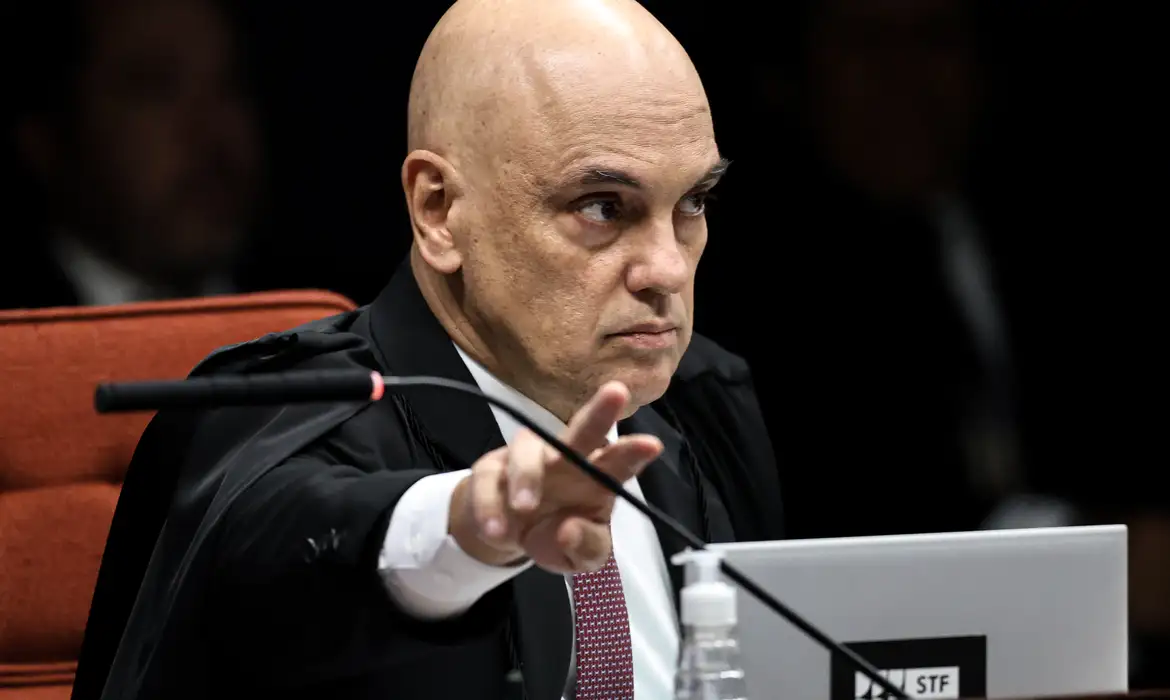

Justice Alexandre de Moraes Orders Massive Tax Data Sweep: Protecting the Elite or Covering Tracks?
By Hotspotnews
In yet another display of unchecked power, Brazilian Supreme Court Justice Alexandre de Moraes has directed the Federal Revenue Service to launch an exhaustive internal audit of tax records belonging to all Supreme Federal Court (STF) justices, along with roughly 100 of their closest family members—parents, children, siblings, and spouses.
This sweeping investigation, involving some 8,000 individual checks across 80 different systems, comes amid mounting scrutiny over alleged ties between top court figures and the collapsed Banco Master financial scandal.
What is presented as a defensive measure against potential leaks of confidential financial information raises far more serious questions about institutional accountability in Brazil. Rather than allowing independent investigators or congressional oversight to examine claims of improper connections to a bank now accused of multibillion-dollar fraud, one powerful justice has taken it upon himself to control the probe into his own circle and that of his colleagues.
The timing could hardly be more convenient. The Banco Master case has rocked Brazil’s financial and political establishment, with reports linking relatives of Justices Moraes and Dias Toffoli to the failed institution through legal contracts and other arrangements. Billions in questionable transactions, investor losses in the hundreds of thousands, and suspicions of regulatory favoritism have fueled public outrage. Instead of stepping back to preserve impartiality, Moraes—already a lightning rod for criticism over his broad use of judicial authority—has positioned himself as both judge and investigator in matters that directly touch his own reputation and that of the court he dominates.
This move fits a troubling pattern. The same justice who has overseen the long-running “Fake News” inquiry—often criticized as a tool to silence dissent—now expands its scope to police potential data breaches involving the very elite he protects. Reports indicate the audit’s findings flow straight to his office, with no apparent mechanism for external review or transparency. The Revenue Service itself has cited judicial secrecy in refusing to comment, leaving ordinary Brazilians to wonder why the nation’s highest court demands absolute privacy while wielding sweeping surveillance powers over citizens.
Conservatives have long warned that concentrated authority in unelected hands erodes democratic checks and balances. When a single figure can order mass surveillance of the judiciary’s own members—while simultaneously facing questions about personal and familial entanglements in major financial controversies—the risk of abuse becomes glaring. True accountability would demand recusal, independent prosecutors, or legislative inquiry—not a self-directed internal sweep shielded from public view.
Brazil deserves better than a system where the powerful investigate themselves under the guise of protecting institutional integrity. The Banco Master affair exposes deep cracks in regulatory oversight and elite networks. Rather than closing ranks, the Supreme Court should embrace openness, recuse conflicted justices, and allow impartial bodies to restore trust. Anything less fuels the perception that justice in Brazil is reserved for the connected few, while ordinary citizens face ever-tightening scrutiny.
The stakes extend beyond one bank failure or one justice’s actions. They touch the core of whether Brazil remains a nation governed by laws applied equally—or one where a handful of robed figures decide who gets investigated, who gets shielded, and who gets to know the truth.