


Justice’s Selective Blindfold: Lulinha’s Escape Exposes Brazil’s Two-Tiered System
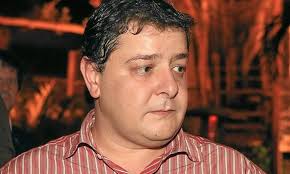
In the heart of Brazil’s ongoing battle against corruption, a glaring double standard has emerged, one that reeks of political favoritism and undermines the very foundations of our democracy. While former President Jair Bolsonaro languishes in a federal prison cell, serving a staggering 27-year sentence for what many conservatives view as politically motivated charges, President Luiz Inácio Lula da Silva’s eldest son, Fábio Luís Lula da Silva—affectionately known as Lulinha—jets off to Europe unscathed, despite being entangled in one of the nation’s most explosive fraud scandals. This isn’t just hypocrisy; it’s a blatant erosion of the rule of law, where connections to power seem to grant immunity.
Let’s recap the facts that have Brazilians fuming. The Federal Police’s Operation No Deduction has uncovered a massive scheme allegedly diverting over R$1 billion from the pockets of hardworking retirees and pensioners through unauthorized discounts at the National Institute of Social Security (INSS). At the center of this web stands Antônio Carlos Camilo Antunes, dubbed “Careca do INSS,” a businessman accused of masterminding the fraud. Testimonies, financial records, and seized communications point to Lulinha as a potential “hidden partner” in companies linked to the operation. Reports suggest he received a jaw-dropping R$25 million lump sum, plus a monthly “allowance” of R$300,000 from Careca—funds siphoned from the very people who built this country with their sweat and sacrifice.
Yet, as opposition voices like Deputy Carlos Jordy and Júlia Zanatta cry out on social media, demanding accountability, the justice system drags its feet. Petitions flooded the Supreme Federal Court (STF) just yesterday, urging Justice André Mendonça to seize Lulinha’s passport, impose an ankle monitor, or even order preventive arrest to prevent flight risk. After all, Lulinha was spotted traveling first-class alongside Careca to Spain, where he reportedly maintains a residence. No action has been taken. No restrictions imposed. He’s free to roam Madrid while the probe supposedly “advances” at a snail’s pace.
Contrast this with the swift hammer of justice that fell on Bolsonaro. Convicted by the STF in 2025 for crimes tied to post-election events—including attempted abolition of the democratic state and forming an armed criminal organization—Bolsonaro faced a barrage of evidence from communications, testimonies, and logs. The courts moved with lightning speed: preventive detention, a tampered ankle monitor leading to full imprisonment, and now a life-altering sentence in a closed regime. Conservatives argue this was a witch hunt, fueled by institutional bias against the right, but regardless, the system acted decisively when it suited the powers that be.
The hypocrisy deepens with today’s headlines. In the parallel Banco Master fraud case, businessman Fabiano Zettel—a major donor to Bolsonaro and São Paulo Governor Tarcísio de Freitas—was dramatically arrested at Guarulhos Airport as he attempted to flee to Dubai. The PF blocked his escape, executed search warrants, and froze billions in assets. Zettel’s ties to the opposition made him an easy target, yet when it comes to Lulinha’s alleged “mesada” and a luxurious Brasília mansion serving as a “QG” for dealings with Careca’s associates like Roberta Luchsinger, the response is crickets. Why the kid-glove treatment? Could it be because Lulinha’s father sits in the Planalto Palace, vowing impartial investigations while his allies in Congress block summons and inquiries?
This isn’t about left versus right; it’s about equality under the law—a principle conservatives have championed since the days of Operation Car Wash, which exposed systemic graft across parties. But under Lula’s administration, that equality feels like a farce. The INSS scandal exploded under his watch, with unauthorized deductions quadrupling compared to previous years, yet the focus shifts to opposition-linked cases like Banco Master to deflect scrutiny. Public trust in institutions is at rock bottom, with social media ablaze over “selective justice” and calls for a full parliamentary inquiry.
If evidence against Lulinha solidifies—and the whispers of hidden partnerships, lavish payments, and cozy mansions suggest it might—then let the chips fall. Seize the passport. Enforce the monitor. Hold him accountable, just as Bolsonaro was held. Anything less perpetuates a dangerous precedent: justice for thee, but not for me. In a nation striving for true conservatism—rooted in family, faith, and fairness—such double standards cannot stand. The time for excuses is over; it’s time for action.