




Leftist Extremists Vandalize U.S. Embassy in Brasília: A Direct Challenge to American Sovereignty
By Hotspotnews
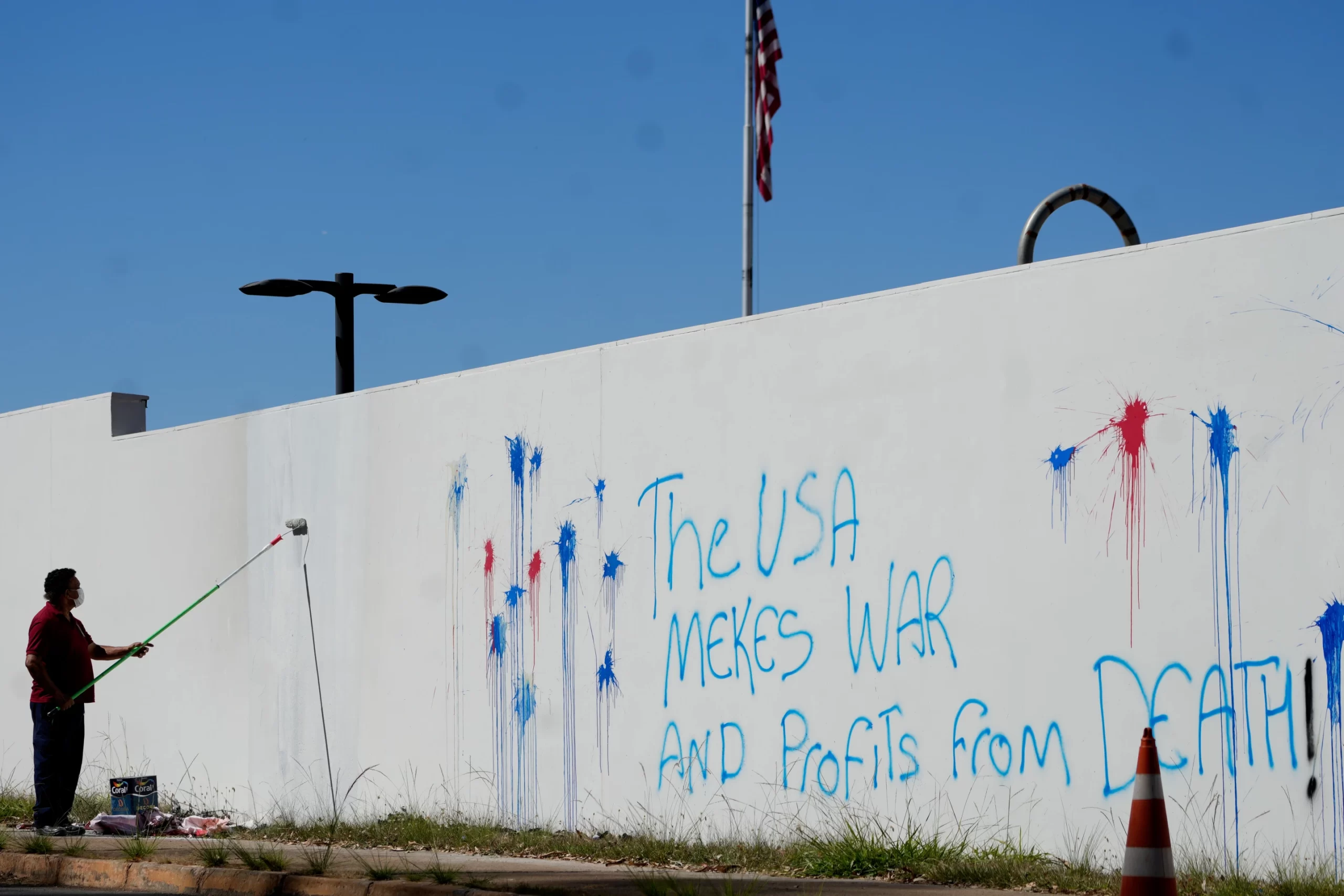
On August 13, 2026, militants associated with Brazil’s Movimento dos Trabalhadores Rurais Sem Terra (MST), the Landless Workers’ Movement, and its allied youth groups carried out a deliberate act of vandalism against the United States Embassy in Brasília. They spray-painted anti-American slogans across the outer wall, including the bilingual message “The USA makes war and profits from death,” displayed banners denouncing the American “war industry,” and burned a desecrated U.S. flag altered with images of skulls and bombs. The perpetrators then fled, leaving Brazilian authorities to clean up the mess and investigate.
This was no spontaneous outburst. The MST’s own youth wing and the Levante Popular da Juventude publicly claimed responsibility, framing the attack as a “peaceful intervention” against what they call U.S. imperialism. One participant, reportedly an attorney linked to the group, was briefly detained by local police and released after signing a basic occurrence report. Embassy staff quickly began scrubbing the graffiti while issuing a measured statement calling the acts “unacceptable” and affirming cooperation with Brazilian authorities. Consular operations continued without interruption.
As of August 14, 2026, President Donald Trump has not publicly acknowledged or commented on the incident. No statement has appeared from the White House, no Truth Social post has addressed it, and no official readout confirms that the president has been personally briefed or issued a response. The only confirmed U.S. government reaction remains the Embassy’s formal condemnation. In the current climate of strained U.S.-Brazil relations, this silence does not diminish the seriousness of the provocation. Trump’s administration has consistently prioritized the protection of American interests, personnel, and symbols abroad. When a leftist movement targets a U.S. diplomatic facility, burns the American flag, and claims the act as ideological warfare, a firm eventual response would align with the pattern of decisive leadership that has characterized this presidency on matters of national security and sovereignty.
The incident occurs against a backdrop of already difficult relations between the Trump administration and the leftist government of President Luiz Inácio Lula da Silva. Washington has imposed significant tariffs on Brazilian goods and taken firm steps on issues of mutual concern, including the designation of major Brazilian criminal organizations such as the PCC and Comando Vermelho as foreign terrorist organizations. These measures reflect a clear prioritization of American interests and security. In that context, an organized leftist movement targeting a U.S. diplomatic facility is not a minor protest—it is a calculated provocation.
The MST has long positioned itself as a champion of the rural poor through land occupations and redistribution campaigns. In practice, its methods have frequently involved illegal invasions of private property, intimidation of landowners, and disruption of agricultural production—the very sector that forms a cornerstone of Brazil’s economy and global food supply. Critics on the right have for years described elements of the movement as radical, ideologically driven, and willing to employ extralegal tactics. The embassy attack fits a pattern of escalating confrontation rather than legitimate advocacy. Dressing participants as clowns and Uncle Sam caricatures does not transform property destruction and flag-burning into protected speech; it underscores the theatrical contempt for institutions and national symbols.
From a conservative perspective, the principle at stake is straightforward. Embassies are sovereign territory. An attack on one is an attack on the nation it represents. Allowing such acts to pass with only a polite diplomatic note and a temporary detention invites further escalation. The United States has every right—and responsibility—to demand that the host government investigate thoroughly, prosecute those responsible to the full extent of the law, and ensure the physical security of American facilities and personnel. Weak responses signal vulnerability.
Some voices on the Brazilian right and among American conservatives have already begun discussing whether organized groups that engage in coordinated attacks on foreign embassies cross into the territory of domestic extremism or even terrorism. While no official U.S. designation of the MST has been announced, the question is legitimate. When a movement claims responsibility for vandalizing a U.S. embassy, burns the American flag, and ties the action to a broader ideological war against the United States, policymakers are entitled to examine the group’s activities, funding, and patterns of behavior under the same rigorous standards applied to other threats. Rule of law requires distinguishing peaceful assembly from criminal aggression.
Brazil’s agricultural productivity and democratic institutions have historically benefited from secure property rights and predictable legal frameworks. Movements that systematically challenge those foundations while targeting foreign allies do not advance the interests of ordinary Brazilians. They advance a political project hostile to free enterprise, national sovereignty, and stable international partnerships. The Trump administration’s willingness to confront such challenges head-on—through trade policy, security designations, and clear diplomatic messaging—stands in contrast to approaches that prioritize accommodation of radical leftist forces.
The embassy vandalism should serve as a clarifying moment. American taxpayers fund the protection of U.S. facilities abroad. American diplomats and staff deserve security, not tolerance of graffiti and flag-burning by organized militants. Brazilian authorities have an obligation to uphold the Vienna Convention and their own laws against vandalism and disorder. And conservatives who value ordered liberty, national pride, and the defense of Western institutions should recognize this episode for what it is: a test of resolve.
Strong nations protect their symbols and their people. Soft responses only encourage the next escalation. The United States under President Trump has demonstrated it will not look the other way when American interests are directly challenged. That posture remains the correct one—even if a personal presidential statement on this specific incident has not yet been issued.
SOURCE: AP NEWS


