

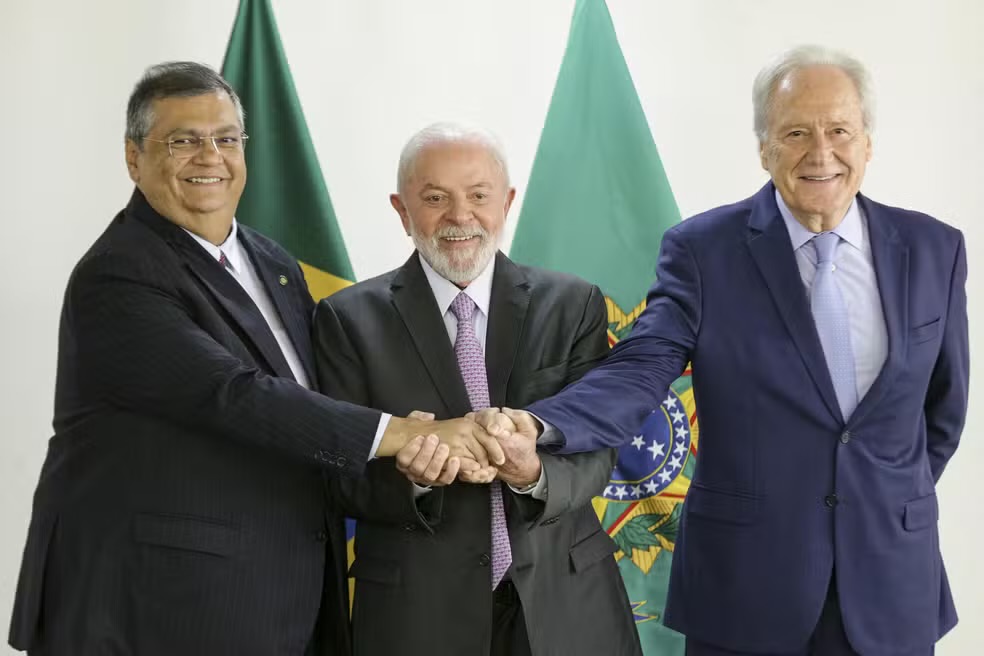

Brazil’s Lula Decries U.S. Visa Revocation of Justice Minister as Tensions Escalate
In a move that has further strained diplomatic relations between Brazil and the United States, Brazilian President Luiz Inacio Lula da Silva announced on Tuesday that the U.S. government revoked the visa of Justice Minister Ricardo Lewandowski. Speaking at a cabinet meeting in Brasilia, Lula condemned the decision as “irresponsible” and expressed solidarity with his embattled minister, framing the action as an affront to Brazil’s sovereignty. The visa revocation, which the U.S. State Department has not yet officially confirmed, appears to be linked to the ongoing legal proceedings against former Brazilian President Jair Bolsonaro, a figure who remains a polarizing force in Brazilian politics and a staunch ally of conservative values.
The revocation of Lewandowski’s visa comes amid a broader U.S. policy of imposing visa bans and sanctions on Brazilian officials involved in Bolsonaro’s trial, which centers on allegations that he plotted to undermine the 2022 presidential election results. Bolsonaro, often referred to as the “Trump of the Tropics” for his populist rhetoric and unapologetic conservatism, faces charges that could lead to a 40-year prison sentence if convicted. He has vehemently denied the accusations, calling the trial a politically motivated “witch hunt” orchestrated by Lula’s leftist administration and Brazil’s judiciary to prevent his political comeback in the 2026 elections.
Lula’s public condemnation of the U.S. action was fiery and unapologetic. Wearing a cap emblazoned with the phrase “Brazil belongs to Brazilians,” the president framed the visa revocation as an overreach by a foreign power meddling in Brazil’s internal affairs. “These attitudes are unacceptable—not only against Minister Lewandowski, but also against Supreme Court justices or any Brazilian official,” Lula declared, signaling a broader rejection of what he perceives as U.S. interference. His remarks were echoed by other Brazilian officials, who have accused the United States of undermining the nation’s judicial independence.
From a conservative perspective, this development raises serious concerns about the Biden administration’s foreign policy priorities and its apparent willingness to escalate tensions with a key South American ally. The visa revocation targeting Lewandowski, a respected jurist and former Supreme Court justice, is seen by many as a punitive measure aimed at pressuring Brazil’s government over its handling of Bolsonaro’s case. This move aligns with other U.S. actions, including reports of crippling 50% tariffs imposed on Brazilian imports and sanctions against a Brazilian judge overseeing Bolsonaro’s trial. These policies, reportedly influenced by lobbying from Bolsonaro’s son, Eduardo Bolsonaro, who has been active in conservative circles in the United States, suggest a deliberate strategy to support Bolsonaro’s cause while punishing Lula’s administration.
Conservatives argue that this situation exposes a troubling double standard in U.S. foreign policy. While the Biden administration has championed democratic principles and judicial independence on the global stage, its actions here appear to undermine those very principles by targeting Brazilian officials engaged in their constitutional duties. The revocation of Lewandowski’s visa, in particular, is viewed as a personal attack on a figure who has been a cornerstone of Brazil’s legal system, having served as a Supreme Court justice before taking on the role of justice minister under Lula. Critics contend that such measures risk alienating Brazil, a vital economic and strategic partner, at a time when global alliances are increasingly critical.
Moreover, the timing of the visa revocation coincides with heightened political polarization in Brazil, where Bolsonaro remains a rallying figure for conservatives who view him as a defender of traditional values, economic freedom, and resistance to leftist policies. His trial, which centers on allegations of orchestrating a coup to retain power after losing the 2022 election to Lula, has galvanized his base, who see it as an attempt to silence a leader who challenged Brazil’s entrenched political establishment. The U.S. intervention, conservatives argue, only fuels the narrative that external forces are colluding with Lula’s government to suppress dissent and marginalize the conservative movement in Brazil.
The broader implications of this diplomatic spat cannot be overstated. Brazil, as Latin America’s largest economy and a key player in global trade, is a critical partner for the United States. Yet, the imposition of tariffs and sanctions risks economic fallout, potentially harming American businesses and consumers who rely on Brazilian goods, from agricultural products to manufactured items. Conservatives warn that these aggressive measures could push Brazil closer to rival powers like China, which has already made significant inroads in Latin America through infrastructure investments and trade deals. Such a shift would undermine U.S. influence in the region and weaken its strategic position in the Western Hemisphere.
Lula’s response, while defiant, also underscores the domestic political tightrope he walks. By publicly supporting Lewandowski and framing the U.S. actions as an attack on Brazilian sovereignty, he seeks to rally nationalist sentiment and deflect criticism from his administration’s handling of the economy and social issues. However, conservatives argue that Lula’s rhetoric masks his own administration’s efforts to consolidate power and suppress opposition, with Bolsonaro’s trial serving as a convenient tool to neutralize a formidable political rival. The U.S. visa revocation, in this view, inadvertently bolsters Lula’s narrative of external interference, giving him a platform to deflect scrutiny from his own governance failures.
For conservatives, the situation highlights the need for a principled foreign policy that respects national sovereignty while promoting shared values of freedom and democracy. The Biden administration’s apparent alignment with Lula’s government risks alienating millions of Brazilians who support Bolsonaro’s vision of a strong, independent Brazil free from leftist overreach. It also raises questions about the consistency of U.S. policy, which seems to selectively target conservative leaders while turning a blind eye to authoritarian tendencies in other regimes.
As tensions between Brazil and the United States continue to simmer, the revocation of Ricardo Lewandowski’s visa serves as a stark reminder of the delicate balance in international relations. For conservatives, it is a call to action to defend allies like Bolsonaro, who represent a bulwark against the global spread of progressive ideologies. Whether this diplomatic row will escalate further or find resolution remains uncertain, but its impact on Brazil’s political landscape and U.S.-Brazil relations will likely reverberate for years to come.