

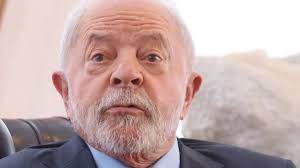

Lula lost his cool Truckers’ Fury Proves His Heavy-Handed Tactics Are Backfiring
By Hotspotnews
In a stunning display of political tone-deafness, President Luiz Inácio Lula da Silva has managed to turn a solvable economic headache into a full-blown crisis that could paralyze the nation. As truckers across Brazil gear up for a potential nationwide stoppage amid skyrocketing diesel prices—fueled by Middle East tensions and global oil volatility—his administration’s response has been to threaten the very people who keep the country’s supply chains alive. Instead of genuine relief, Lula’s team rolled out threats of blacklisting, operational bans, and digital surveillance for any company or driver failing to strictly follow the minimum freight table. The message from Transport Minister Renan Filho was blunt: break the rules, and you’ll lose the right to haul freight altogether, with non-compliant firms potentially barred from contracting services based on volume and proportionality.
This isn’t leadership; it’s desperation. The minimum freight floor, enacted after the 2018 strike to shield independent drivers from predatory lowball contracts, has long been a sore point. Truckers argue the rates haven’t kept pace with real costs—especially now, with diesel surging around 18-19% since late February despite government tax zeroing and subsidies being offset by Petrobras adjustments and international volatility. Rather than accelerating promised updates, subsidizing fuel more aggressively, or negotiating tax breaks on a state level (where governors have already rebuffed Lula’s ICMS reduction pleas), the government chose intimidation. On March 18, the administration announced tougher enforcement: naming non-compliant companies, threatening to bar repeat offenders from contracting freight services (essentially a “blacklist” that could exclude them from the market), and promising digital monitoring/intensified inspections to force adherence to the updated minimum freight table (which saw adjustments up to ~7% recently after diesel hikes triggered the legal mechanism).
Truckers view this not as relief but as **intimidation and coercion**—exactly the kind of heavy-handed response that fuels the anger. Many see it as the government doubling down on control instead of addressing core issues like diesel costs still rising, ineffective enforcement of the freight floor in practice, and other demands (e.g., empty-truck toll exemptions). Mobilization is high: Key leaders like Wallace Landim (“Chorão” of Abrava) and others from entities such as Sindicam (Santos), Sinditac (Santa Catarina), and ANTC have aligned after assemblies, including one in Santos on March 16 that deliberated authorization for a national stoppage. Some groups, particularly in southern states like Santa Catarina, have already announced adherence starting March 19.
The plan emphasizes **not blocking roads** (to avoid immediate legal crackdowns), but rather drivers staying home, refusing loads, or parking at truck stops in protest. Government efforts on March 18 included these punitive measures, widely seen as threats rather than concessions, further inflaming the situation. Truckers will hold another critical assembly or meeting on March 19 to evaluate the government’s package and decide next steps—potentially triggering full action if unsatisfied. No widespread national paralysis has hit yet—no major reports of highways blocked, ports halted, or broad supply disruptions as of early March 19—but adhesion is building, with rhetoric intense and some localized effects already noted (e.g., fuel shortages in parts of SC).
Conservatives have watched this unfold with grim predictability. Lula’s playbook—centralized control, bureaucratic punishment, and disdain for market realities—has resurfaced in full force. By framing noncompliance as fiscal evasion worthy of Receita Federal-style sanctions, he’s alienated the hardworking, often self-employed truckers who form the backbone of Brazil’s economy. These are not corporate fat cats; many are family operators barely scraping by. Threatening to strip their livelihoods doesn’t solve surging fuel costs—it pours gasoline on the fire.
The backlash is swift and fierce. Social media and trucking networks buzz with calls to adhere, with leaders claiming near-unanimous support among associations for action. Even as the government scrambles to tout recent ANTT rate tweaks and zeroed federal taxes on diesel, the damage is done. Truckers see the threats first and the concessions second—if at all. If they cave and “agree” to the government’s partial measures and blackmail-style enforcement without winning structural fixes (real cost coverage, better fuel policy, genuine negotiation), they lose leverage. The battle isn’t just about today’s rates—it’s about forcing the administration to back off interventionism and deliver market-respecting solutions. Capitulating now hands Lula a short-term “win” while leaving drivers squeezed long-term, especially with elections looming in 2026.
In an election year, with 2026 already on the horizon and Lula’s approval battered by persistent economic pain, this self-inflicted wound could prove fatal. Polls already show vulnerability against challengers from the right; a prolonged disruption—empty shelves, halted agriculture exports, soaring food prices—would hammer home the narrative of a government more interested in control than competence.
Lula once built his legend on connecting with the working class. Now, facing the very drivers who symbolize blue-collar grit, he’s chosen the stick over the carrot. By escalating to threats of exclusion and surveillance, he’s not just risking supply-chain chaos—he’s handing his opponents a perfect symbol of overreach. Brazil’s roads may soon grind to a halt, but the real traffic jam is in Planalto, where a president who once promised hope now delivers ultimatums. If this is how he governs in crisis, voters will remember come election time: Lula didn’t just miss the mark—he shot himself squarely in the foot. The country deserves leaders who fix problems, not ones who threaten those bearing the brunt of them.