


Lula’s Government Rejects Socialist Statism: A Rare-Earth Win for Brazil’s Future
By Hotspotnews
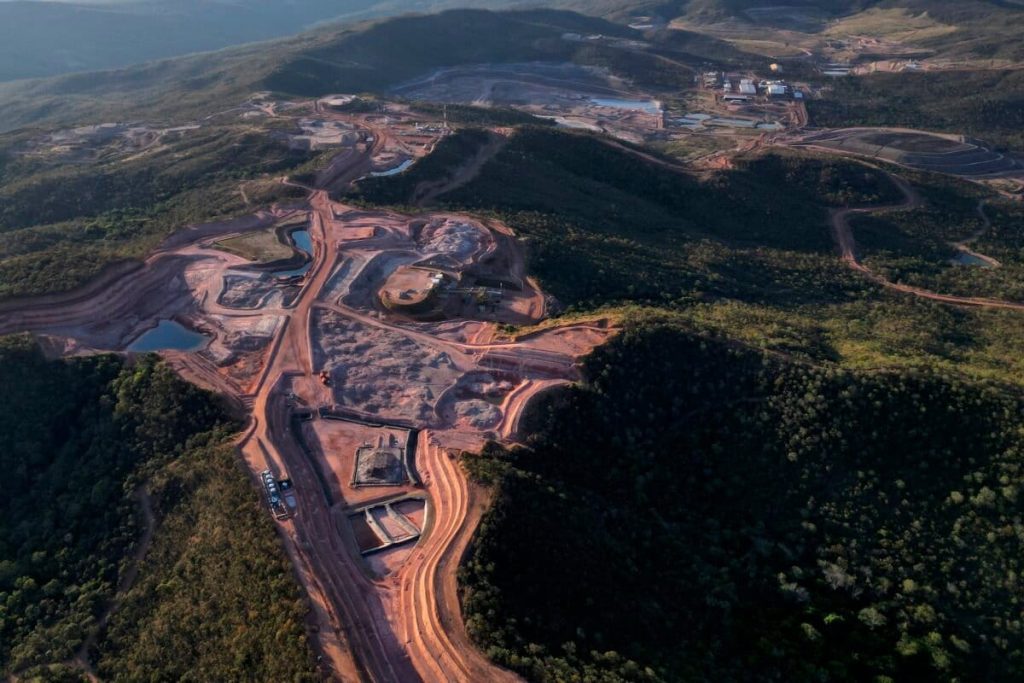
VIn a surprising display of pragmatism, President Luiz Inácio Lula da Silva’s administration has blocked the immediate creation of “Terrabras,” a proposed state-owned monopoly on rare earths and critical minerals. This decision has exposed deep fractures within the ruling Workers’ Party (PT) coalition and offers a glimmer of hope that Brazil may yet avoid repeating the costly mistakes of its interventionist past.
The push for Terrabras—envisioned as a government giant controlling everything from exploration to export—came from hardline PT lawmakers who see state ownership as the path to “sovereignty.” Their vision: another bureaucratic behemoth to rival Petrobras in inefficiency, political patronage, and fiscal drain. Thankfully, cooler heads in the Planalto Palace have prevailed, at least for now. Instead of rushing into a new state enterprise, the government is prioritizing private-sector incentives and a National Council for Critical Minerals under presidential oversight. This approach wisely leans toward market-driven development rather than top-down control.
Brazil sits on the world’s second-largest reserves of rare earth elements—vital for electric vehicles, wind turbines, defense systems, and advanced electronics. The global race for these materials is intensifying, with China dominating supply chains and Western nations desperately seeking alternatives. Yet for decades, Brazil has failed to capitalize on its mineral wealth, exporting raw ore while importing finished high-tech goods. The solution is not creating yet another state company prone to corruption, endless subsidies, and operational failure. History provides ample warning: from Petrobras scandals to the decay of state-controlled enterprises under previous PT governments, heavy state intervention has consistently delivered higher costs, lower productivity, and political favoritism rather than genuine development.
Conservative economists and mining industry leaders have long argued that Brazil’s best path forward lies in clear regulations, legal security, and tax incentives that attract responsible private investment—both domestic and foreign. A Terrabras-style monopoly would scare away capital at precisely the moment when the country needs billions in exploration and processing technology. It risks turning strategic minerals into tools for ideological posturing instead of engines of growth, jobs, and technological advancement.
The PT’s angry reaction reveals the ideological fault line. Party leaders accuse the government of “deliverance” to foreign interests, clinging to the outdated belief that only state bureaucrats can guard national sovereignty. In reality, true sovereignty comes from a strong, diversified economy—not from nationalizing industries that the state has repeatedly proven incapable of managing efficiently. Countries like Australia and Canada have successfully developed critical minerals sectors through private enterprise backed by smart regulation, without resorting to socialist models.
By delaying Terrabras and favoring a more market-oriented framework, Lula’s government has—perhaps reluctantly—acknowledged economic reality over party dogma. This rift with the PT’s most radical wing may signal a broader recognition in Brasília: after years of fiscal strain and sluggish growth, Brazil cannot afford more experiments in state capitalism.
For Brazil to seize its rare-earth opportunity and reduce dependence on adversarial supply chains, policymakers must double down on this pragmatic turn. Reduce bureaucracy. Guarantee property rights. Welcome responsible investment. Anything less risks squandering one of the greatest resource booms of the 21st century in favor of failed 20th-century ideology.