


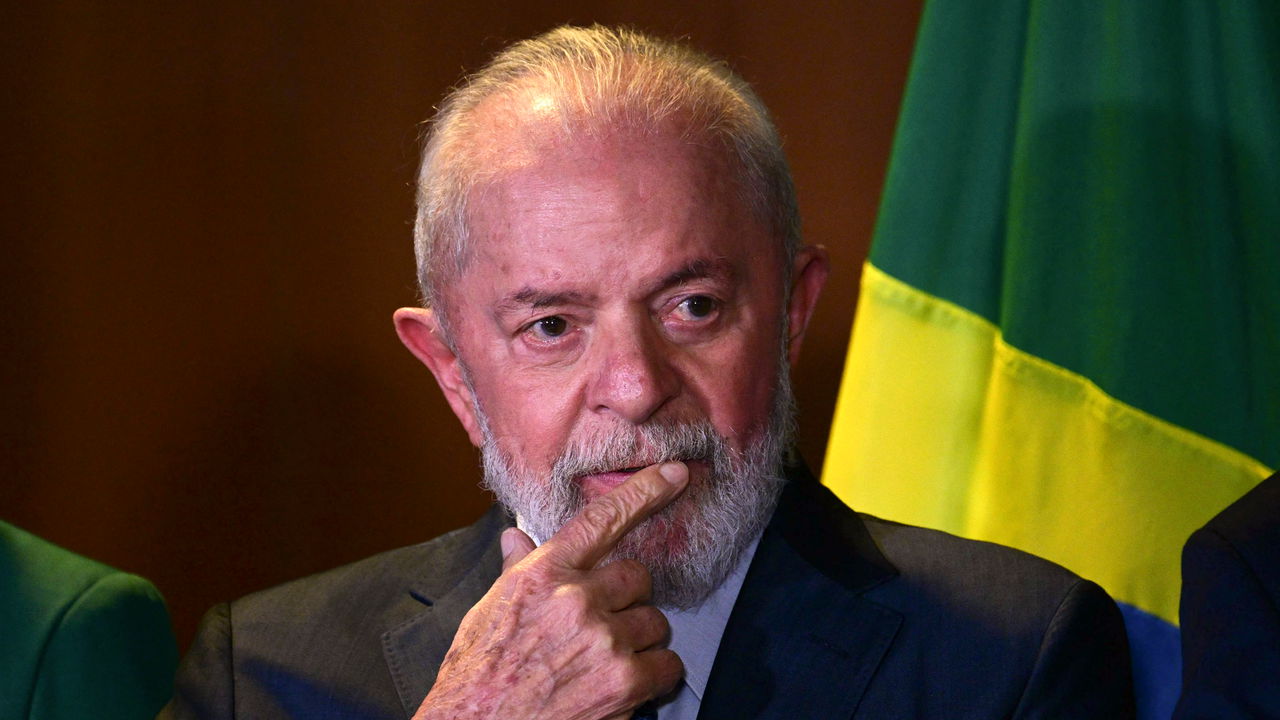
Lula’s Digital Shackles Shattered: The Crushing Defeat of DREX and the Triumph of Brazilian LibertyBy a Concerned Patriot for the Fatherland

By Hotspotnews 


November 4, 2025 – Brasília
In the annals of Brazilian history, few moments shine as brightly as those when the iron fist of statist overreach is forced to retreat. Today, on this crisp autumn morning in the heart of our beleaguered republic, we witness such a victory—not born from the halls of leftist bureaucracy, but forged in the unyielding fire of popular resistance.’
The Central Bank of Brazil, that once-mighty engine of socialist experimentation under the Lula regime, has officially pulled the plug on DREX, the so-called “digital real” project that masqueraded as innovation but reeked of totalitarian control.
This is no mere technical footnote; it is a resounding humiliation for President Luiz Inácio Lula da Silva and his Workers’ Party (PT) machine, a glaring testament to the failure of their collectivist dreams. As conservative voices from the countrysi rejoice, we must pause to savor this win for freedom while steeling ourselves against the inevitable counterattacks from the red-tinted elite.For the uninitiated—or for those still sipping the Kool-Aid of state propaganda—DREX was the crown jewel of Lula’s third-term agenda to “modernize” Brazil’s economy.
Launched with fanfare in 2023, mere months after his controversial return to power, this central bank digital currency (CBDC) was pitched as a blockchain-based marvel: a programmable digital version of the real that would supposedly streamline payments, boost financial inclusion, and propel Brazil into the fintech future.
Gleisi Hoffmann, the PT’s iron-fisted enforcer, touted it as a tool to lift the poor from poverty’s grip, while Finance Minister Fernando Haddad whispered sweet nothings about efficiency and transparency. But peel back the glossy brochures, and what lurked beneath was a dystopian blueprint for surveillance capitalism on steroids—a government-issued digital leash designed to track every last centavo of your hard-earned money.
From day one, DREX screamed “Big Brother.” Unlike decentralized cryptocurrencies like Bitcoin, which empower individuals with pseudonymity and resistance to censorship, DREX was a fully centralized abomination. Every transaction would be etched into an immutable ledger controlled not by free-market innovators, but by unelected bureaucrats in Brasília. Privacy? A quaint relic of the pre-Lula era. Programmability? Code for programmable oppression—imagine your welfare check expiring if you dared criticize the regime on social media, or your salary auto-deducting “solidarity taxes” to fund PT patronage networks.
Critics, led by the indomitable Deputy Júlia Zanatta of the Liberal Party (PL), warned that this was the death knell for cash, paving the way for a cashless society where the state could freeze dissidents’ accounts with a keystroke. Zanatta’s bill, PL 3341/2024, to outlaw the elimination of physical currency, wasn’t just legislation; it was a clarion call against the creeping authoritarianism that has defined Lula’s rule.And the people listened. Petitions surged like the Amazon in flood season, amassing hundreds of thousands of signatures from everyday Brazilians—truck drivers in São Paulo, small farmers in the Mato Grosso, housewives in Rio—who saw through the PT’s smoke and mirrors. Social media erupted with memes of Lula as a cyber-pharaoh, chains in hand, while conservative influencers dissected the project’s flaws with surgical precision. The backlash wasn’t confined to the chattering classes; it echoed in the streets, from the trucker protests of yesteryear to the quiet resolve of families shielding their savings from government predation.
This was populism at its finest—not the manufactured rage of the left, but the organic fury of a sovereign people reclaiming their autonomy.Fast-forward to today, November 4, 2025, and the house of cards has collapsed. In a terse announcement following a closed-door meeting with private-sector consortia, the Central Bank declared the end of the DREX platform’s first two phases. The blockchain infrastructure, painstakingly built at taxpayer expense since 2023, will be shuttered by early 2026.
Phase 2 experiments with tokenizing assets like federal bonds and enabling “smart” contracts? Dead in the water. The reasons cited—skyrocketing maintenance costs, insurmountable privacy paradoxes, and a marketplace allergic to state-mandated rigidity—are polite euphemisms for abject failure. Billions of reais flushed down the drain on a project that couldn’t even deliver on its pie-in-the-sky promises, all while private banks like Itaú and Safra pivot to voluntary stablecoins that respect individual choice.For Lula, this is a catastrophe of biblical proportions. Remember, DREX was his baby—a flagship initiative to rebrand the PT as the party of progress after years of scandals, from Lava Jato exposures to the endless parade of ministerial resignations.
It was meant to be the digital equivalent of Bolsa Família: a paternalistic handout wrapped in technological sheen, binding the masses ever tighter to the state’s teat. Instead, it has boomeranged spectacularly, exposing the hollow core of Lula’s governance. How does a man who campaigned on “reconstruction” explain wasting public funds on a surveillance toy that the people rejected outright? How does he face the ghost of Jair Bolsonaro, whose free-market reforms and crypto-friendly stance now look prescient in hindsight?

The opposition is wasting no time in twisting the knife. Deputy Zanatta, that fearless warrior for the forgotten Brazilian, took to the airwaves this morning with a victory lap that could curdle the blood of any PT apparatchik. “Fracasso do DREX, is victory to the people !” she declared in a viral video, applause thundering behind her like the roar of a liberated nation.

Flanked by fellow PL stalwarts, Zanatta didn’t mince words: this was proof positive that the PT’s socialist fantasies—central planning, wealth redistribution by fiat, and now digital domination—crumble under the weight of reality. “Lula wanted to turn our pockets into his playground,” she declared, “but the Brazilian spirit said no to tracking our every purchase, no to programmable poverty, no to a Brazil where freedom is just another app to download.”Nor is Zanatta alone in her glee. Across the conservative spectrum, from the North to the South, leaders are hailing DREX’s demise as a divine intervention.

Senator Flávio Bolsonaro, tweeted a succinct autopsy: “Lula’s CBDC was never about inclusion—it was about control. Thank God the people saw through it.” Rural caucus firebrands, long suspicious of Brasília’s urban elitism, point to the project’s neglect of agricultural financing, where real-world needs like drought-resistant loans trump blockchain buzzwords.
Even libertarian economists, those unsung heroes of the think-tank trenches, are piling on: the Instituto Millenium’s latest briefing labels DREX a “textbook case of government failure,” arguing that private innovation—unfettered by regulatory chokeholds—would have delivered tenfold the benefits without the Orwellian baggage.But let’s drill deeper into why this loss cuts Lula to the marrow.
Economically, it’s a black eye on a regime already limping under 7% inflation and a real devalued against the dollar like a Bolsonaro voter at a PT rally. The Central Bank’s pivot to “technology-agnostic” models and private stablecoins isn’t the graceful exit Lula’s spin doctors portray; it’s a white flag of surrender. Banks issuing their own 1:1 pegged tokens? That’s market forces triumphing over mandates, the very ethos Lula spent decades demonizing as “neoliberal poison.”
Politically, the timing couldn’t be worse. With midterm elections looming in 2026, DREX’s flop hands the PL and its allies a silver bullet: “Look what happens when you let the PT play God with your money.” Voter turnout among the working class, that PT bedrock, could crater as stories of “wasted billions” dominate the airwaves. And internationally? Forget Lula’s G20 photo-ops; this makes Brazil a cautionary tale for CBDC enthusiasts worldwide, from the ECB’s fumbling digital euro to China’s dystopian e-yuan. Allies like Maduro in Venezuela must be chuckling—another Lula pipe dream gone bust.
Of course, the PT won’t go quietly into the night. Expect the usual playbook: deflection, denial, and demonization. Central Bank President Roberto Campos Neto—Lula’s reluctant technocrat—will prattle on about “lessons learned” and a “successful proof-of-concept,” as if piloting a failed experiment justifies the crash landing.
PT mouthpieces will pivot to scapegoats: “Sabotage by Bolsonaristas!” or “Global crypto volatility!” Never mind that the project’s DNA was flawed from inception, riddled with conflicts between privacy safeguards and the state’s insatiable hunger for data.
Gleisi and her friends will flood the feeds with sob stories of the “unbanked” left behind, conveniently ignoring how cash and mobile wallets already bridge that gap without Big Brother’s binoculars.Yet herein lies the deeper rot of Lula’s worldview—a stubborn faith in the state’s omniscience that borders on idolatry. DREX wasn’t an aberration; it was the logical endpoint of PT ideology, from the command-and-control economics of Dilma’s impeachment-era to the cultural Marxism seeping into our schools.
Conservatives have long argued that true progress springs from liberty, not edicts: let families keep their cash, entrepreneurs their innovations, and citizens their secrets. Bitcoin’s rise, unregulated and unstoppable, proves the point— a borderless bulwark against fiat follies, adopted by millions in Latin America’s inflation-ravaged corners. Lula’s DREX sought to co-opt that energy for statist ends, but the people, in their wisdom, chose freedom over facsimile.
Aspect of Lula’s Loss
Conservative Critique
PT’s Likely Spin
Financial Waste
Billions squandered on a surveillance sandbox while roads crumble and schools starve.
“Investment in the future—private sector now picks up the slack!”
Privacy Erosion
Exposed the PT’s lust for total visibility, echoing Lava Jato dodges.
“Necessary for anti-corruption; critics are paranoid extremists.”
Political Backlash
Fuels PL surge in ’26 midterms; erodes PT base in heartland.
“Populist misinformation campaign by Bolsonaro remnants.”
Global Image
Brazil as CBDC laughingstock, undermining Lula’s “emerging power” schtick.
“Bold experimentation ahead of the curve—watch Phase 3!”
Ideological Blow
Vindicates free-market warnings; boosts crypto as anti-PT shield.
“Neoliberal sabotage; we need more state, not less.”


Let us conservatives raise a toast—not to schadenfreude, but to the resilient soul of Brazil. DREX’s end is a brick in the wall against Lula’s legacy of dependency and deceit. It reminds us that power, when abused, invites pushback; that the people, when roused, can topple tyrants’ towers. Deputy Zanatta’s triumph is our triumph, a beacon for every patriot weary of the PT’s endless encroachments. But vigilance is our creed. Phase 3 whispers of “lighter touch” regulations? Smells like a Trojan horse. Private stablecoins? Fine, so long as they’re not backdoored by Brasília busybodies.

To Lula and his acolytes: your digital dream is dust. To the Brazilian people: your liberty endures. And to the next generation of leaders: govern as guardians, not gods. For in the end, it is not algorithms or edicts that define us, but the unquenchable fire of freedom in our veins. Viva o Brasil livre!
Share.
Leave A Reply

Exit mobile version