

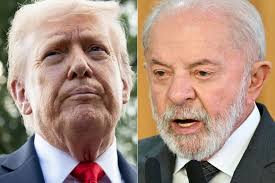

Lula’s Trojan Horse: A Leftist Bid to Silence Dissent Under the Guise of Crime Fighting
By Hotspotnews
In a move that reeks of authoritarian overreach and political desperation, Brazilian President Luiz Inácio Lula da Silva has floated a audacious proposal to deploy Brazil’s Federal Police (PF) onto American soil in partnership with the Trump administration.
Announced during a press conference in New Delhi on February 22, 2026, Lula’s plan masquerades as a tough-on-crime initiative aimed at combating transnational threats like drug trafficking, arms smuggling, money laundering, and fuel contraband. But make no mistake—this is no noble crusade against criminals. It’s a thinly veiled attempt by a socialist leader to extend his iron grip beyond Brazil’s borders, targeting conservative exiles and bolstering his flagging image ahead of the 2026 elections.
On the surface, Lula’s vision sounds straightforward: foster “intense cooperation” with the United States to apprehend Brazilian fugitives hiding in affluent American neighborhoods. He emphasized that any operations would require explicit U.S. approval, with a high-level delegation—including the PF director, Justice Minister, and tax officials—set to meet Trump in March to hammer out details. “I don’t want to receive them; I want to arrest them,” Lula declared, referring to deporting these so-called criminals back to Brazil for trial and imprisonment. He cited ongoing PF investigations into fuel smuggling rings with ties to U.S.-based operations as a catalyst, framing it as a bilateral partnership akin to existing extradition agreements.
But conservatives know better than to take Lula at his word. This proposal comes hot on the heels of the U.S. military’s bold intervention in Venezuela, which saw Nicolás Maduro abducted in January 2026—a move Lula publicly decried as a violation of sovereignty. Yet here he is, hypocritically advocating for similar extraterritorial actions against his own countrymen. Why the sudden pivot? The answer lies in Lula’s alternative motives, which reveal a calculated strategy to consolidate power and crush opposition.
First and foremost, Lula’s plan is a direct assault on Brazilian conservatives exiled in the U.S., many of whom fled what they see as political persecution under his regime. Figures like Eduardo Bolsonaro, Allan dos Santos, and other Bolsonaro allies have sought refuge in America, where they’ve continued to expose the leftist agenda back home. By labeling them “criminals” tied to vague charges of corruption or incitement, Lula aims to drag them back to face kangaroo courts in Brazil. This isn’t about drug lords or smugglers—it’s about silencing voices that challenge his narrative. Conservative commentators on platforms like X have been vocal: this is Lula weaponizing international alliances to hunt down patriots, much like how he allegedly used the PF to target Jair Bolsonaro in past investigations.
Moreover, this initiative is a desperate ploy to neutralize right-wing governors and opposition leaders who have made public security their battle cry for the 2026 race. Lula has struggled to convince voters he’s serious about crime, with polls showing public safety as a top concern. By roping in Trump—a global icon of conservatism—Lula hopes to “intercept” attacks from the right, making it harder for Bolsonarists to criticize him without appearing disloyal to their ideological allies in the U.S. It’s a cynical move: partner with a conservative powerhouse to undermine conservatives at home. Sources close to Brazilian politics suggest this was pushed by Lula’s inner circle, including Finance Minister Fernando Haddad, as a way to preempt the opposition’s narrative that Lula is soft on organized crime.
Geopolitically, Lula’s motives run even deeper. Amid shifting alliances in Latin America—U.S. warnings about Chinese influence in Peru, ongoing pressure on Cuba, and the exclusion of Brazil from Trump’s anti-China summits—Lula is signaling a reluctant pivot toward Washington. But conservatives see this as a facade. Lula’s history of cozying up to socialist dictatorships like Venezuela’s makes his sudden enthusiasm for U.S. cooperation suspicious. Is he truly committed to fighting crime, or is this a bid to appease Trump while quietly advancing his leftist project? His recent imposition of visas on Americans, framed as “reciprocity,” smacks of anti-U.S. pettiness, alienating potential allies and further isolating Brazil.
In the end, Lula’s proposal isn’t about justice—it’s about control. By exporting Brazil’s politicized law enforcement to American soil, he’s eroding national sovereignty and setting a dangerous precedent for global leftist overreach. True conservatives must rally: support exiled patriots, demand transparency from Trump, and ensure that alliances serve freedom, not tyranny. If Lula succeeds, it won’t just be criminals in the crosshairs—it’ll be the very soul of Brazilian conservatism.