



Mercosur’s Asia Pivot Under Lula: Trade Ambition or a Dangerous Blind Spot?
By Hotspotnews
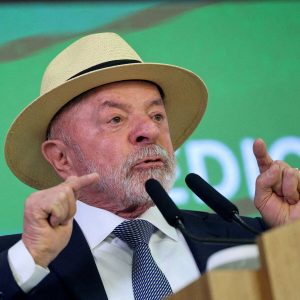
In the shadow of escalating U.S. pressure and the designation of Brazil’s most powerful criminal organizations as Foreign Terrorist Organizations, President Luiz Inácio Lula da Silva is accelerating Mercosur’s outreach to Asia. Talks with Japan have formally launched. A working group aims to revive stalled negotiations with South Korea by December. And after a phone call with Xi Jinping, Lula is pushing to fast-track a potential free-trade agreement with China. Officials frame this as smart diversification toward the “most dynamic markets on the planet.” From a conservative perspective, however, the timing, the partners, and the broader context demand far greater scrutiny.
The economic case is real. Mercosur seeks new buyers for soy, beef, minerals, and other exports amid U.S. tariffs and global fragmentation. Japan, South Korea, and China offer scale. Critical minerals cooperation and value-chain integration could benefit Brazilian industry. Yet trade policy never exists in a vacuum—especially when the same government has spent months resisting the U.S. decision to label the Primeiro Comando da Capital (PCC) and Comando Vermelho as terrorist groups.
Lula’s Record and the PCC Reality
Lula’s prior corruption convictions in the Lava Jato investigations were later annulled by Brazil’s Supreme Court on procedural grounds—jurisdiction and judicial bias claims—not a full vindication on the facts. That history fuels legitimate doubt about institutional judgment when high-stakes foreign policy intersects with organized crime. The PCC is no ordinary gang. It has evolved into one of the Western Hemisphere’s largest transnational criminal organizations, with operations spanning more than 20 countries, sophisticated money-laundering networks, and documented partnerships involving Chinese criminal groups for electronics-based laundering schemes and precursor chemicals. U.S. authorities have sanctioned related networks exploiting American financial systems, and Brazilian police have dismantled Chinese-linked operations moving hundreds of millions of reais tied to the PCC.
Lula’s government responded to the FTO designation by invoking sovereignty, rejecting any suggestion of external interference, and insisting these groups are profit-driven criminals rather than ideological terrorists. Fair enough on the definitional point. But sovereignty is not a shield against reality. The designation expands U.S. tools—sanctions, secondary pressure on banks and logistics firms, enhanced due diligence—that will raise compliance costs for Brazilian companies regardless of rhetoric. Opposing the label while simultaneously deepening commercial ties with jurisdictions where Chinese criminal networks thrive invites questions about priorities.
The China Factor and Crime Facilitation Risks
Closer Mercosur-China integration is the most sensitive element. China is already Brazil’s top trading partner. Expanding market access, investment, and even short-term visa waivers increases the volume of people, goods, and capital flowing both ways. Chinese criminal networks have expanded across Latin America precisely alongside legitimate trade and investment. They specialize in low-violence methods—corruption, patronage, underground banking, and trade-based laundering—that mesh efficiently with groups like the PCC. Public cases already show Chinese e-commerce platforms and electronics distribution used to clean PCC drug proceeds.
No smoking-gun evidence proves the Asia deals are designed to “appease” the FTO designation or shield criminal interests. Trade talks predate the May 2026 designation and respond to genuine commercial pressures, including U.S. tariffs. Still, conservatives are right to ask hard questions: What security and anti-money-laundering safeguards will accompany these agreements? Will origin rules and customs cooperation be robust enough to prevent criminal exploitation of new corridors? Does the push for flexibility with China prioritize economic gains over the need to disrupt transnational networks already operating inside Brazil?
History shows criminal organizations adapt faster than bureaucracies. Freer trade without parallel hardening of financial intelligence, port controls, and international law-enforcement cooperation risks creating new arteries for the very groups the FTO designation targets. Brazil’s own authorities continue to combat the PCC domestically—recent large-scale operations against laundering and fuel schemes prove capacity exists. That capacity must be matched by realism about external partners.
A Conservative Path Forward
Trade diversification is not inherently suspect. Dependence on any single market, including the United States, carries costs. Japan and South Korea are democratic, rule-of-law partners whose deals pose fewer systemic risks. China is a different proposition: an authoritarian power whose commercial expansion has repeatedly coincided with the growth of opaque networks that facilitate crime and influence.
Congress, opposition parties, and civil society should demand transparency on the negotiating mandates, security annexes, and due-diligence standards. Brazil should deepen practical cooperation with the United States against the PCC and CV even while disagreeing on the terrorist label—intelligence sharing, asset recovery, and joint disruption of money flows serve Brazilian citizens first. At the same time, any Asia agreement must include enforceable clauses on organized crime, beneficial ownership transparency, and rapid information exchange.
Lula’s government insists national sovereignty is non-negotiable. True sovereignty includes the capacity to protect the financial system, ports, and communities from transnational predators. Opening new commercial doors while downplaying the scale of the PCC threat and the documented role of Asian criminal networks is not strategic autonomy—it is a calculated risk that could leave Brazil more exposed, not less. Conservatives should insist that economic opportunity never come at the expense of security. The Brazilian people deserve both.


