

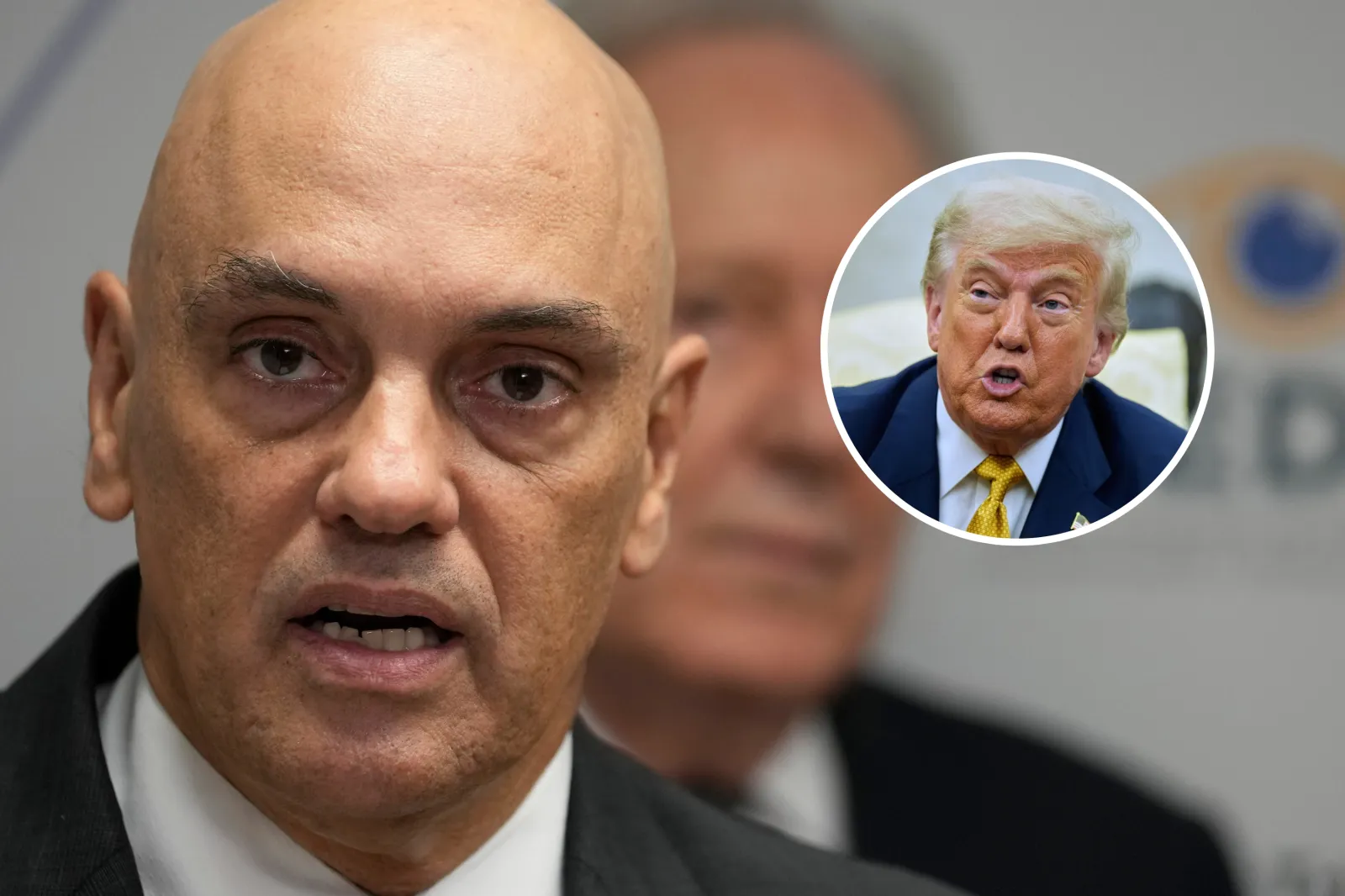

Brazilian Judge Alexandre de Moraes Faces U.S. Lawsuit as Free Speech Battle Intensifies
By Hotspotnews
In a significant escalation of the global fight against government censorship, Trump Media and Rumble have taken the battle directly to a Brazilian Supreme Court justice in an American courtroom. The lawsuit, filed in Florida federal court, targets Justice Alexandre de Moraes for his aggressive campaign of platform bans and content suppression that has silenced dissenting voices in Brazil.
Martin De Luca, the U.S. lawyer representing the platforms, has delivered pointed and updated remarks in recent Brazilian television segments, exposing ongoing cracks in the Brazilian government’s defense strategy. De Luca highlighted not only the initial failure of Brazilian authorities to formally defend Moraes personally—despite earlier commitments from the Attorney General’s Office (AGU)—but also recent developments where the AGU intervened as a state party. While a Florida court permitted Brazil’s participation, De Luca stressed that this does not constitute a full personal defense for Moraes himself, leaving the justice exposed to potential default judgment (“revelia”) if he fails to respond adequately. He described Moraes’ actions as fundamentally “indefensible” under U.S. legal standards.
For years, Moraes has wielded extraordinary power from Brazil’s Supreme Federal Court (STF), issuing orders that force social media companies to remove accounts, block content, and even suspend operations—often without due process or transparent justification. Critics, including many conservatives worldwide, view this as classic judicial authoritarianism: a single unelected judge acting as prosecutor, judge, and executioner in matters of political speech. His targets have frequently included supporters of former President Jair Bolsonaro and those questioning government narratives on elections, COVID policies, or cultural issues.
This isn’t mere regulatory oversight—it’s an assault on the fundamental human right to free expression. In the United States, where the First Amendment still holds strong, platforms like Truth Social (under Trump Media) and the free-speech-oriented Rumble represent a bulwark against the kind of top-down control increasingly common in leftist strongholds abroad. By suing in Florida, these companies are asserting that foreign judges cannot simply reach across borders to dictate terms to American businesses and their users.
De Luca’s latest observations underscore the procedural weaknesses and inconsistencies in Moraes’ position. The AGU’s intervention, while a tactical move by Brasília, appears more focused on shielding the Brazilian state than vigorously defending the justice’s personal conduct—fueling questions about confidence in his overreach. This development strengthens the plaintiffs’ arguments, potentially leading to rulings that limit extraterritorial censorship attempts and set a precedent for other tech platforms facing similar intimidation.
The broader context is unmistakable: globalist elites and activist judges are working overtime to police thought and speech, especially when it challenges progressive orthodoxies. In Brazil, this has manifested as raids, arrests, and digital blackouts aimed at conservatives. Similar patterns appear in Europe with “hate speech” laws and pressure on American companies to comply with foreign standards that would never survive U.S. constitutional scrutiny.
Supporters of robust free speech have long warned that allowing one nation’s judiciary to bully U.S.-based platforms creates a dangerous precedent. If Moraes succeeds unchecked, it empowers every foreign authority to demand content moderation aligned with their political preferences. The Trump Media and Rumble lawsuit pushes back, defending not just their business interests but the principle that open discourse strengthens democracy.
As this case unfolds in Florida—with fresh scrutiny on service, responses, and the limits of foreign judicial power—it serves as a reminder that the defense of liberty requires vigilance, both at home and against overreaching forces abroad. Americans should watch closely: victories here bolster the global resistance to censorship, while complacency invites more of the same. Moraes’ gambit may finally meet the limits of American justice, where the Constitution still prioritizes speech over state control.