


Pope Francis, Advocate for the Marginalized, Dies at 88, Leaving U.S. Catholic Church at a Crossroads
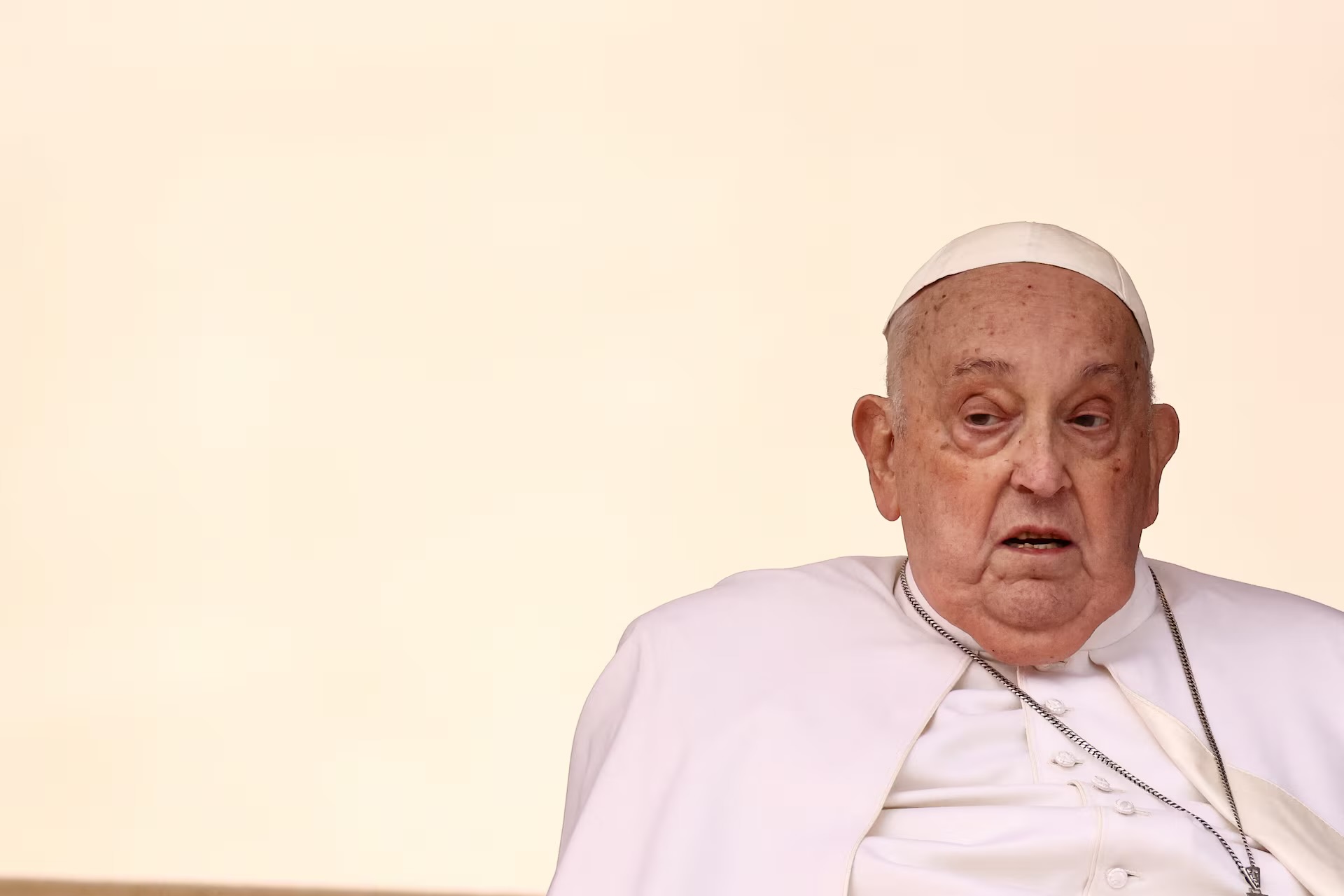
VATICAN CITY — Pope Francis, the first Latin American pontiff and a transformative figure in the Roman Catholic Church, died on Easter Monday, April 21, 2025, at 7:35 a.m. CEST at his residence in the Vatican’s Casa Santa Marta. He was 88. Cardinal Kevin Farrell, the Vatican’s camerlengo, announced the death, stating, “His entire life was dedicated to the service of the Lord and His Church. He taught us to live the values of the Gospel with fidelity, courage, and universal love, especially in favor of the poorest and most marginalized.
The announcement came less than 24 hours after Francis, despite severe health challenges, made a final public appearance in St. Peter’s Square on Easter Sunday, April 20, 2025, blessing thousands from his popemobile. Earlier that morning, he held a brief private meeting with U.S. Vice President J.D. Vance, gifting him chocolate Easter eggs for his children, a Vatican tie, and rosaries. Vance, reflecting on the encounter, noted on X, “I was happy to see him yesterday, though he was obviously very ill. My heart goes out to the millions of Christians all over the world who loved him.
Francis’s death follows a 38-day hospitalization at Rome’s Gemelli Hospital for double pneumonia, from which he was discharged on March 23, 2025. His chronic lung issues, stemming from a partial lung removal in his youth, and recent mobility challenges requiring a wheelchair, marked a frail final chapter for the pontiff who led the world’s 1.4 billion Catholics since 2013.[](https://www.theguardian.com/world/2025/apr/21/pope-francis-dies)[](https://www.nytimes.com/live/2025/04/21/world/pope-francis-updates-vatican)
Born Jorge Mario Bergoglio in Buenos Aires, Argentina, Francis was the first Jesuit pope and the first non-European pontiff in over a millennium. His papacy was defined by a push for inclusion, championing migrants, the poor, and the environment, often clashing with conservative factions. His outspoken criticism of the Trump administration’s immigration policies, including calling mass deportations a “disgrace,” underscored tensions with figures like Vance, a Catholic convert who defended prioritizing national citizens. Their Easter meeting, while cordial, followed Vatican discussions where migration policy was a point of contention.[](https://www.reuters.com/world/pope-francis-has-died-vatican-says-video-statement-2025-04-21/)[](https://www.aljazeera.com/news/2025/4/21/pope-francis-dead-at-88-vatican-reports)
Impact on U.S. Catholic Church Politics
Francis’s death leaves the U.S. Catholic Church, representing about 66.8 million faithful, at a pivotal moment. The church is politically polarized, with 47% of Catholics identifying as Democrats and 46% as Republicans. Key issues include:
– Immigration: Francis’s advocacy for migrants aligned with the U.S. Conference of Catholic Bishops (USCCB), which recently ended a federal partnership to serve refugees due to Trump administration funding cuts. His February 2025 letter to U.S. bishops, urging rejection of anti-immigrant narratives, clashed with conservative Catholics, including Vance, who cited *ordo amoris* to prioritize citizens.
– Abortion: The USCCB’s focus on abortion as the “preeminent” issue has aligned some Catholics with Republican policies, creating friction with Democratic-leaning Catholics, 77% of whom support legal abortion. Debates over denying Communion to pro-choice politicians like President Joe Biden persist, with no unified stance.[](https://www.npr.org/2025/04/21/1013050313/pope-francis-dead)
– Polarization and Traditionalism: A surge in conservative, traditionalist Catholicism among younger priests and laity, favoring Latin Mass and strict doctrine, contrasts with Francis’s inclusive vision. His progressive stances, including outreach to LGBTQ Catholics, drew criticism from conservatives like Archbishop Carlo Maria Viganò, who accused him of a “gay-friendly agenda.”[](https://www.npr.org/2025/04/21/1013050313/pope-francis-dead)
The upcoming conclave, involving about 138 cardinals (80% appointed by Francis), will determine whether the church continues his progressive trajectory or shifts toward conservatism. Potential successors include progressive Italian Cardinal Matteo Zuppi, Vatican Secretary of State Pietro Parolin, and Filipino Cardinal Luis Antonio Tagle.[](https://www.theguardian.com/world/2025/apr/21/pope-francis-dies)
Legacy and Transition
Francis simplified papal funeral rites in 2024, emphasizing faith over worldly power, and requested burial at the Basilica of Santa Maria Maggiore rather than St. Peter’s Basilica. A nine-day mourning period (*novemdiales*) begins, with his funeral expected within four to six days. Cardinals will convene in Rome for a conclave to elect the 268th pope, a process likely to take two to three weeks.
In the U.S., reactions reflect the church’s divide. Conservative Catholics on X expressed hope for a return to traditionalism, while others mourned Francis as “everyone’s pope” for his humility. The USCCB, navigating funding cuts and internal divisions, faces pressure to bridge partisan gaps as it engages a new pontiff.
Francis’s final *Urbi et Orbi* message, read by an aide on Easter Sunday, called for hope, peace in global conflicts, and care for the marginalized, echoing his lifelong mission. As mourners gather in St. Peter’s Square, his legacy as a “people’s pope” endures, challenging the U.S. Catholic Church to reconcile its fractures in a polarized era.nytimes.
*Sources: Vatican News, The New York Times, Reuters, CNN, The Guardian, and posts on X.*


