

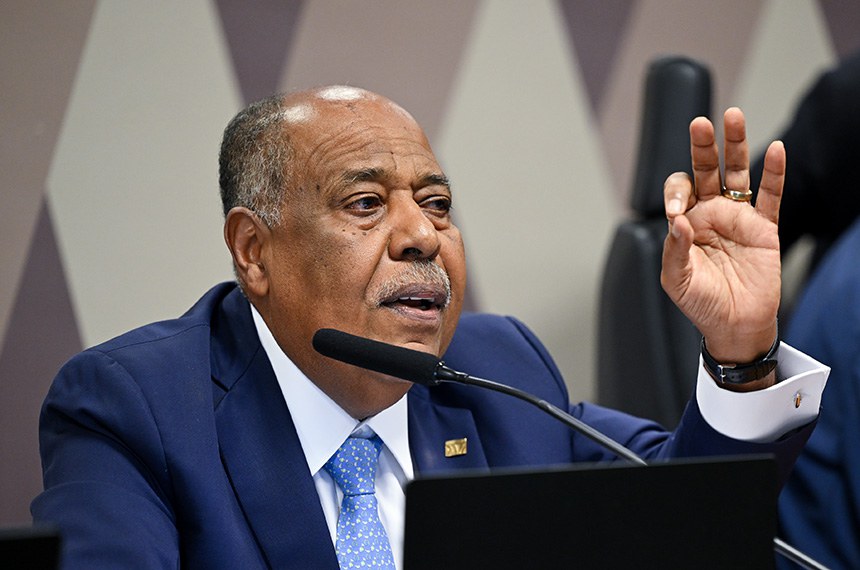

Senate Betrays Voters Again: Why Reward Benedito Gonçalves with More Power? Say NO to Lula
By Hotspotnews
In a nation desperate for real change, Brazil’s Senate has delivered yet another slap in the face to millions of voters who have demanded accountability from an increasingly politicized Judiciary. The approval of Minister Benedito Gonçalves for the powerful role of Corregedor Nacional de Justiça in the CNJ sends a clear message: the old guard remains firmly in control, and “mission accomplished” means never having to face consequences.
Gonçalves, a key figure in the Superior Electoral Court (TSE) during the contentious 2022 elections, has become a symbol of everything wrong with Brazil’s institutions. He famously declared “Missão dada, missão cumprida” to none other than Alexandre de Moraes during Lula’s inauguration — a phrase now etched in the memory of conservatives as an admission of coordinated action. Critics rightly point to his involvement in decisions that sidelined opposition voices, enforced controversial rulings on ineligibility, and backed sweeping censorship measures. For millions of Brazilians who question the integrity of that electoral process, elevating him is not neutral career progression. It is institutional reinforcement of the very problems they want fixed.
If the Senate truly represented the Brazilian people — the same people who have voiced frustration over judicial overreach, asymmetric application of the law, and the weaponization of institutions against one side of the political spectrum — why fast-track this choice? The CCJ vote sailed through 21 to 5, with the full Senate plenary delayed only by quorum issues rather than principled opposition. This is not governance by the voters. It is governance by the club in Brasília, where autonomy of the Judiciary has become code for zero accountability and self-preservation.
Voters across Brazil have repeatedly signaled they want balance restored. They want an end to the “dictatorship of the toga,” where select ministers appear to act as both judge and political actor. They want transparency, not more power concentrated in the hands of those who already wielded it controversially in electoral matters. Instead, the Senate opts for continuity. A minister moving from the TSE — where he helped shape post-election enforcement — to the CNJ, which oversees disciplinary actions against judges nationwide, looks less like reform and more like mission extension. The watchdog position now goes to someone many see as part of the team that needed watching.
This pattern reveals a deeper rot: the disconnect between the Brazilian people and their so-called representatives. While polls and street sentiment show widespread distrust in how power is exercised in the courts, the Senate prioritizes institutional harmony with the STF and STJ over listening to the electorate. Centrist and government-aligned senators avoid rocking the boat, fearing confrontation with powerful ministers. The result? The same faces, the same networks, the same agenda — dressed up as “experience” and “stability.”
True conservatives and liberty-minded Brazilians understand what this means. Without genuine checks on judicial power, without term limits, transparent selection processes, or real legislative pushback, the call for change remains just talk. Rewarding Benedito Gonçalves with expanded authority over the entire magistrature does not heal divisions or restore faith in democracy. It deepens the cynicism that the system is rigged to protect itself.
The Brazilian people deserve better than recycled missions and elite protection pacts. If the Senate claims to serve the voters, it is past time they proved it — starting by rejecting the status quo and demanding real institutional renewal. Anything less is a betrayal of the mandate for change that so many Brazilians have clearly expressed.