

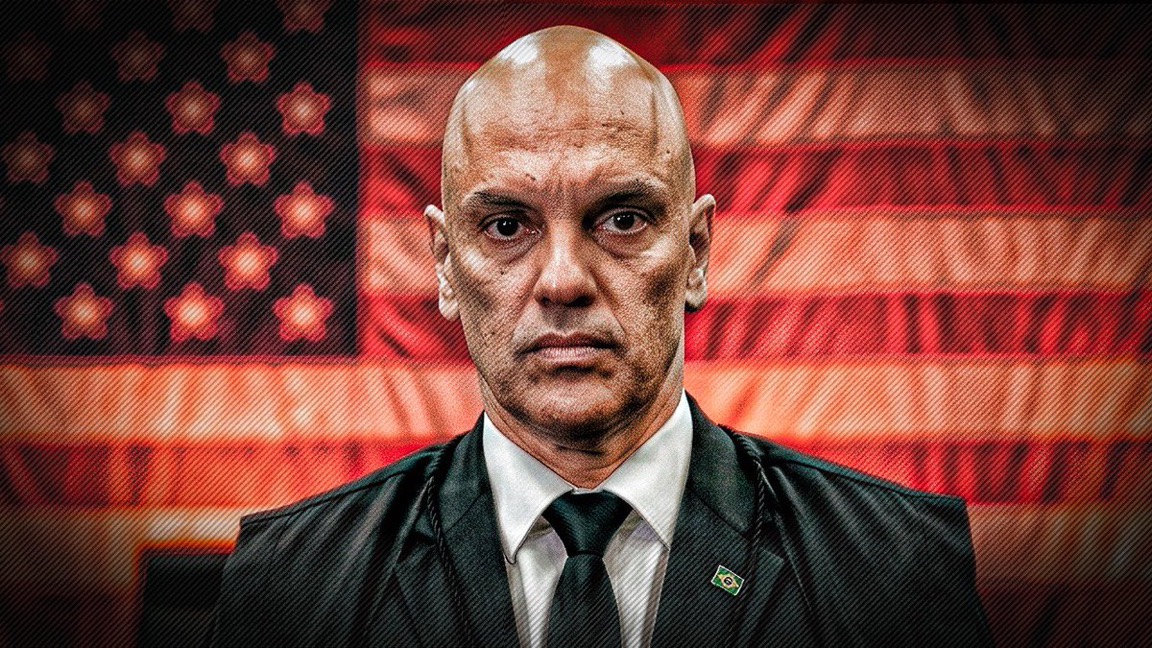

STF’s Judicial Tyranny: Alexandre de Moraes Axes Four Cops 22 Years Later for Roughing Up Theft Suspects on the Street
By Hotspotnews
Brazil’s out-of-control Supreme Court has delivered yet another slap in the face to law enforcement and common sense. On April 22, 2026, Minister Alexandre de Moraes unilaterally ordered the immediate dismissal of four Santa Catarina Military Police officers for actions taken back on the night of June 24, 2004—twenty-two excruciating years ago. The “crime”? Using physical force against two young theft suspects, ages 16 and 18, in Rio Negrinho, a modest municipality in northern Santa Catarina.
According to the case, the officers approached the youths near BR-280 in the Vila Nova neighborhood around 11:15 p.m. after a suspected theft attempt. The suspects were allegedly assaulted in a manner later classified as torture under Brazil’s Law 9.455/1997. The officers were eventually convicted in 2016 and handed light sentences—between two years and four months to two years and eight months in an open regime. They served their time without disappearing into prison hell. The state Tribunal de Justiça de Santa Catarina (TJSC), which actually understands local realities, reviewed the administrative consequences and rightly decided the officers could keep their positions based on proportionality, their service records, and the practical needs of public security. The Military Police of Santa Catarina agreed. Case closed. Or so it should have been.
Enter Alexandre de Moraes, the judicial strongman who never misses an opportunity to flex federal power. Responding to a recurso extraordinário pushed by the Public Ministry of Santa Catarina, Moraes annulled the TJSC’s decision in a single stroke. He declared the officers’ conduct “illegitimate, immoral, and abusive,” invoked ironclad STF precedent that makes loss of public office an automatic, non-negotiable consequence of any torture conviction, and ordered their immediate expulsion from the force. No proportionality, no second chances, no consideration for two decades of subsequent service. Just raw, retroactive punishment.
This is not the rule of law. This is judicial sadism dressed up as accountability.
Let’s be brutally honest about the context. Brazil’s Military Police operate in a battlefield, not a seminar room. They confront armed drug gangs, repeat offenders, and street criminals who exploit every weakness in the system. A late-night stop of suspected thieves in 2004 wasn’t a tea party. Suspects resist, fight back, and test officers daily. What elites in Brasília label “torture” is often the gritty reality of street policing—force applied when polite requests get you killed. These four officers weren’t sadistic monsters; they were doing a dangerous job in an era when crime was already spiraling. They then served honorably for another 22 years, protecting citizens while the courts coddled actual predators with early releases, reduced sentences, and endless appeals.
The hypocrisy burns. While Moraes obsesses over old police cases, Brazil bleeds from violent crime waves, favela wars, and organized narco-terror. Murderers and rapists enjoy “human rights” protections that seem designed to frustrate victims and officers alike. Yet four cops who handled two thieves get career death two decades later. The selectivity mirrors the STF’s broader pattern: relentless persecution of January 8 protesters, political dissenters, and anyone challenging institutional power, paired with indifference to the daily carnage on Brazil’s streets. Federal overreach into state police discipline tramples federalism and local knowledge. Santa Catarina’s authorities lived with these officers and their context. Moraes, safe in his Brasília bubble, clearly doesn’t—and doesn’t want to.
Eduardo Bolsonaro captured the seething public rage with sharp sarcasm on X, exposing how this ruling insults every Brazilian who expects police to deter crime rather than coddle suspects. Good cops get purged. Criminals grow bolder. The message from the STF couldn’t be clearer: better a bruised thief than a confident officer.
This case lays bare the deeper cancer conservatives have diagnosed for years. Concentrated, unaccountable power in the hands of a few ministers has turned the judiciary into a political weapon. “Human rights” rhetoric protects the worst elements of society while demoralizing the thin blue line that stands between civilization and chaos. Officers risk their lives for modest pay, face internal affairs witch hunts, and now retroactive career destruction. Who in their right mind would join the force under these conditions?
Brazil urgently needs sweeping reform: constitutional limits on individual ministerial power, restoration of genuine federalism in security matters, mandatory minimums for violent criminals, and a justice system that prioritizes victims, communities, and protectors over ideological score-settling. Until then, the STF’s war on police will continue eroding morale, emboldening thugs, and leaving honest citizens more vulnerable than ever.
The thin blue line is being deliberately thinned. Ignoring this reality won’t restore order—it will accelerate the collapse. Enough is enough.