


The Banco Master Scandal: A Web of Fraud, Judicial Conflicts, and the Urgent Need for Reform
By Hotspotnews -January 24, 2026
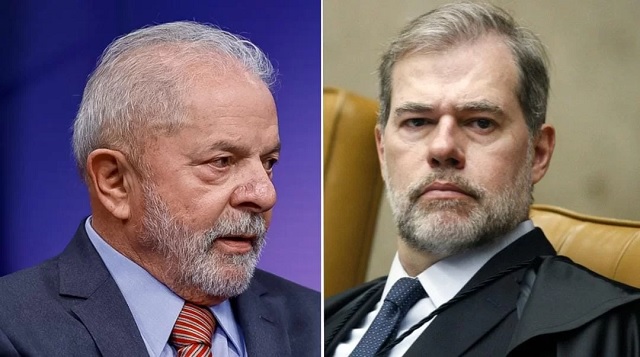
In a nation already weary of entrenched corruption and institutional favoritism, the Banco Master fraud scandal stands as a glaring indictment of Brazil’s elite power structures. At the center of this multi-billion-dollar scheme sits Supreme Court Justice Dias Toffoli, whose questionable decisions and personal ties have fueled accusations of shielding the powerful from accountability. This case, involving alleged money laundering, asset hiding, and inflated financial returns through entities like Reag Investimentos, exposes the dangers of unchecked judicial authority—particularly when it intersects with family connections and political appointments. As conservatives, we champion the rule of law, free markets, and personal responsibility; here, we see a perversion of those principles, with ordinary Brazilians left to foot the bill for elite malfeasance. Yet, a recent U.S. court ruling offers a glimmer of hope, reinforcing international standards against fraud and countering domestic delays.
The scandal revolves around Banco Master (formerly Banco Máxima), a mid-sized lender accused of orchestrating one of Brazil’s largest banking frauds. Investigators allege the bank inflated its balance sheet with fictitious credit portfolios, funneled money through suspect investment funds managed by Reag Investimentos, and laundered proceeds tied to organized crime in sectors like fuel distribution. Returns on some Reag funds reportedly reached absurd levels—up to 7 million percent in 2019—through artificial pricing and hidden asset schemes involving family members of key players. The fallout has ensnared high-profile figures, including Banco Master CEO Daniel Vorcaro and businessman Nelson Tanure, while spotlighting Toffoli’s role in overseeing probes despite apparent conflicts. Public outrage, amplified by a January 23 Globo News exposé, underscores a judiciary perceived as complicit in impunity.
To understand the depth of this betrayal, consider the detailed timeline of events, which reveals a pattern of regulatory action thwarted by judicial intervention:
– **August 28, 2025**: Federal Police launch raids targeting organized crime in the fuel sector, uncovering links to Reag Investimentos. This operation exposes money-laundering schemes that later tie into Banco Master’s operations, highlighting how criminal networks allegedly used investment funds to clean illicit gains.
– **September 9, 2025**: A proposed merger between Banco Master and state-owned Banco de Brasília (BRB) collapses amid scrutiny over ties to Reag and ongoing money-laundering probes. This marks an early red flag, as regulators begin questioning the bank’s financial health.
– **November 18, 2025**: Brazil’s Central Bank decrees the extrajudicial liquidation of Banco Master and its affiliates, citing “grave violations” including fraudulent management and balance-sheet manipulation estimated at R$12.2 billion. This decisive action aims to protect depositors and dismantle the fraud network.
– **Late November 2025**: Justice Dias Toffoli, recently seen traveling with Augusto de Arruda Botelho—a lawyer representing a Banco Master director—becomes the case’s rapporteur at the Supreme Federal Court (STF), despite no jurisdictional privilege for the involved parties. He immediately imposes absolute secrecy on the files, limiting access and raising suspicions of shielding.
– **December 2025**: Toffoli issues a series of atypical rulings, including interfering in a Central Bank hearing with CEO Daniel Vorcaro and ordering a new police operation for searches and seizures. Crucially, he seals the seized materials (including 39 cell phones and 31 devices) and sends them directly to the STF, denying Federal Police access while granting it to the Prosecutor General’s Office (PGR). These moves delay investigations and spark criticism for overreach.
– **January 5, 2026**: The Federal Court of Accounts (TCU) orders an inspection into the Central Bank’s liquidation procedures, probing potential irregularities in the process that led to Banco Master’s shutdown.
– **January 6, 2026**: The STF freezes assets belonging to businessman Nelson Tanure, Vorcaro’s brother-in-law, amid evidence of fraudulent management and money laundering.
– **January 7, 2026**: TCU President Bruno Dantas clarifies that only the STF can reverse the Central Bank’s liquidation decision, emphasizing the audit court’s limited authority and pushing back against challenges to the regulator’s actions.
– **January 8, 2026**: A TCU judge’s single-ruling order for document inspection is challenged by the Central Bank, leading to a full-court decision on the matter.
– **January 9, 2026**: In a pivotal international development, U.S. Bankruptcy Judge Scott M. Grossman of the Southern District of Florida recognizes Brazil’s liquidation proceedings for Banco Master. Despite objections from Vorcaro, who argued the move was premature amid TCU scrutiny, Judge Grossman rules that the Brazilian liquidation “shall be given full force and effect and be binding on and enforceable in the United States against all persons and entities.” This freezes Banco Master’s U.S. assets, preventing dissipation and giving the liquidation global enforcement power. The decision bolsters the Brazilian process by closing off escape routes for hidden funds, countering domestic delays, and ensuring fraudsters cannot exploit international borders to evade justice.
– **January 12, 2026**: The Central Bank links 36 firms to the R$11.5 billion fraud, identifying heavy involvement from Reag-managed funds like Astralo 95 and Reag Growth 95.
– **January 13, 2026**: Revelations show Banco Master lent millions to companies tied to Reag’s suspect funds, deepening the money-laundering allegations.
– **January 14, 2026**: Federal Police expand raids, targeting Vorcaro, Tanure, and others. Finance Minister Fernando Haddad warns this could be Brazil’s largest banking fraud.
– **January 15, 2026**: The Central Bank liquidates Reag Investimentos (now CBSF) for ties to the Master fraud. Toffoli’s ruling further delays police access to evidence, prompting PGR and police petitions for intervention.
– **January 16, 2026**: Reag’s asset manager exits amid the probe. Toffoli appoints experts to analyze seized materials, maintaining control over the evidence.
– **January 19, 2026**: Criticism mounts against Toffoli’s handling, with authorities decrying his decisions as obstructive.
– **January 21, 2026**: The Central Bank liquidates Will Bank, a Master affiliate, amid growing concerns over regulatory pressure.
– **January 22, 2026**: STF ministers resist reversing the liquidation. Reports expose Toffoli’s family ties to the Taiayá resort, linked to Banco Master lawyers and funds via Harley investments. Senators file for Toffoli’s impeachment.
– **January 23, 2026**: Under pressure, Toffoli considers remanding the case to lower courts. A Globo News segment airs, detailing his conflicts—including resort connections and decisions delaying probes—while revealing schemes using family to hide assets.
– **January 24, 2026**: The PGR rejects recusal requests against Toffoli, citing insufficient evidence, despite public cynicism over judicial impunity.
This timeline illustrates a stark contrast: swift regulatory and police action undermined by Toffoli’s interventions, which conservatives view as emblematic of leftist judicial activism. Appointed by former President Lula da Silva, Toffoli’s history of suspending Lava Jato investigations and now this case raises alarms about favoritism toward the powerful. His family’s resort links—sold to a JBS lawyer shortly before key rulings—smack of cronyism, eroding trust in institutions meant to uphold justice.
The U.S. judge’s decision is a conservative win for international rule of law. By recognizing the liquidation, it thwarts attempts to hide assets abroad, accelerating asset recovery and creditor protections in Brazil. This external pressure exposes the weaknesses in domestic processes, where Toffoli’s delays could have allowed further evasion. Without such global teeth, the scandal might drag on indefinitely, costing taxpayers billions.
Brazil deserves better: a judiciary free from personal entanglements, accountable to the people, not the elite. Conservatives must push for reforms—stronger recusal rules, term limits for justices, and robust anti-corruption measures—to prevent future scandals. The Banco Master case isn’t just about fraud; it’s a battle for the soul of Brazilian democracy. Let this be the catalyst for real change.
Source: Timeline By @Grok X AI