



The Censor Faces Judgment: Alexandre de Moraes and Brazil’s Banco Master Reckoning
By Hotspotnews
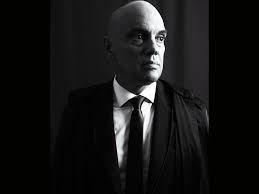
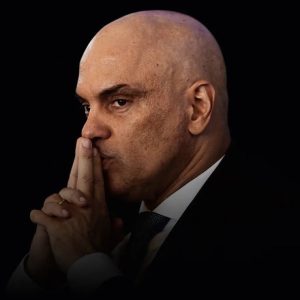
Alexandre de Moraes spent years presenting himself as the indispensable guardian of Brazilian democracy. From the bench of the Supreme Federal Court he led investigations that sent former President Jair Bolsonaro to prison, imposed sweeping speech restrictions, and even ordered the nationwide blocking of X. Now the same justice sits at the center of the country’s largest banking fraud scandal in a generation. The $10 billion collapse of Banco Master has produced documents, metadata, and text messages that raise serious questions about whether Moraes maintained an unusually close relationship with the bank’s owner while his wife’s law firm collected tens of millions of reais.
Banco Master was liquidated by Brazil’s Central Bank in November 2025 after regulators uncovered what investigators describe as a Ponzi-style scheme built on fraudulent financial products. Owner Daniel Vorcaro was arrested while attempting to leave the country. The hole left behind is estimated in the tens of billions of reais and has already drawn in politicians, central-bank officials, and members of the judiciary. What has turned a financial crime into an institutional crisis is the paper trail connecting Vorcaro to Moraes.
Federal Police recovered Vorcaro’s phone and documented more than 50 messages sent to a number associated with Moraes between late 2023 and November 2025. In one exchange days before his arrest, Vorcaro asked whether he needed to leave the country. Investigators also identified multiple in-person meetings. Separately, metadata on a legal-services contract between Banco Master and Barci de Moraes Advogados—the firm run by the justice’s wife, Viviane Barci de Moraes—shows the document was last edited under a profile registered to “Ministro Alexandre de Moraes.” The contract was valued at approximately R$131 million (roughly $24–25 million), with monthly installments in the millions of reais. Payments continued until the bank’s collapse. Moraes has denied any improper conduct, stating he never judged cases involving the bank and that conversations concerned other matters such as international sanctions. He has accused fellow Justice André Mendonça, a Bolsonaro appointee who unsealed the police report, of abusing his authority.
The timing could hardly be more explosive. Brazil’s presidential election is weeks away. The same court that Moraes has used to police political speech is now holding an unprecedented plenary session to decide whether one of its own members should face a formal investigation. Chief Justice Edson Fachin has tried to contain the damage by unsealing thousands of pages and transferring parts of the case, yet the public clash between Moraes and Mendonça has already exposed deep fractures inside the STF. President Luiz Inácio Lula da Silva publicly called for full disclosure. Opposition figures have seized on the revelations as evidence that the court has become a political actor rather than a neutral referee.
The conservative critique is straightforward. An unelected justice accumulated extraordinary power—ordering content takedowns, investigating sitting lawmakers, and shaping the electoral environment—while family financial interests intersected with a now-failed bank that cultivated influence across Brasília. The same standard Moraes applied to others is now being applied, however imperfectly, to him. Whether the court ultimately opens an inquiry or buries the matter will tell Brazilians more about the health of their institutions than any campaign speech.
The Banco Master affair is not a partisan morality play. Figures on both sides of the political aisle received payments or favors from Vorcaro. That fact does not excuse the appearance of conflict at the highest level of the judiciary. When a justice who spent years lecturing the country about the rule of law finds his own family’s contract and personal communications under scrutiny, the public is entitled to answers rather than institutional self-protection.
#BancoMaster #Moraes #STF #BrazilElection #RuleOfLaw
Sources: Reuters reporting on the September 15, 2026 Supreme Court session and unsealed Federal Police documents; Financial Times coverage of the scandal’s expansion to the court; Brazilian outlets including O Globo, Folha de S.Paulo, and Valor Econômico on the contract metadata, meeting records, and text messages; Central Bank liquidation records from November 2025.


