




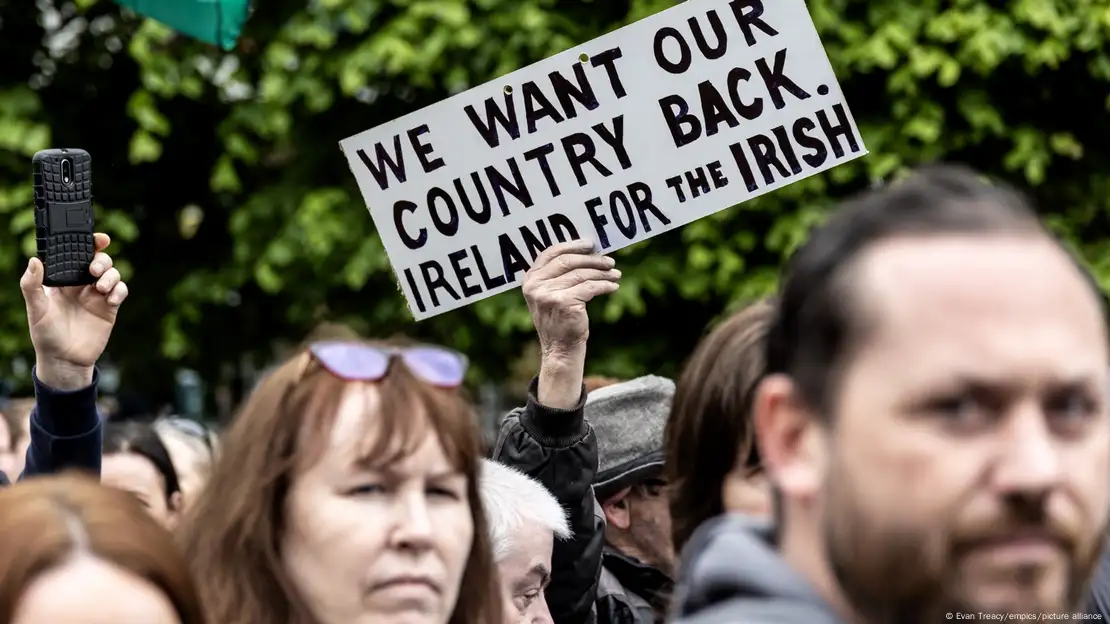
The Erosion of Ireland: A Call to Preserve Our Heritage
By Hotspotorlando News
As the clock strikes 1:53 AM EDT on June 21, 2025, the image of Ireland from above—a verdant emerald isle surrounded by the deep blue Atlantic—stirs a profound sense of pride and urgency. This land, shaped by centuries of struggle, sacrifice, and resilience, is now at a crossroads. The recent outcry from voices like Michael O’Keeffe and others on social media reflects a growing sentiment: Ireland is slipping away, transformed by forces that threaten its cultural identity and the very fabric of its society.
The concerns are palpable. Streets once lined with the familiar rhythm of Irish life are now dotted with kebab shops and migrant-run barbershops. Groups of foreign men loiter on corners, while the air carries the hum of countless unfamiliar languages. Schools enforce diversity curricula, sidelining the rich Gaelic heritage that defines us. Women and girls report feeling unsafe, a stark contrast to the peace our ancestors fought to secure. Migrant camps spring up where Irish families once dreamed of homes, and hotels—meant to host visitors—now serve as permanent hubs for newcomers. Violent crime rises, with migrants comprising over 20% of the prison population, and cheap foreign labor dominates job sites, displacing local workers.
This is not the Ireland our forefathers bled for during the Easter Rising or the Troubles. It is a nation under siege by unchecked immigration, orchestrated by a globalist agenda that prioritizes political correctness over cultural preservation. The Irish people, burdened with guilt for historical sins they did not commit—despite our own history of colonization—find themselves a persecuted class in their own land. The state’s purchase of hotels for migrant housing and the influx of asylum seekers, many without ties to this soil, underscore a betrayal by leaders who have sold our homeland for personal gain.
Conservatives must stand firm. The notion that legal immigration and tax contributions grant a right to our land is a fallacy. Ireland’s beauty, peace, and culture are not commodities to be shared with those who have no stake in our history. The data speaks for itself: the rapid demographic shift threatens to erase the Irish identity, reducing us to a footnote in a globalist narrative. If European-descended peoples, already a mere 9% of the world’s population, lose their ancestral homelands, there can be no recovery.
The time for complacency is over. A national protest scheduled for June 22nd in Dublin’s Garden of Remembrance signals an awakening. Men, in particular, must reclaim their duty to protect women, children, and the nation’s future. This is not about xenophobia but about survival—preserving a way of life forged through millennia. Those who shy away from hard truths or offensive language must step aside. Leadership demands courage, not cowardice.
Ireland’s fight is not isolated. Similar battles rage across the UK, Canada, and beyond, where globalist policies erode national sovereignty. Yet, as a small nation, Ireland’s transformation could be complete within five years if this tide is not turned. We must reject the EU’s Pact on Migration and Asylum, opting instead for a sovereign immigration policy that prioritizes our people. The Irish spirit, tempered by hardship, is our greatest asset. Let it rise again to reclaim our island—not as a relic, but as a living testament to our enduring legacy.
In the face of this crisis, every Irishman and woman must ask: Will we surrender our birthright, or will we fight to ensure Ireland remains Ireland? The answer lies in our hands, and the hour is now.
#### Analysis of Immigration Policies in the Context of Ireland and Broader Trends
To deepen this call to action, let’s examine Ireland’s immigration policies, their legal framework, implementation, and socioeconomic impacts, while addressing the broader trends that amplify the concerns voiced online.
##### Legal Framework and EU Influence
Ireland, as an EU member, operates under the Treaty on the Functioning of the European Union (TFEU), particularly Articles 79 and 80, which cede significant control over immigration to the EU. This includes setting conditions for legal entry, residence, and family reunification for non-EU nationals, alongside efforts to combat irregular immigration through returns. The 2015 European Agenda on Migration and the 2016 guidelines on regular migration reflect the EU’s push for a balanced approach, promoting legal pathways while managing irregular flows. However, integration measures remain a national responsibility, leaving Ireland to navigate a patchwork system that often feels imposed rather than tailored.
Critics, including those on X, argue that this framework prioritizes EU cohesion over Irish sovereignty. The government’s decision to opt into aspects of the EU’s migration pact—despite having an opt-out clause—has fueled perceptions of a loss of control. The designation of hotels as migrant hubs and the slow processing of asylum claims suggest a policy overwhelmed by volume, with little regard for cultural or economic capacity. This misalignment is a key driver of the public’s demand for a complete immigration halt, as articulated by Way of the World.
##### Socioeconomic Impacts
Economically, immigration is touted as a solution to labor shortages and an aging population. Yet, the reality on the ground tells a different story. O’Keeffe’s observation of “cheap foreign labor” in shops, hospitals, and construction sites points to wage suppression and job displacement for Irish workers. Housing shortages, already acute, are worsened by migrant camps and the repurposing of family homes, a grievance echoed across rural and urban areas. The government’s investment in migrant infrastructure—while framed as humanitarian—diverts resources from native needs, deepening public discontent.
Culturally, the policy’s emphasis on diversity education and multilingual environments is seen as an assault on Ireland’s Gaelic roots. The influx of “countless languages” and the sidelining of traditional heritage in schools reflect a deliberate shift that many fear will erase Irish identity within a generation. This cultural erosion, combined with rising crime rates linked to migrants, amplifies the sense of a nation under threat, resonating with the thread’s apocalyptic tone.
##### Public Perception and Policy Criticism
The X thread reveals a visceral public reaction, with users like Alain Leroy lamenting the failure of men to protect their communities and Nala promoting the June 22nd protest as a rallying cry. The statistic of migrants comprising over 20% of the prison population, while not detailed by crime type, fuels narratives of insecurity, particularly for women and girls. This perception is reinforced by anecdotal reports of loitering and violence, suggesting a policy failure in vetting and integration.
The conservative critique extends beyond illegal immigration to legal pathways, arguing that even tax-paying migrants lack a moral claim to Ireland’s ancestral land. This stance reflects a broader rejection of multiculturalism, with users like Capt’n Trash McDrunkface asserting a coordinated globalist agenda. The satirical “flag-folding” meme targeting the EU underscores a desire to reclaim national autonomy, a sentiment gaining traction as Ireland’s demographic shifts accelerate.
##### Comparative Context
Ireland’s challenges are not unique. The UK faces similar tensions with multiculturalism, Canada struggles with housing pressures from immigration, and the U.S. debates border security with vigor. The EU’s globalist approach, often criticized as punitive, is seen as accelerating these trends across Western nations. Ireland’s smaller size makes it particularly vulnerable, with some predicting a loss of Irish character within five years if current policies persist.
##### Policy Recommendations
From a conservative standpoint, Ireland must assert control over its destiny. Key steps include:
– **Opting Out of EU Migration Pacts**: Using Ireland’s opt-out clause to design a sovereign policy that prioritizes cultural compatibility and economic need over EU mandates.
– **Stricter Vetting and Deportation**: Implementing rigorous screening and expediting returns for those without legal status, addressing irregular immigration’s root causes.
– **Housing and Job Protections**: Redirecting funds to native housing initiatives and enacting labor laws to safeguard Irish wages and employment opportunities.
– **Cultural Preservation**: Reinforcing Gaelic education, heritage programs, and community events to counter cultural dilution and foster national pride.
– **Community Engagement**: Empowering local leaders to address migrant integration, ensuring it aligns with Irish values rather than imposed diversity quotas.
##### Conclusion
Ireland’s immigration policies, shaped by EU directives and national leniency, have unleashed consequences that threaten its social cohesion and identity. The public’s frustration, as voiced on X, demands a bold policy overhaul that balances humanitarian duties with the preservation of Irish heritage. While globalization advocates open borders, the conservative argument—rooted in self-preservation—insists that a nation’s primary obligation is to its people. As the June 22nd protest approaches, the government faces a defining moment to realign policies with the will of its citizens, or risk losing Ireland to an unrecognizable future. The Irish spirit, forged in adversity, must rise to reclaim our island—not as a memory, but as a living legacy for generations to come.


