

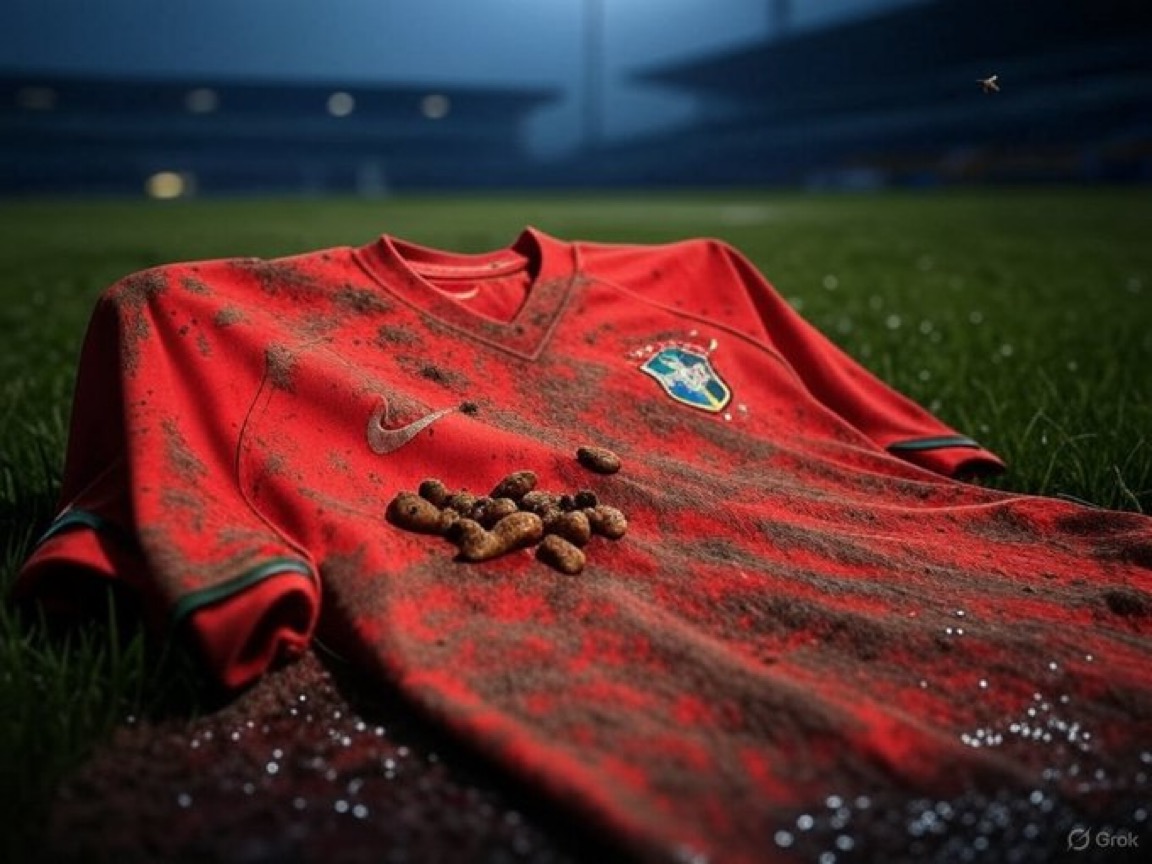

The Red Shirt Rumor: Brazil’s Soccer Kit Controversy Ignites Political Firestorm
By: The Hotspotorlando News
In April 2025, a seemingly innocuous rumor about a new red jersey for the Brazil national soccer team exploded into a national controversy, exposing the deep political divisions that continue to shape the country’s cultural landscape. The Brazilian Football Confederation (CBF) found itself at the center of a storm, forced to deny claims of a crimson alternate kit for the 2026 World Cup. What began as a speculative report about a nod to Brazil’s historical roots quickly spiraled into a clash over identity, patriotism, and the politicization of the Seleção’s iconic attire.
The Spark: A Red Jersey Rumor
The controversy originated with a report from Footy Headlines, a website known for leaking soccer kit designs. It suggested that the CBF, in partnership with Nike, Brazil’s official kit supplier, was planning to replace the traditional blue away jersey with a red (or crimson) one for the 2026 World延长赛程表 World Cup, co-hosted by the United States, Mexico, and Canada. The proposed red shirt was said to symbolize the pau-brasil tree, a reddish-wooded species that gave Brazil its name due to its use in dye production during the 16th century. The design, rumored to possibly involve Nike’s Jordan Brand, was pitched as a bold, modern tribute to Brazil’s cultural heritage.
However, on April 29, 2025, the CBF swiftly debunked the rumor, declaring the circulating images of a red jersey “unofficial” and reaffirming their commitment to the traditional yellow home kit and blue away kit. The CBF stated that the 2026 World Cup kit design process with Nike had not yet begun, effectively shutting down speculation—at least officially.
A Nation Divided: The Political Backlash
The red jersey rumor might have remained a minor footnote in football fashion history if not for Brazil’s polarized political climate. The proposed color immediately became a lightning rod for controversy, with rightwing and leftwing factions interpreting it through their respective lenses.Conservative groups, particularly supporters of former president Jair Bolsonaro, erupted in outrage. Red, they argued, was the color of President Luiz Inácio Lula da Silva’s Workers’ Party (PT) and the Landless Workers’ Movement (MST), both associated with Brazil’s left. Rightwing figures like conservative Minas Gerais governor Romeu Zema labeled the red shirt “anti-patriotic,” with slogans like “Our flag will never be red!” echoing across social media platforms like X. For these critics, the red jersey was seen as a betrayal of Brazil’s football legacy and a covert attempt to align the national team with leftist politics.
The yellow jersey, Brazil’s iconic “Canarinho” kit, has already become a politically charged symbol. Adopted by Bolsonaro supporters during his presidency and associated with rightwing protests, it has been shunned by some left-leaning Brazilians who now see it as tainted. Introducing a red jersey risked further politicizing the national team, a unifying institution in a country often divided by politics. Veteran football writer Juca Kfouri, a left-leaning commentator, criticized the idea as being in “bad taste,” arguing that red lacks a strong historical connection to Brazil’s football identity, despite the pau-brasil reference. Prominent broadcaster Galvão Bueno went further, calling the red shirt “a crime” and an “insult” to the Seleção’s storied tradition.
Historical Context: Yellow, Blue, and the Flag
Brazil’s national team kit is steeped in history and symbolism. The yellow home shirt with green trim, paired with blue shorts and white socks, mirrors the colors of the Brazilian flag, a design solidified after the team’s 1950 World Cup loss prompted a redesign to boost national pride. The blue away kit, famously worn during the 1958 World Cup victory against Sweden due to a kit clash, has since become a beloved emblem of Brazil’s five World Cup triumphs.
Red, by contrast, has little precedent in Brazil’s modern football attire. Early kits from 1917 to 1919 reportedly included red elements, and the color appeared in Brazil’s first flag in the early 19th century. The pau-brasil tree offers a cultural link, but the CBF’s own statute reportedly mandates that kits reflect the flag’s colors—yellow, green, blue, and white—raising questions about whether a red jersey would even be permissible.
Commercial Ploy or Cultural Misstep?
Skeptics, including sports writer Paulo Vinícius Coelho, suggested the red jersey rumor was a commercially driven “trial balloon” to gauge fan reactions and boost kit sales. Nike, known for pushing bold designs, may have seen the red shirt as a way to refresh Brazil’s brand, possibly leveraging the Jordan Brand’s streetwear appeal to attract younger fans. Yet the backlash underscored the cultural weight of the yellow jersey, a symbol of Pelé, Zico, Ronaldo, and Neymar Jr.’s legacy.
The controversy also fueled speculation on platforms like X, where users debated whether the red kit was a political statement supporting Lula or even foreign ideologies. Others defended the pau-brasil inspiration as apolitical, but the polarized reactions highlighted how deeply football and politics intertwine in Brazil. Some analysts suggested the CBF may have allowed the rumor to spread as a distraction from other challenges, such as their failure to secure Real Madrid manager Carlo Ancelotti as coach.
The Status Quo: Yellow and Blue Prevail
As of May 2, 2025, no red jersey has been officially confirmed for the Brazil national team. The 2024 kits, produced by Nike, remain yellow for home matches and blue for away matches, featuring stars like Neymar Jr. and Vini Jr. Retailers like Amazon and eBay offer red Brazil-themed fan apparel, but these are unofficial products, not match kits.
A Cautionary Tale
The red shirt saga is a stark reminder of Brazil’s fractured political landscape, where even a football kit can become a battleground. The pau-brasil narrative, while culturally resonant, underestimated the yellow jersey’s emotional and historical significance. The CBF’s quick denial suggests they misjudged the public’s reaction, and the episode may have been amplified by misinformation or deliberate leaks to test the waters. Whether a marketing misstep or a genuine proposal, the controversy reinforces a timeless truth: in Brazil, football is never just a game.
*For the latest updates on Brazil’s 2026 World Cup kit, stay tuned to official CBF announcements or visit grok.com for real-time insights.*