


The Stark Divide: First-Instance Judge Versus STF Minister in Brazil’s Judiciary
By Hotspotnews
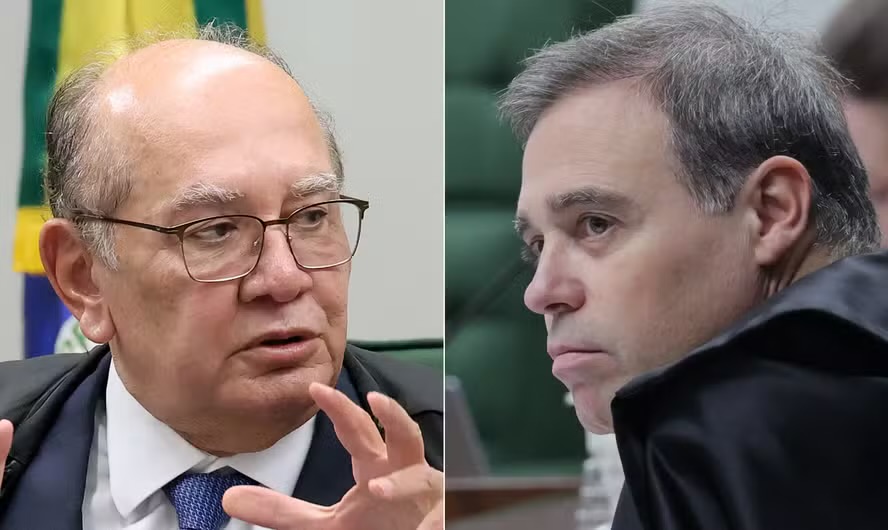
In Brazil’s high-stakes corruption investigations, parallels between operations frequently emerge. Recent tensions in the Caso Master — centered on alleged large-scale financial frauds linked to Banco Master and associated figures — have prompted Minister Gilmar Mendes to question aspects of how fellow Minister André Mendonça, as relator in the STF’s Segunda Turma, is managing the case. These discussions often invoke memories of Operação Lava Jato and the role of then-Judge Sérgio Moro.
Such comparisons, however, blur a fundamental and flagrant distinction in Brazil’s judicial structure: the vast differences between a first-instance judge and a Minister of the Supremo Tribunal Federal. Equating the two distorts procedural realities, institutional roles, and the proper scope of any potential challenges.
Hierarchical Roles in the Brazilian Judiciary
Brazil’s judiciary operates in distinct layers:
- First-instance judges (juízes de primeira instância) sit at the foundation. They directly oversee investigations, authorize coercive measures such as searches and preventive arrests, evaluate evidence, conduct trials, and issue initial convictions. Their position places them at the heart of fact-finding and case construction.
- STF Ministers (ministros do Supremo Tribunal Federal) occupy the apex. Appointed by the President and confirmed by the Senate, these 11 justices focus on constitutional matters, uniformity of law, and cases involving high authorities or exceptional gravity. As rapporteurs (relatores), they review proceedings, but within a collegiate environment where decisions often require input from peers in Turmas or the full Plenum.
This separation ensures that intensive evidentiary work occurs lower down, while the STF provides oversight, correction, and constitutional guardianship.
The First-Instance Judge: Direct Architect of the Case
During Lava Jato, Sérgio Moro, as federal judge in Curitiba, embodied the trial-level role. He authorized key investigative steps, interacted extensively with prosecutors and federal police, presided over proceedings, and delivered convictions that anchored the entire operation. Allegations of partiality and improper coordination at this foundational level led the STF to annul many convictions. The core reasoning was that flaws at the origin — where the judge shapes the investigation — could irreparably taint the entire process.
A first-instance judge’s proximity to the raw mechanics of a case creates unique vulnerabilities. Any perceived overreach directly affects evidence gathering, plea negotiations, and the legitimacy of downstream rulings.
The STF Minister as Relator: Collegiate Oversight at the Summit
André Mendonça’s position as STF Minister and relator in Caso Master operates on an entirely different plane. STF Ministers do not typically direct original investigations or micromanage police operations. Their function centers on legal and constitutional analysis of matters that often arrive already developed from lower instances or specialized inquiries.
Key contrasts include:
- Scope of involvement: A trial judge builds the factual record; an STF relator reviews it for compliance with higher norms. Contacts with lawyers or discussions around plea deals carry different weight when they occur at the constitutional level rather than during active trial-court investigation.
- Collegiate safeguards: STF decisions face immediate peer scrutiny. Challenges to impartiality usually take the form of targeted recusal (suspeição or impedimento) for a specific case, not broad nullification of an entire operation.
- Plea and procedural dynamics: Collaboration agreements are primarily the domain of the Public Prosecutor’s Office and the accused. A relator’s role is generally limited to eventual homologation. Public statements by Mendonça rejecting a “selective” plea proposal presented directly to him underscore an attempt to maintain distance, contrasting sharply with deeper coordination claims leveled against first-instance judges.
Mendonça has explicitly differentiated the cases, framing Caso Master as addressing one of Brazil’s largest financial frauds involving organized elements, rather than a replay of Lava Jato. Recent votes in the Segunda Turma have largely sustained key measures under his rapporteurship, reflecting collective support amid internal debate.
Why the Analogy Does Not Hold
The comparison between a first-instance judge like Moro and an STF Minister like Mendonça falters on structural grounds:
- Level of proceedings: Irregularities at the trial-court base can contaminate everything above them. Issues involving an STF relator remain contained at the apex and are more readily addressed through internal mechanisms.
- Nature of power exercised: Hands-on investigative direction versus supervisory and constitutional review.
- Institutional response: Lava Jato-style mass annulments addressed foundational defects. Challenges at the STF level focus on specific decisions or recusal, preserving the broader investigative framework.
- Public record and defenses: Mendonça’s transparent rejection of improper approaches in open session creates a different evidentiary posture than the extensive leaked communications that fueled Lava Jato critiques.
While questions about judicial propriety — such as the boundaries of a relator’s interactions — merit serious discussion, they must be evaluated against the actual duties and constraints of the office, not transplanted from a lower judicial context.
Respecting Institutional Boundaries
Brazil’s justice system relies on these clear distinctions to function effectively. A first-instance judge wields direct, formative power that demands rigorous neutrality precisely because of its impact. An STF Minister exercises elevated but more constrained authority within a collective body designed for balance and constitutional fidelity.
As debates around Caso Master continue, maintaining this clarity avoids misplaced precedents and unnecessary institutional erosion. Precise scrutiny — tailored to each role’s realities — ultimately bolsters public confidence in the judiciary far more than broad-brush analogies that ignore flagrant differences in position, power, and procedure.
The exchange between Ministers underscores ongoing tensions in high-profile adjudication, yet the system’s strength lies in honoring these structural separations while demanding integrity at every level.