


The Supreme Court’s Shameful Self-Protection: Fachin’s Archiving of the Toffoli Probe Lays Bare Decades of Judicial Impunity in the Banco Master Fraud
In 1a move that will be remembered as one of the darkest chapters in Brazilian institutional history, Supreme Federal Court President Luiz Edson Fachin, on February 21, 2026, unilaterally annulled and definitively archived the Federal Police investigation into Minister José Antonio Dias Toffoli’s blatant conflict of interest in the sprawling Banco Master fraud case.
This decision did not merely close a procedural file—it slammed the door on accountability for one of the most powerful men in Brazil, shielding him from scrutiny while the nation’s largest banking scandal in a generation continues to bleed billions from the public purse and erode what remains of public trust in the judiciary.
The Banco Master affair is no ordinary financial misstep. It represents a multi-billion-real web of alleged fraud, illicit credit operations, and systemic abuse that culminated in the Central Bank’s extrajudicial liquidation of the institution, imposing an estimated R$55 billion burden on the Fundo Garantidor de Créditos—the very mechanism meant to protect ordinary depositors. At the center stands Daniel Vorcaro, the bank’s flamboyant owner, now under arrest and facing charges that could dismantle an empire built on opaque funds, political connections, and sweetheart deals. The Polícia Federal’s Operation Compliance Zero has peeled back layers of this rot, revealing how billions vanished through creative accounting, phantom assets, and influence peddling that reached the highest echelons of power.
Enter Minister Dias Toffoli, a Lula appointee since 2009 and a veteran of the court’s activist wing. In December 2025, Toffoli was randomly assigned as rapporteur for the STF’s inquiries into the Master collapse. Almost immediately, his handling of the case raised red flags: excessive secrecy, questionable procedural maneuvers, and a pattern of decisions that seemed to slow rather than accelerate justice. Then came the bombshell. In early February 2026, the Federal Police, after forensic analysis of Vorcaro’s seized cellphones, delivered a devastating 200-page report directly to Fachin. It documented more than ten in-person meetings between Toffoli and Vorcaro between 2023 and 2024—during the very period when the bank’s troubles were mounting. Even more damning were the financial trails: R$35 million in transfers from the Arleen investment fund—controlled by Vorcaro’s brother-in-law, Fabiano Zettel—to Maridt Participações, a closely held family company in which Toffoli and his relatives hold stakes. These payments continued years after an initial 2021 resort-share transaction involving the same parties, with internal messages discussing “repasse to Toffoli” in language that left little to the imagination.
Toffoli has denied personal receipt of funds, insisting all transactions were legal, properly declared to the tax authorities, and unrelated to his judicial role. Yet the optics—and the timing—were catastrophic. Facing internal pressure and a mounting public outcry, Toffoli “voluntarily” stepped down as rapporteur on February 12 following closed-door meetings among the ten ministers. In a rare display of corporate solidarity, the full court issued a unanimous note declaring there was “no case for suspicion,” affirming the validity of every act Toffoli had taken, and allowing him to retain full voting rights in the case now reassigned by lottery to Minister André Mendonça.
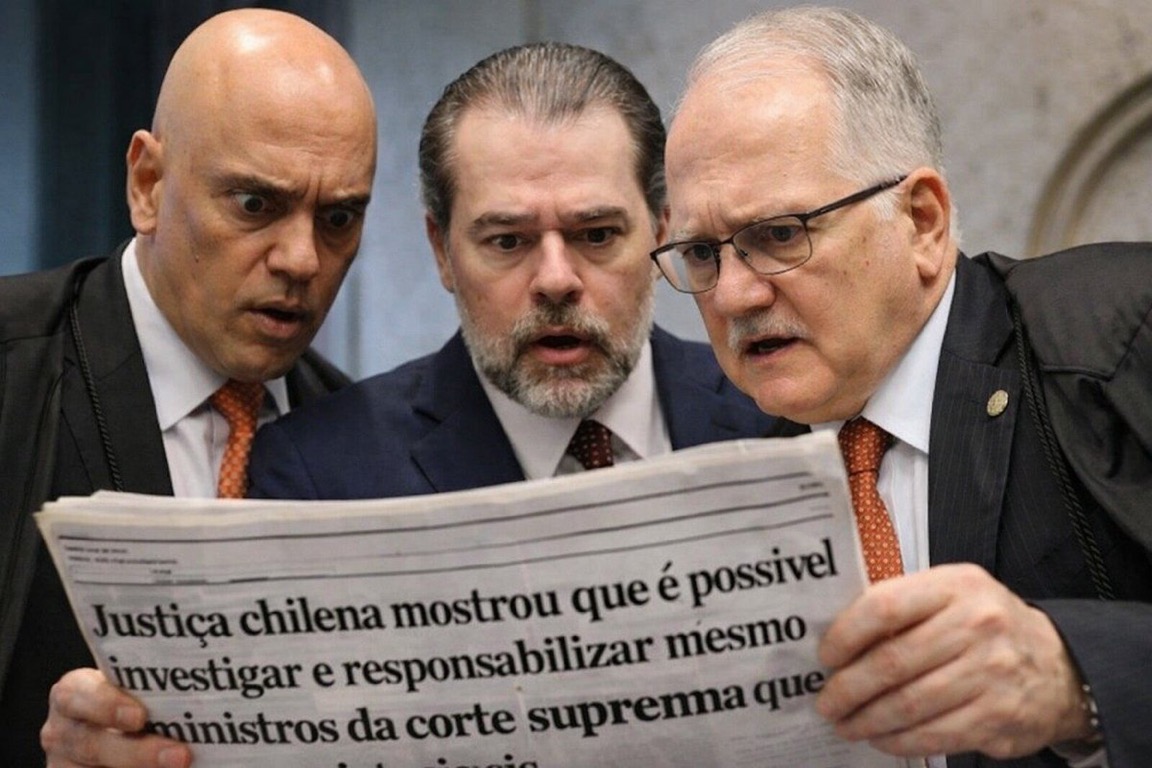
That was merely the prelude. Nine days later, Fachin—acting as relator of the sealed “arguição de suspeição” process (AS 244)—delivered the coup de grâce: he annulled the entire Federal Police procedure investigating Toffoli’s conduct, archiving it definitively with no possibility of appeal. The message could not be clearer. The Supreme Court had closed ranks. A sitting justice under credible suspicion of ethical breach and possible criminal implication would face no independent probe, no public reckoning, and no real consequence. The court would police itself—and it chose protection over transparency.
This is the ultimate scandal because it confirms what millions of Brazilians have long suspected: the STF operates as an untouchable caste, accountable to no one but itself. While ordinary citizens endure the consequences of financial frauds that destroy pensions, savings, and livelihoods, the guardians of the Constitution shield their own. Toffoli’s continued right to vote on a case in which he is personally entangled is not merely improper—it is an affront to the most basic principles of natural justice. That the court’s president would bury the police file on a Saturday, without explanation or dissent, only underscores the institutional rot.
The Brazilian Senate now stands as the last constitutional bulwark against this judicial overreach. Under Article 52 of the Constitution, the Senate holds exclusive authority to process and judge Supreme Court ministers for crimes of responsibility. Dozens of impeachment requests against Toffoli—and over eighty against various ministers since 2021—already sit before the House. Recent STF maneuvers, including Minister Gilmar Mendes’s December 2025 monocratic ruling restricting such petitions to the Prosecutor General alone and raising quorums to two-thirds, represent an unconstitutional power grab that the Senate must reject outright.
What concrete steps can the Senate take? First, it must immediately schedule public hearings and summon relevant actors—including Fachin and Toffoli themselves—to explain this travesty in open session. Transparency is the antidote to secrecy. Second, conservative and center-right senators should prioritize and accelerate the analysis of all pending impeachment petitions, forcing a floor vote where appropriate. Even if conviction remains politically difficult, the process itself exposes the court’s hypocrisy and builds public pressure. Third, the Senate must advance long-overdue constitutional amendments: establishing fixed terms for STF ministers (say, 10 to 15 years), lowering the mandatory retirement age from 75, creating an independent external ethics council with real disciplinary power, and enshrining strict recusal rules that cannot be overridden by internal “agreements.”
Fourth, legislation restoring the historic right of any citizen to file impeachment complaints—without gatekeeping by the PGR—should be fast-tracked, directly countering Mendes’s overreach. Broader judicial reform packages already moving through Congress, including limits on monocratic decisions and curbs on the court’s abuse of injunctions, must be strengthened and passed before the next legislative session. The Senate, representing the federative pact and the will of the states, cannot allow a self-perpetuating oligarchy in Brasília to dictate its own immunity.
The Brazilian people have watched for too long as scandals involving Odebrecht, Lava Jato, and now Banco Master reveal the same pattern: elites protecting elites while preaching accountability to everyone else. The Fachin-Toffoli maneuver is not an isolated lapse; it is the logical endpoint of a court that has arrogated to itself the roles of legislator, prosecutor, and judge. If the Senate fails to act decisively—through hearings, impeachment proceedings, and structural reform—it will confirm the public’s darkest fears: that in today’s Brazil, there is one law for the powerful and another for the rest.
The rule of law demands better. The Brazilian people deserve better. The Senate’s moment of truth has arrived. History will record whether it rose to defend the Republic—or bowed once more to the robes of impunity.