


The Supreme Court’s Two-Tiered Justice: A Conservative Perspective
By HOTSPOTNEWS
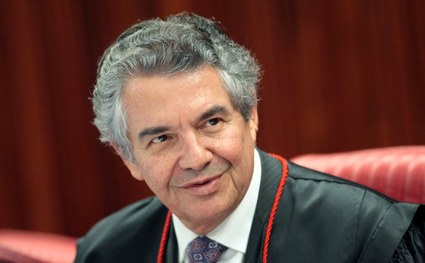
In recent weeks, retired Supreme Court Justice Marco Aurélio Mello has spoken with unflinching clarity about the state of Brazil’s highest court. A man who served on the STF for over three decades with a reputation for principled conservatism and strict adherence to constitutional limits, Mello has voiced deep concern over the institution’s eroding public trust. His latest remarks cut straight to the heart of a growing scandal: the glaring double standard in how the judiciary treats former presidents Lula and Jair Bolsonaro.
Mello posed a simple, devastating question that every Brazilian should be asking: Why was Lula tried in first-instance courts for his corruption scandals, allowing multiple layers of appeal and eventual release, while Bolsonaro faces direct judgment in the STF for alleged political offenses? This isn’t a minor procedural detail—it’s the difference between ordinary justice and extraordinary persecution.
Under Brazil’s Constitution, the STF’s original jurisdiction is meant for sitting officials with foro privilegiado to prevent harassment through lower courts. Once a president leaves office, that privilege typically ends. Lula benefited from this reality after his presidency; his cases began in lower courts under Operation Lava Jato, where evidence was scrutinized, convictions were handed down, and appeals were possible. The process, while lengthy, followed traditional judicial channels.
Bolsonaro, however, finds himself dragged straight into the Supreme Court—often before a single judge who also acts as investigator, prosecutor, and executioner. This concentration of power in one magistrate, particularly Alexandre de Moraes, has led to decisions that stretch constitutional boundaries: sweeping social media bans, electronic monitoring, and restrictions that many view as modern-day muzzling of political speech. Mello has called such measures reminiscent of authoritarian regimes, where liberty of expression is the first casualty.
The contrast is impossible to ignore. One former leader received the full protections of due process and multiple judicial reviews. The other faces a streamlined, high-stakes tribunal where dissent is limited and reversals are rare. Conservatives see this not as impartial justice but as selective enforcement designed to neutralize a political threat. When the court decides who gets “regular” justice and who gets “supreme” justice, it ceases to be a neutral arbiter and becomes a political actor.
Mello’s warnings go further. He describes a Supreme Court increasingly distant from the Brazilian people, where constitutional provisions are bent or bypassed to achieve desired outcomes. Public confidence in the institution has plummeted—not because of abstract debates, but because ordinary citizens perceive favoritism, overreach, and a willingness to expand jurisdiction far beyond what the founders envisioned. The retired justice’s sadness is palpable: he mourns an STF that once stood as a guardian of rights but now risks becoming an instrument of control.
True conservatives have long championed limited government, separation of powers, and the rule of law applied equally to all. When a court picks and chooses its forum based on political convenience, it undermines those very principles. The solution isn’t more power for the judiciary but a return to constitutional modesty: let lower courts handle what the Constitution assigns them, allow appeals, and restore faith through transparency and restraint.
Marco Aurélio Mello’s courage in speaking out reminds us that even within the system, voices of reason persist. Brazil deserves one standard of justice—not two. Until that equality is restored, the Supreme Court’s legitimacy will continue to suffer, and the people’s trust will remain fractured. The time for judicial humility is long overdue.