In a display of masterful diplomacy that only a proven dealmaker like President Donald J. Trump could orchestrate, the United States and China have taken a significant step toward a more balanced and prosperous relationship. As Trump touched down in Beijing for his high-stakes summit with President Xi Jinping, the grand reception extended by our Chinese counterparts underscored a refreshing reality: respect is earned through American strength, not weakness. Far from the failed appeasement policies of previous administrations, Trump’s approach—rooted in fair trade, national security, and unapologetic patriotism—has positioned the United States to secure real wins for American workers, farmers, and families.
Photos by Reuters
Photos by Reuters
Photos by Reuters
Photos by Reuters
Photos by Reuters
Photos by Reuters
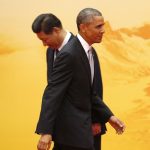
Contrast this with President Obama’s visits to China, where the receptions were notably cooler and the outcomes far less substantive for American interests. During Obama’s 2009 trip to Beijing, the Chinese hosts provided a subdued welcome amid disputes over protocol, and the summit yielded little in terms of concrete concessions on trade imbalances or intellectual property theft. Similarly, in 2014, Obama’s state visit featured visa extensions and climate pledges that sounded ambitious on paper but delivered minimal enforcement or economic reciprocity—China continued its aggressive expansion in the South China Sea and mercantilist practices while American manufacturing continued to suffer. These encounters highlighted the pitfalls of a policy rooted in multilateral niceties and strategic patience, which often translated to one-sided concessions without compelling Beijing to change course.
Xi Jinping rolled out the red carpet in spectacular fashion for President Trump, complete with honor guards, ceremonial pomp, and enthusiastic crowds of Chinese students waving flags and cheering. State media highlighted the warm personal rapport between the two leaders, with Xi hosting a lavish welcome that included a formal banquet featuring refined Chinese delicacies. This enthusiasm from Beijing’s leadership isn’t a sign of concession—it’s validation. After years of China testing the limits under softer U.S. policies, Xi recognizes that Trump means business. The summit’s cordial tone, marked by extended bilateral talks and mutual expressions of friendship, demonstrates that personal diplomacy between strongmen can yield stability where multilateral bureaucracies have failed.
Economically, the positives are already emerging. Trump arrived flanked by top American business leaders, signaling a focus on reciprocity. Discussions emphasized boosting U.S. agricultural exports, securing reliable market access for American goods, and addressing imbalances that have hollowed out manufacturing jobs for decades. Conservatives have long argued that tariffs and tough negotiations force fair play—and the early signals from Beijing suggest China is prepared to deliver on purchases that will support heartland farmers and factories. Extending pauses on export controls for critical minerals further protects U.S. supply chains and technological edge, preventing adversaries from holding America hostage. Trump’s insistence on a monitoring mechanism to ensure commitments are kept, marks a departure from past empty promises, putting America First in every deal.
On the global stage, the summit delivered strategic breathing room. With tensions high over key international hotspots, Trump leveraged his relationship with Xi to explore areas of common interest, including curbing destabilizing influences. Xi’s willingness to engage seriously on these fronts reflects the leverage Trump has built through military readiness and economic pressure. No more endless concessions or strategic ambiguity—America’s renewed strength compels dialogue that prioritizes U.S. interests, from Taiwan deterrence to curbing fentanyl precursors flowing into our communities. The personal chemistry on display, with Trump praising Xi as a leader of distinction, humanizes the process while keeping focus on results.
Critics on the left will wring their hands about “authoritarian optics” or insufficient confrontation, but conservatives understand the truth: peace through strength works. Trump’s first term proved that confronting China on intellectual property theft, unfair subsidies, and trade deficits revitalized American industry. This summit builds on that foundation, fostering predictability in the world’s most consequential bilateral relationship without sacrificing sovereignty. Xi’s evident enthusiasm—evident in the elaborate hosting and public warmth—affirms that Trump’s brand of leadership commands attention on the global stage.
As the details of agreements crystallize, one thing is clear: under President Trump, America negotiates from a position of power. This Beijing summit isn’t about kowtowing—it’s about delivering tangible victories that strengthen our economy, secure our future, and project resolve to the world. In true conservative fashion, results matter more than rhetoric, and early indications point to a summit that advances the cause of American greatness. The road ahead requires vigilance, but Trump has once again shown why bold, America-centric diplomacy delivers where globalist platitudes fall short.