

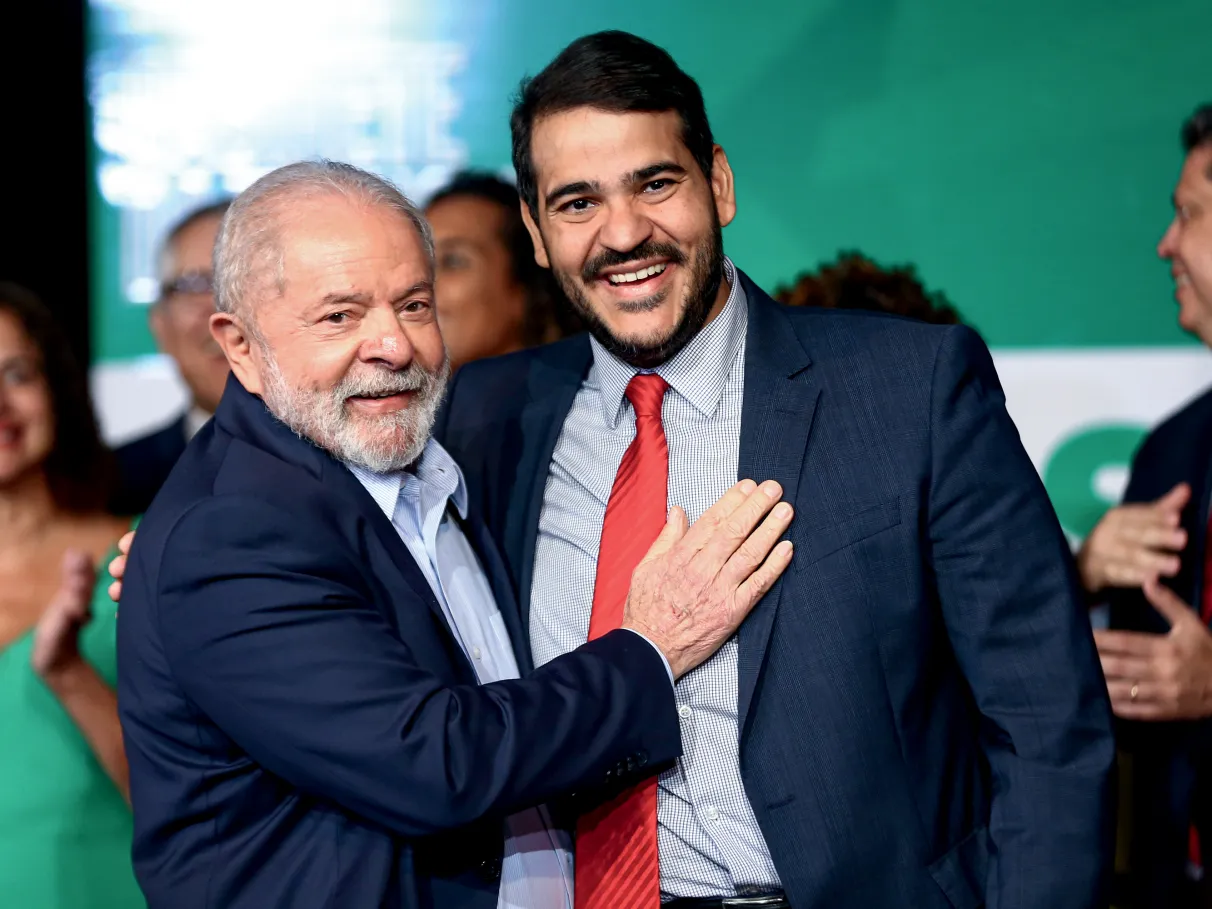

U.S. Revokes Visa of Brazil’s AGU Chief Jorge Messias – A Victory for Sovereignty and Accountability
By Hotspotnews | September 22, 2025 | 11:42 AM EDT**
In a bold move that signals a renewed commitment to American sovereignty and immigration enforcement, the Trump administration has revoked the U.S. visa of Jorge Messias, Brazil’s Attorney General of the Union (AGU). Confirmed by Reuters and reported widely today, this decision—made on Monday, September 22, 2025—marks a significant escalation in the U.S. government’s efforts to hold foreign officials accountable for actions deemed detrimental to American interests. For conservatives, this is a welcome step toward protecting our borders and ensuring that those who undermine our values face consequences.
The revocation of Messias’ visa comes amid a broader crackdown on foreign officials perceived as complicit in policies that facilitate illegal immigration or challenge U.S. legal norms. According to reports, the Trump administration is also targeting the visas of other Brazilian authorities, echoing earlier actions against Supreme Court Justice Alexandre de Moraes and several of his colleagues. This is not a random act of aggression but a deliberate response to a pattern of behavior that conservatives have long criticized—namely, the enabling of globalist agendas that erode national sovereignty.
Messias, a figure in Brazil’s leftist government, has been a lightning rod for controversy. His lavish compensation as AGU chief further fuels the outrage. Reports indicate stark disparities in his earnings. For instance, a Metrópoles article from July 2025 revealed that Messias received a staggering R$ 193,226.92 ($34,000 USD) in honoraria in a single month—far exceeding the typical salary range for AGU lawyers, which Glassdoor estimates at R$ 11,000 to R$ 32,000 ($2,000 to $5,800 USD) monthly. Yet, other sources suggest his average monthly earnings might be as low as R$ 5,200 ($940 USD), highlighting either inconsistent reporting or potential irregularities in his compensation. Such discrepancies raise questions about transparency and whether Messias has benefited from cronyism within Brazil’s government—a concern that resonates with American conservatives who demand fiscal responsibility and ethical governance.
The timing of this visa revocation is no coincidence. It aligns with President Trump’s executive orders, issued earlier this year, aimed at reversing what he calls the “unprecedented flood of illegal immigration” facilitated by previous administrations. By targeting Messias, the U.S. is sending a clear message: officials who support policies that conflict with American immigration laws will face repercussions. This action underscores the administration’s promise to “faithfully execute the immigration laws of the United States,” a principle that has been a cornerstone of conservative policy since Trump’s return to office.
For Brazilian conservatives and their American counterparts, this development is cause for celebration. Social media reactions on X reflect a mix of glee and anticipation, with users like @Tomusa1985bra and @AmayaReSC mocking Messias’ predicament and predicting more accountability to come. The image of Messias, once a symbol of Brazil’s bureaucratic elite, now serves as a reminder that no one is above the law—especially when their actions impact U.S. interests.
Critics may argue that this is an overreach or an attempt to meddle in Brazil’s internal affairs. However, the U.S. has every right to control who enters its borders, and the revocation of a visa is a lawful exercise of that authority. If Messias’ role in Brazil’s government has contributed to policies that indirectly support illegal migration or challenge U.S. judicial norms—as the visa suspension of Moraes suggests—then this move is not only justified but overdue.
As the day progresses, the full implications of this decision will unfold. Will Messias respond? Will Brazil retaliate? For now, conservatives can take heart in the fact that the Trump administration is wielding its power to protect American values. The revocation of Jorge Messias’ visa is more than a diplomatic spat—it’s a triumph of sovereignty over globalist excess and a warning to those who would prioritize personal gain over the rule of law.