

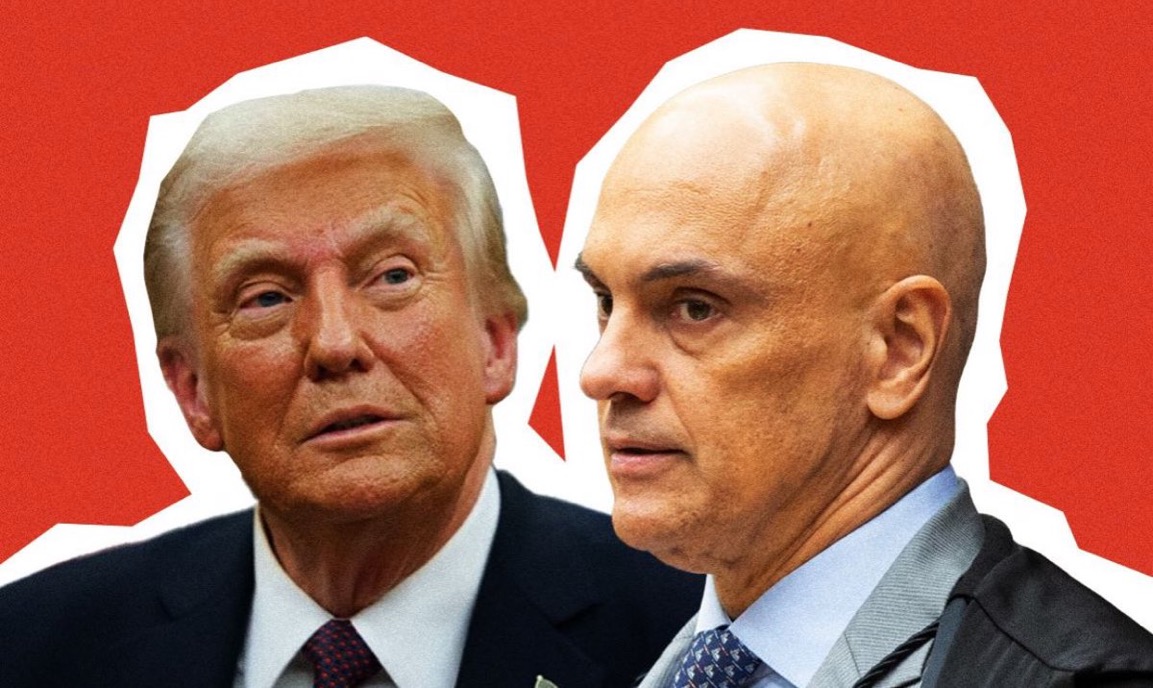

U.S. Sanctions on Brazil’s Lula Government: A Response to Judicial Atrocities and Democratic Erosion
The Trump administration’s threat to impose sanctions on Brazilian Supreme Court Justice Alexandre de Moraes under the Global Magnitsky Act has ignited a firestorm, shining a spotlight on the atrocities committed by President Luiz Inácio Lula da Silva’s government. Far from a defense of sovereignty, Lula’s indignant response masks a regime that has weaponized the judiciary to silence dissent, persecute conservatives, and undermine Brazil’s democracy. From baseless coup accusations against former President Jair Bolsonaro to Moraes’ relentless censorship and arrests, the Lula administration’s actions demand international scrutiny. These sanctions, under consideration as of May 21, 2025, are not an attack on Brazil but a necessary stand against a government that tramples free speech, pursues political vengeance, and flirts with authoritarian powers like China and Russia while preaching sovereignty.[](https://x.com/grok/status/1925358075697148192)
A Judiciary Turned Tyranny
At the heart of this crisis is Alexandre de Moraes, a Supreme Court justice who operates as Lula’s judicial enforcer, committing what many conservatives view as human rights atrocities. Moraes has spearheaded a campaign of censorship and persecution, targeting conservative voices with impunity. In 2024, he ordered the nationwide suspension of X, Brazil’s primary platform for free discourse, over vague claims of “disinformation.” This draconian move silenced millions, particularly Bolsonaro supporters, who rely on X to counter the leftist narrative dominating traditional media. X users have branded Moraes a “censor” and “psychopath,” reflecting the depth of public outrage.
Moraes’ atrocities extend beyond censorship. He has frozen bank accounts, ordered arrests, and launched sprawling investigations into “digital militias” and alleged coup plots, disproportionately targeting conservatives. The January 8, 2023, riots in Brasília, where Bolsonaro supporters stormed government buildings, have been exploited to justify mass arrests and convictions, often with harsh sentences for minor offenses. For example, Débora Rodrigues dos Santos received a 14-year sentence for vandalism, a punishment conservatives decry as disproportionate and politically motivated. These actions, lacking transparent oversight, suggest a judiciary bent on crushing dissent rather than upholding justice.
Fabricated Coup Narrative Against Bolsonaro
The Lula government’s most egregious atrocity is its relentless persecution of Jair Bolsonaro, falsely accused of masterminding a coup to overturn the 2022 election. On February 18, 2025, Prosecutor-General Paulo Gonet charged Bolsonaro and 33 others with plotting to kill Lula, Vice President Geraldo Alckmin, and Moraes himself, alongside plans to seize power.
The evidence? Recovered phone data from aides, unverified conversations, and documents printed at the presidential palace—none directly implicating Bolsonaro. He has dismissed these as “creative” lies, and his son, Senator Flávio Bolsonaro, called the charges “empty” and a tool of Lula’s “nefarious interests.The January 8 riots, while chaotic, lacked military backing or clear coordination, undermining claims of a sophisticated coup. Yet, Lula and Moraes have spun this into a narrative of existential threat, justifying their crackdown. Bolsonaro, already barred from running until 2030 for electoral violations, faces a potential 12-year prison sentence if convicted. Conservatives see this as a desperate bid to neutralize a rival who remains a potent force, with polls showing him competitive against Lula in a hypothetical 2026 race.
The lies pile up, and the Lula government’s obsession with jailing Bolsonaro reveals not strength but fear.[]
Lula’s Hypocrisy: Sovereignty for Sale
Lula’s outrage over U.S. sanctions, framed as a defense of Brazil’s sovereignty, is the height of hypocrisy. While he accuses Washington of meddling, his government deepens ties with authoritarian regimes like China and Russia, compromising Brazil’s independence. In May 2025, Lula met Chinese President Xi Jinping in Beijing, signing over 30 agreements and securing $4.6 billion in investments, while heralding an “indestructible” partnership. Brazil’s trade reliance on China—37% of farm exports—gives Beijing outsized influence. Similarly, Lula’s Moscow visit on May 9, 2025, saw him pitch a “strategic partnership” with Vladimir Putin, praising Russia as a key oil and fertilizer supplier.
Lula’s anti-dollar crusade, pushed at the 2023 BRICS summit, aligns with China and Russia’s efforts to undermine U.S. economic dominance, risking Brazil’s stability in global markets. Yet, he cries foul when the U.S. considers sanctions over judicial abuses. If sovereignty is his concern, why does he bow to Beijing and Moscow? X posts capture the sentiment: Lula’s sovereignty rhetoric is a “sham” to shield Moraes and distract from his own failures. His past conviction for corruption in 2017, though overturned, and recent scandals—like the $1.1 billion pension fraud implicating his ministers—further erode his moral standing.
Sanctions: A Call for Accountability
The U.S. sanctions, flagged by Secretary of State Marco Rubio on May 21, 2025, target Moraes under the Global Magnitsky Act for human rights violations, specifically censorship and political persecution. These could include asset freezes, visa bans, and financial penalties, though Moraes reportedly has no U.S. assets. The threat alone has sparked debate, with conservatives like Representative Cory Mills and Eduardo Bolsonaro pushing for action. While some argue sanctions infringe on Brazil’s sovereignty, others see them as a last resort to curb a judiciary that answers to no one.Lula’s government has no defense for these atrocities. A Genial/Quaest poll in April 2025 showed 46% disapproval in Brazil’s northeast, once a PT stronghold, reflecting public discontent with Lula’s leadership. Inflation, crime, and judicial overreach are eroding trust, yet Lula doubles down, shielding Moraes while accusing the U.S. of overreach. The sanctions, if imposed, could expose this hypocrisy globally, forcing Brazil to confront its democratic backslide.[]
A Nation at a Crossroads
Brazil cannot endure this trajectory. Lula and Moraes’ atrocities—censoring speech, jailing dissenters, and fabricating coup plots—are dismantling the freedoms Brazilians fought for after decades of dictatorship. The U.S. sanctions, while controversial, are a wake-up call, not an attack. Conservatives must seize this moment to demand reform: judicial oversight, term limits for justices, and an end to political persecutions. International bodies like the Inter-American Commission on Human Rights could amplify scrutiny without the baggage of U.S. unilateralism.
Lula’s government thrives on division, but Brazil’s people deserve better. The world is watching, and the time for accountability is now. Stop the lies, end the atrocities, and restore Brazil’s democracy before it’s too
source: PBS, CBS, AP, GROK X