

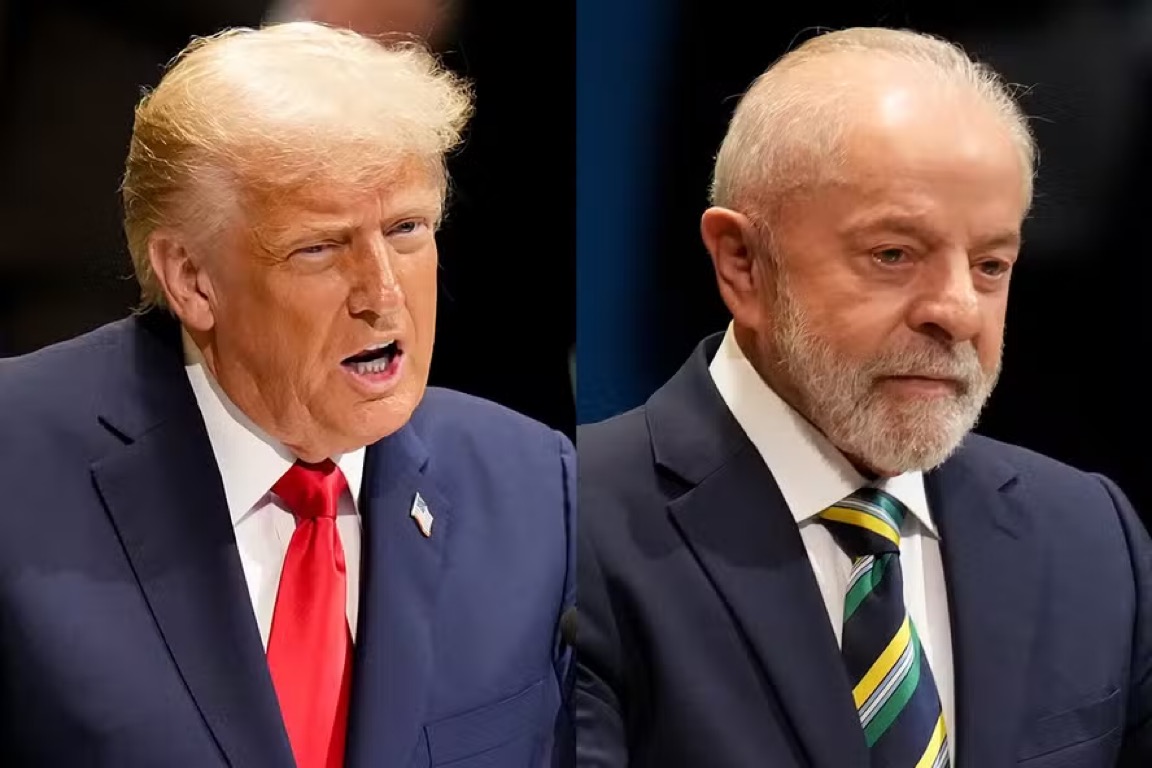

U.S. Turns Up the Heat on Lula: New Tariffs Target Brazilian Planes and Sugar After Year of Stalled Talks
By Hotspotnews
The Trump administration just proposed another round of pressure on Brazil. On November 25, 2026, the Office of the U.S. Trade Representative announced plans to modify existing Section 301 tariffs by adding a 10% duty on finished Brazilian aircraft and higher specific tariffs on out-of-quota raw and refined sugar. These products had been exempt from the 25% tariffs imposed in July. The move is not a surprise to anyone watching the file. It is leverage.
USTR Ambassador Jamieson Greer stated the reason plainly: after more than a year of talks, Brazil has made “no meaningful progress” toward addressing practices the investigation found unreasonable and harmful to American farmers, workers, and companies. Those practices include digital trade barriers and advantages for Brazil’s national payment system, preferential tariffs given to other countries but not the United States, weak anti-corruption enforcement, intellectual property shortfalls, non-reciprocal ethanol access, and inadequate action against illegal deforestation. High-level meetings, including between President Trump and President Lula, did not produce results. Since the July tariffs took effect, Brazil has responded with legal steps to challenge the measures at the WTO and explore countermeasures under its own reciprocity law rather than change the underlying policies.
The Brazilian government is still assessing the impact. Reports indicate the Lula administration is analyzing the effects on bilateral trade before deciding next steps. Embraer reacted more quickly. The company defended the long-standing zero-tariff regime for the aerospace industry that has existed since the 1980s, pointed to its substantial U.S. investments, assets, and jobs, and said it is reviewing the proposal. Its shares dropped sharply on the news. Sugar producers face higher barriers designed in part to stop Brazilian product from entering the U.S. market through third countries. No major new retaliation has been announced yet, but the existing WTO challenge and reciprocity process remain active.
The details matter. For sugar, the proposal replaces the current 25% rate on certain out-of-quota shipments with specific duties of $0.44 per kilogram on raw cane sugar and $0.60 per kilogram on raw beet or refined sugar. These would apply on a nondiscriminatory basis to all countries to prevent Brazilian exporters from routing product through third parties. On aircraft, the 10% duty targets finished aircraft only, removing their current exemption. Parts and components were already excluded from the July measures and are not covered here. Public comments open around November 27 and are due by December 30, 2026, with a hearing set for January 14, 2027. Nothing is final until that process ends.
This is a modification of the July 2026 25% action. A separate 12.5% tariff from a forced-labor Section 301 investigation also applies to certain Brazilian goods. Brazil was the first country targeted under the Trump administration’s Section 301 strategy after earlier emergency tariffs were struck down by the Supreme Court. On Brazil’s side, trade authorities have already ruled that the U.S. tariffs fall under the country’s Economic Reciprocity Law and have formed a working group to propose countermeasures. No specific retaliation has been adopted yet. Brazil’s first request for a WTO panel on the existing tariffs was blocked by the United States on November 24; a second request can still proceed.
Consequences are straightforward. Finished aircraft are one of Brazil’s top exports to the United States, so a 10% duty hits Embraer directly and raises costs for American buyers. Sugar is a globally traded commodity in which Brazil dominates; higher out-of-quota duties increase the price of continued stalemate. The measures are framed as temporary tools to bring Brazil back to the table, not as a permanent wall.
Is this only the beginning? It is the next step in a process that started with the Section 301 investigation and the July tariffs. Section 301 gives the United States tools to adjust rates, expand coverage, or take further action if the practices remain unaddressed. Whether more follows depends on whether Brasília treats the findings as a basis for reform or continues defending the status quo. So far, the record shows engagement without the substantive changes Washington is seeking.
The proposal is additional pressure after negotiations stalled. It targets high-value exports while leaving the door open to a deal. The ball is in Brazil’s court.
Sources: USTR statements and Federal Register notice (November 25, 2026); Reuters reporting on the proposal and prior Section 301 actions; O Globo and G1 coverage of Brazilian government assessment and Embraer response; public accounts of the ongoing WTO dispute (DS646) and Economic Reciprocity Law process.
#USBrazilTrade #Section301 #Embraer #TrumpTariffs #BrazilEconomy #FairTrade #Lula #USTR