



US Lifts Sanctions on Paraguay’s Cartes, But Brazil Faces the Heat: A Tale of Two Americas
By Hotspotnews
In a bold move that underscores the Trump administration’s pragmatic foreign policy, the United States recently lifted sanctions on former Paraguayan President Horacio Cartes after just two years. Imposed in 2023 under the Biden administration for alleged corruption, the sanctions were quietly removed on October 6, 2025, signaling a victory for strategic alliances and a rebuke to the heavy-handed tactics of the left. Meanwhile, across the border in Brazil, the US is doubling down with aggressive sanctions against Supreme Court Justice Alexandre de Moraes and other judicial figures, exposing the hypocrisy of liberal elites who cry foul when their own tactics are turned against them. This stark contrast reveals a clear message: align with America’s interests, and prosper; defy them, and face consequences.
Paraguay’s story is one of redemption through loyalty. Horacio Cartes, a successful businessman and former president from 2013 to 2018, was hit with sanctions by a sanctimonious Biden administration eager to flex its moralizing muscle. Accused of bribing lawmakers—a charge he denied—the sanctions froze his assets and banned transactions, targeting his tobacco empire and political influence within Paraguay’s conservative Colorado Party. Yet, two years later, with Paraguay under the steady hand of President Santiago Peña, a Cartes ally, the US recognized the folly of alienating a reliable partner. Paraguay’s steadfast support for Taiwan, its rejection of China’s overtures, and its alignment with American values, including support for Israel, made the sanctions obsolete. The Trump administration, with its clear-eyed focus on national interests, saw no need to punish a friend. Cartes, in a statement radiating gratitude, praised the “sense of justice” shown by President Trump, promising deeper ties with the US. This is what smart diplomacy looks like: rewarding allies, not antagonizing them.
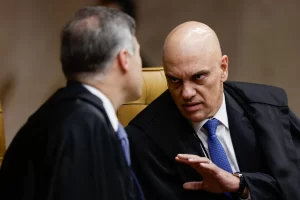
Contrast this with Brazil, where the US is rightly tightening the screws on a rogue judiciary under the Lula administration. On July 30, 2025, the Treasury Department sanctioned Justice Alexandre de Moraes, his wife, and other officials for what the US calls “abusive judicial overreach.” Moraes, the ringleader in former President Jair Bolsonaro’s politically motivated coup trial, has been accused of censoring free speech, jailing conservatives, and rigging the system to prop up Brazil’s socialist government. By September, the sanctions expanded to include more officials and were paired with crippling 50% tariffs on Brazilian imports—everything from soy to steel. Unlike Paraguay, Brazil’s leadership has chosen defiance, targeting American platforms like X and persecuting Bolsonaro, a staunch Trump ally. The result? A clear signal that the US will not tolerate attacks on liberty or its friends. Treasury Secretary Scott Bessent has hinted at more sanctions to come, and Brazilian banks are already sweating under the threat of secondary penalties.
The hypocrisy of Brazil’s left is galling. When Biden slapped sanctions on Cartes, they cheered the US as a global arbiter of justice. Now, with Moraes in the crosshairs, they scream “foreign interference” and “attack on democracy.” This double standard exposes the left’s playbook: rules for thee, but not for me. Paraguay’s Cartes faced accusations of corruption—unproven and now irrelevant—but was given a path to redemption through cooperation. Brazil’s elites, by contrast, have doubled down, protecting a system that punishes dissent while waving the flag of democracy. The US sees through this charade, and its sanctions are a wake-up call: undermine freedom, and you’ll pay a price.
What sets these cases apart is intent. Paraguay’s sanctions were a misstep, a relic of Biden’s virtue-signaling that ignored the bigger picture. Lifting them corrects that error, strengthening a conservative ally in a region plagued by leftist drift. Brazil’s sanctions, however, are a deliberate push to counter a judiciary that’s become a weapon for socialism. While Cartes was a single target, Brazil’s sanctions hit a broader ecosystem—judges, their families, and the economy itself—because the threat is systemic. The Trump administration’s approach is clear: it rewards friends like Paraguay, who uphold shared values, and punishes adversaries like Brazil’s current regime, which flirts with authoritarianism while claiming moral superiority.
This tale of two Americas—South America, that is—shows the power of principled foreign policy. Paraguay’s embrace of US interests has restored its standing, paving the way for economic and political wins. Brazil’s defiance, meanwhile, has invited economic pain and diplomatic isolation. The lesson? Nations that align with liberty and strength will thrive; those that choose censorship and persecution will falter. It’s time for Brazil to take a page from Paraguay’s book before it’s too late.


