

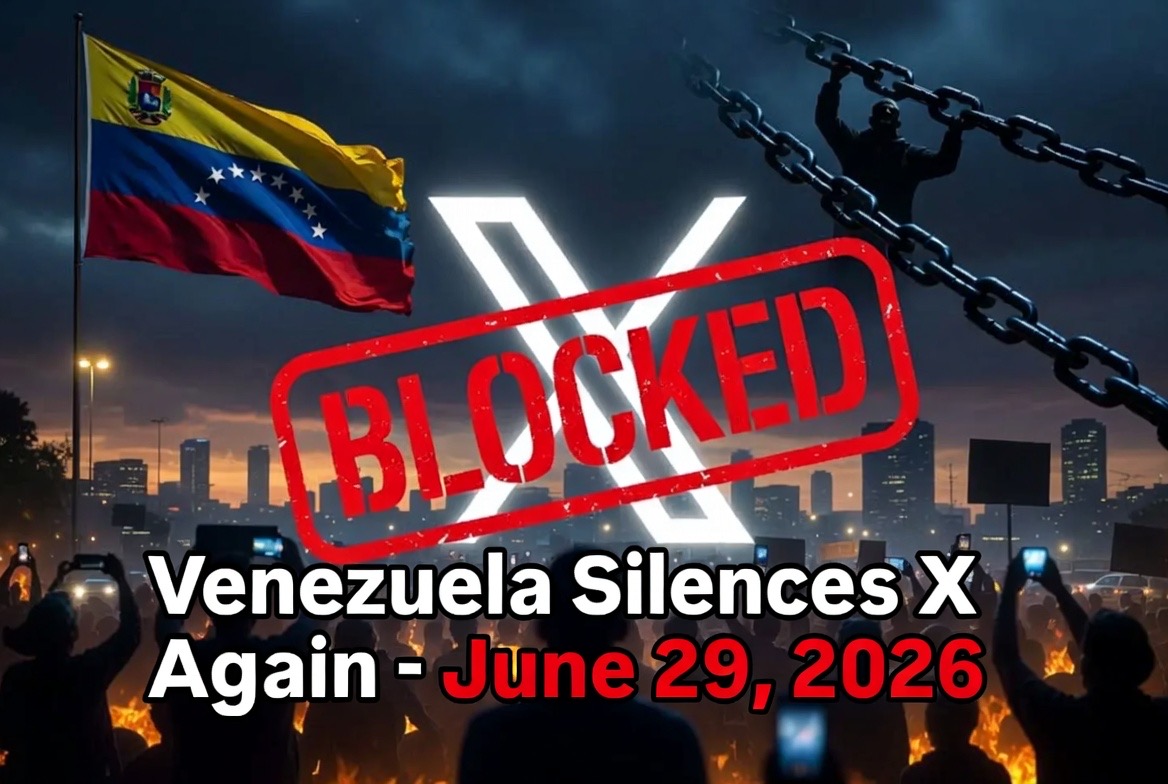

Venezuela Doubles Down on Censorship: Fresh Blocks Hit X as Crises Mount
By Hotspotnews
Caracas, Venezuela – June 29, 2026 — Just when Venezuelans thought digital repression might be easing after years of socialist rule, reports flooded in today of renewed restrictions on X. Users across the country, particularly those on providers like Inter and Movistar, say access to the platform is once again spotty, intermittent, or outright blocked without a VPN. While not yet a total nationwide blackout like the 2024 Maduro-era ban, the pattern is unmistakable: when the regime feels pressure, it reaches for the censorship button.
This comes amid a backdrop of earthquakes rattling parts of the country, ongoing demands for full democratic transition under acting President Delcy Rodríguez, and lingering frustration over incomplete prisoner releases and persistent repressive structures. Venezuelans have taken to other channels to share rescue efforts, protest footage, and criticism — only to find familiar roadblocks on the one platform that became a lifeline for unfiltered news.
Echoes of 2024 Tyranny
Recall that in August 2024, Nicolás Maduro explicitly ordered X blocked for 10 days (which stretched into over a year) after accusing Elon Musk and the platform of inciting “hatred, fascism, and civil war.” The real target was clear: independent voices exposing election fraud, organizing protests, and broadcasting the regime’s brutal crackdown. Dozens died, thousands were arrested, and information flow was choked. The block symbolized everything wrong with 21st-century socialism — a government so afraid of its own people that it had to unplug the truth.
Maduro is gone, captured in a U.S. operation in January 2026, but the authoritarian DNA remains. Rodríguez’s interim government restored some access earlier this year, even as officials returned to the platform. Yet today’s disruptions suggest old habits die hard. Whether it’s a “test” block, provider compliance under pressure, or a response to real-time criticism of disaster response and stalled reforms, the effect is the same: ordinary citizens scrambling for workarounds while the powerful try to shape the narrative.
Free Speech Under Siege — Again
Conservatives have warned for years that centralized power in Venezuela, Cuba, Nicaragua, and beyond inevitably leads to this: poverty, exodus, and the silencing of dissent. X represents the opposite — a tool that empowers individuals, bypasses state media, and holds leaders accountable. Attempts to ban or throttle it are not about “protecting” society. They’re about protecting the regime from accountability during crises.
Families of political prisoners continue marching. Rescue volunteers defy orders to help earthquake victims. Opposition voices demand real elections and the dismantling of the old repressive apparatus — judges, security forces, and colectivos that still operate with impunity. Shutting down or slowing X doesn’t solve problems; it compounds them by isolating people and breeding more distrust.
Venezuelans have proven resourceful, using VPNs and alternative networks to stay connected. But every new restriction is a reminder that the transition from Maduro’s dictatorship remains incomplete. True change requires more than capturing one strongman — it demands ending the entire system that treats free expression as a threat.
As events unfold today, one thing is certain: the Venezuelan people’s desire for liberty will not be blocked forever. Platforms like X give them a voice the regime desperately wants to mute. The free world should watch closely — and stand firmly against this latest slide back into darkness.
The fight for a free Venezuela continues, one unfiltered post at a time.