


The Amazon’s Forgotten People: When“Environmental Justice” Means Bulldozing Poor Farmers
By Hotspotnews
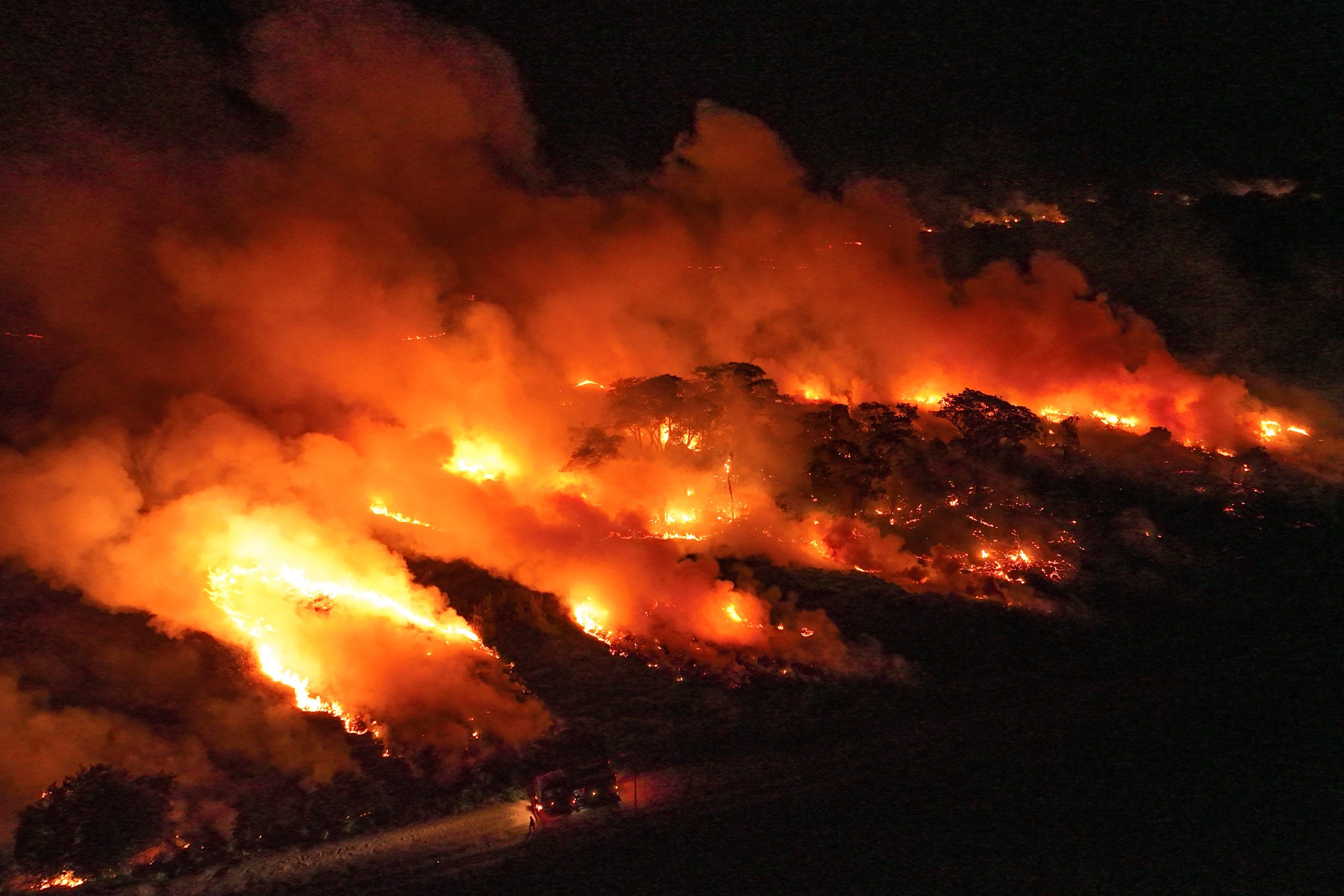
While the world prepares for yet another lavish COP30 climate summit in Brazil, federal agents are quietly carrying out one of the cruelest operations in recent memory deep in the Amazon rainforest. Hundreds of small farming families—many of them descendants of rubber tappers and riverine communities who have lived on the same land for generations—are being forcibly expelled by armed teams from the Federal Police, INCRA, and IBAMA. Their modest homes are demolished, their livestock confiscated or shot, their fruit trees cut down, and their children left with nothing but the clothes on their backs. No compensation. No relocation assistance. No mercy.
These are not wealthy landowners or illegal loggers. These are poor Brazilians—caboclos, mestizos, and mixed families—who clear a few hectares to grow manioc, raise a handful of cattle, and feed their children. They are exactly the kind of people the international left claims to defend when it lectures Brazil about “social justice.” Yet when the moment of truth arrives, the same activists who weep over the rainforest are utterly silent as bulldozers flatten the homes of the Amazon’s poorest residents.
The justification? These families happen to live inside areas that bureaucrats in Brasília have recently reclassified as “indigenous territory.” Never mind that many of these demarcations were drawn by NGOs and approved in closed-door meetings with little consultation of local reality. Never mind that the supposed indigenous beneficiaries are sometimes nowhere to be found, or that the newly “protected” land often ends up in the hands of well-connected hands of large carbon-credit schemes and foreign foundations. The families are simply declared invaders on their own ancestral soil and erased.
Meanwhile, satellite imagery and whistleblowers repeatedly show that massive illegal mining operations and industrial-scale deforestation—often linked to powerful economic groups—continue largely untouched in other parts of the Amazon. The message is clear: if you are poor, powerless, and trying to survive with a small plot of land, the full weight of the state will crush you. If you have money and political connections, you can negotiate, delay, or simply buy your way out of trouble.
This is not environmental protection. This is social cleansing dressed up as conservation. It is the state choosing which poor people deserve to exist and which do not, all while collecting applause from celebrities and European chancelleries who will never have to watch their own homes burned to the ground by men in uniforms.
The Amazon has been poor for decades despite receiving billions in international funds supposedly destined to “save” it. The reason is simple: the money rarely reaches the people who actually live there. Instead, it flows to consultants, NGOs, certification schemes, and government agencies that grow fatter with each new “emergency.” The real inhabitants—those who know every stream and trail—are treated as obstacles to be removed so that the rainforest can be managed by well-paid outsiders who fly in for photo ops.
True conservation begins with justice. A family that plants fruit trees, raises animals sustainably, and passes the land to its children is the best guardian the forest could have. Driving those families away and replacing them with absentee “protection” schemes only guarantees that the forest will remain poor, violent, and exploited by those with the power to bend the rules.
The images coming out of these evictions—crying children, elderly women clutching a few belongings, homes reduced to ashes—are a national shame. They are also a warning. If the government can do this to humble farmers in the Amazon today, it can do it to anyone tomorrow.
Brazil does not need more international applause for looking “green” on paper. It needs a government that defends its own citizens, especially the weakest among them. Until that day comes, every demolished house in the Amazon is a stain on the nation’s conscience—and a reminder that the war against the Brazilian people is being waged in the name of saving the planet.