


When the Police Close Ranks, the Republic Should Ask Why
By Hotspotnews
Facts verified by Grok
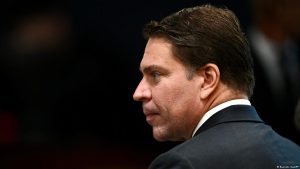
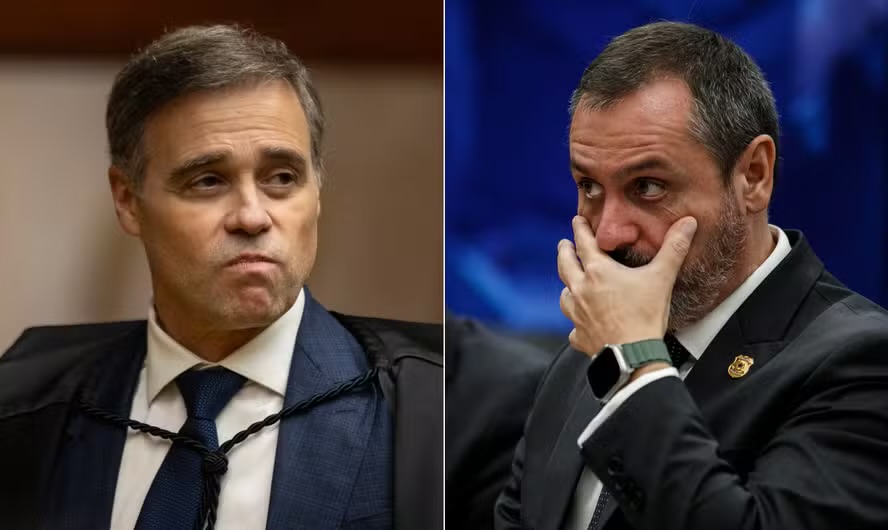
On Tuesday, Justice André Mendonça of Brazil’s Supreme Court ordered the preventive removal of Federal Police Director-General Andrei Rodrigues and Intelligence Director Leandro Almada. The stated reason was not a minor administrative quarrel. Mendonça alleged that the Federal Police produced intelligence reports that subjected him—and Attorney General Jorge Messias—to systematic monitoring for more than 30 days. That is not a routine personnel dispute. It is an accusation that the state’s investigative apparatus was turned toward a sitting justice of the highest court.
The response from the remaining high command was swift and uniform. Eleven directors issued a joint note of “total support,” denounced “unjustified attacks,” blamed “political-electoral narratives,” and placed their positions at the disposal of the acting director-general. In Brasília, this is presented as institutional dignity. A more skeptical reading is available: it looks like the corporation circling the wagons.
Conservative institutions are supposed to prize two things above team spirit: limited power and individual responsibility. A police force that can generate unsigned or thinly sourced intelligence on a Supreme Court justice, and then answer a court order with a bloc resignation offer, is not advertising humility. It is advertising cohesion. Cohesion is useful against organized crime. It is dangerous when the target of the intelligence work is another branch of government.
None of this requires assuming that every accusation against Rodrigues is proven. Preventive removal is not a conviction. The reports themselves, according to Mendonça, even warned that their inferences lacked evidentiary value—and then recommended continued collection anyway. That combination should alarm anyone who cares about due process. Intelligence that admits it cannot support formal measures, yet keeps watching a justice, is not professional caution. It is mission creep.
The political context makes the episode worse, not better. The clash sits inside a larger fight among justices, the Attorney General’s Office, and the Federal Police over the Banco Master investigations. When police intelligence becomes a weapon in a war among elites, ordinary citizens lose twice: first because the law is applied unevenly, and second because the institution that should be boringly technical starts acting like a faction.
The directors’ note insists Rodrigues’s record is “technical, impartial, and responsible.” That may be their sincere view. It is not a substitute for an investigation. Placing one’s office at another official’s disposal is a political gesture. It is not evidence. It does not answer who ordered the reports, who wrote them, who circulated them, or why a minister of the Court was treated as a collection target.
A conservative answer is simple. The Federal Police exists to investigate crimes under law, not to referee disputes inside the Supreme Court. If the reports were lawful and properly authorized, the directors should welcome a clean internal inquiry instead of performing collective loyalty. If they were not lawful, solidarity is the last thing the public needs.
Brazil does not need a politicized police. It does not need justices using leaked intelligence as ammunition against one another either. It needs an institution that can survive the removal of two officials without treating a court order as an attack on the corporation itself. When every remaining director stands up at once, the question is not only whether they are loyal. The question is whether anyone in that building still thinks loyalty and legality are different things.
The response of the remaining top delegates was fast and uniform. Eleven directors released a note of “full support”, repudiated “unjustified attacks”, denounced “political-electoral narratives” and made the positions available to the interim director-general, William Marcel Murad. They signed the text:
Dennis Cali, director of Investigation and Combating Organized Crime and Corruption;
Fabrício Schommer Kerber, director of Administrative Police;
Otavio Margonari Russo, director of Combating Cybercrime;
Felipe Tavares Seixas, director of International Cooperation;
Helena de Rezende, director of People Management;
Roberto Reis Monteiro Neto, Technical-Scientific Director;
André Luis Lima Carmo, director of Administration and Logistics;
Christiane Correa Machado, director of Education of the National Police Academy;
Alexsander Castro de Oliveira, director of Personal Protection;
Ademir Dias Cardoso Júnior, director of Information Technology and Innovation;
Humberto Freire de Barros, director of Amazon and Environment.
In Brasilia, this type of manifesto is usually sold as institutional dignity. There is another reading, more skeptical: the corporation closed the siege.
SOURCES
• Metrópoles — “PF directors put their posts at the disposal after Andrei’s removal” (Sept. 8, 2026). Reports the joint note and names the 11 directors.
• Estadão — Coverage of the same note of support and the directors placing their offices with acting Director-General William Marcel Murad.
• G1 — Reports Mendonça’s order removing Andrei Rodrigues and Leandro Almada, formal notification, and Murad taking over as acting head.
• Agência Brasil — “Mendonça removes Andrei Rodrigues from the Federal Police director-general post” (Sept. 8, 2026).
• CNN Brazil — Preventive removal, order for the PF Internal Affairs office to investigate, and the monitoring allegation.
• Folha de S.Paulo — Profile of Andrei Rodrigues and the broader STF–PF clash.
• O Tempo — Timeline of the crisis and majority in the STF Second Panel to keep the removal in place, with Gilmar Mendes requesting more time.
• Reuters — Removal on the allegation of unlawful monitoring of public authorities.
These outlets support the core facts used in the article: Mendonça’s order, the removal of Rodrigues and Almada, the 11 directors’ joint statement, Murad’s interim command, the Internal Affairs inquiry, and the Second Panel vote.
#PoliciaFederal #STF #AndreiRodrigues #AndreMendonca #LeandroAlmada #WilliamMurad #Brasil


