


Germany’s €1 Billion Pledge to Brazil’s “Forever Forests” Fund: Noble Intentions, Familiar Risks
By Hotspotnews
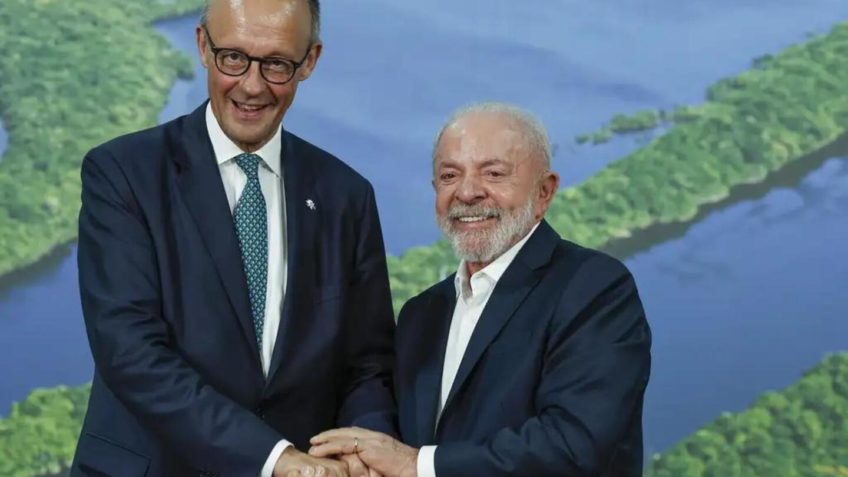
In the closing days of the COP30 climate summit in Belém, Germany announced a €1 billion contribution to Brazil’s ambitious Tropical Forests Forever Fund (TFFF). On paper, the idea is seductive: raise $125 billion from governments and private investors, park the money in global financial markets, and use the returns to pay tropical nations to keep their trees standing. Brazilian President Luiz Inácio Lula da Silva and Environment Minister Marina Silva hailed the German pledge as proof that the world is finally ready to make the rainforest “worth more alive than cut down.”
Conservatives should applaud any serious effort to reduce deforestation without punishing economic growth. Protecting the Amazon is in everyone’s interest, including the United States and Europe. Yet experience teaches caution when billions of euros are handed to international funds administered by governments with mixed track records on transparency and results.
First, the numbers invite skepticism. Brazil promises the fund will eventually generate $4 billion a year in perpetual income. That assumes consistently high investment returns and low administrative costs, two assumptions that rarely survive contact with large multilateral initiatives. The Green Climate Fund and REDD+ programs have spent more than a decade proving that “innovative finance” often means slow disbursement, high overhead, and results measured in glossy reports rather than satellite-verified forest cover.
Second, the governance structure raises red flags. While private capital is courted, the fund will be managed by a public entity under Brazil’s current left-wing government. Conservatives remember the Lula era’s first two terms: impressive poverty reduction, yes, but also repeated corruption scandals involving state-controlled companies and public banks. Billions flowing through Brasília will inevitably attract the same political clientele networks that once turned Petrobras into a piggy bank.
Third, the underlying philosophy is uncomfortably close to global wealth redistribution dressed in green clothing. Rich nations are asked to write large checks essentially because they industrialized first, while recipient countries are paid simply for not cutting trees they were already legally obliged to protect. Germany’s €1 billion could have modernized its own energy grid, secured rare-earth supply chains outside China, or funded adaptation projects in vulnerable European regions hit by floods and heat waves. Instead, it is being sent to a fund whose success depends on the administrative competence and political honesty of distant governments.
None of this means Germany should withhold every euro. Targeted, results-based payments for verified emission reductions can work; Norway’s billion-dollar deals with Indonesia and Guyana show that. But those programs succeeded precisely because they were bilateral, tightly monitored, and paid only after independent auditors confirmed fewer chainsaws. The TFFF, by contrast, looks like a giant pooled fund where political symbolism risks trumping measurable outcomes.
Conservatives do not oppose conserving the Amazon; we oppose wasting taxpayer money on feel-good schemes that enrich consultants and politicians while the forest continues to burn. If Germany truly wants to help, it should insist on iron-clad transparency, third-party verification of every hectare saved, and clear exit clauses if corruption or inefficiency take root.
Until those safeguards are in place, this €1 billion looks less like climate leadership and more like climate indulgence: a costly gesture that lets wealthy nations claim moral high ground while outsourcing both the responsibility and the risk. The rainforest deserves better, and so do German taxpayers.