


A Conservative Outlook on China’s Footprint in Brazil’s Energy Sector
By Hotspotnews
From a conservative perspective—emphasizing national sovereignty, strategic security, economic independence, and skepticism toward authoritarian regimes—the situation with State Grid’s involvement in CPFL is not just routine foreign investment. It represents a calculated expansion of Chinese state power into a vital artery of Brazilian society: the electricity grid that powers homes, factories, farms, and the broader economy.
Energy is not a commodity like soybeans or iron ore. It is the foundation of modern life and national resilience. When a company ultimately tied to the Chinese Communist Party gains significant ownership and operational influence over distribution networks serving millions of Brazilians, it creates potential leverage points that prudent nations should view with caution. The dramatic claim that “China controls the light that reaches your house” is rhetorical exaggeration—Brazilian regulators still oversee day-to-day operations—but the underlying reality of concentrated foreign state ownership in critical infrastructure deserves serious scrutiny, not dismissal as conspiracy.
How This Level of Influence Developed
China did not seize control overnight through some hidden plot. It advanced through patient, state-directed economic statecraft that took advantage of Brazil’s internal conditions over more than a decade. Here’s the step-by-step conservative reading of how it reached this point:
- Brazil’s Privatization Opening (1990s onward)
Following the end of hyperinflation and the push for market reforms under President Fernando Henrique Cardoso, Brazil privatized significant portions of its electricity sector. State-owned utilities were partially sold off to attract capital and improve efficiency. This created private companies like CPFL with tradable shares. While privatization itself aligned with free-market principles, it also opened the door to any buyer with deep pockets—including foreign state-owned enterprises. Conservatives often note that without strong accompanying safeguards for national security, privatization can inadvertently transfer strategic assets abroad. - China’s Rise as an Aggressive Investor (2000s–2010s)
As China accumulated massive foreign reserves from its export boom, its state-owned giants (backed by cheap state financing and political direction) began systematically acquiring stakes in global infrastructure. State Grid Corporation of China—the world’s largest utility by some measures—is not a normal private company. It operates under the oversight of China’s State-owned Assets Supervision and Administration Commission and serves the strategic goals of the CCP. Its playbook includes targeting electricity transmission and distribution in developing nations, often bundling deals with technology transfers, loans, and political goodwill. This fits the broader pattern seen in ports, mines, and grids across Latin America, Africa, and parts of Europe. - The 2017 Turning Point with CPFL
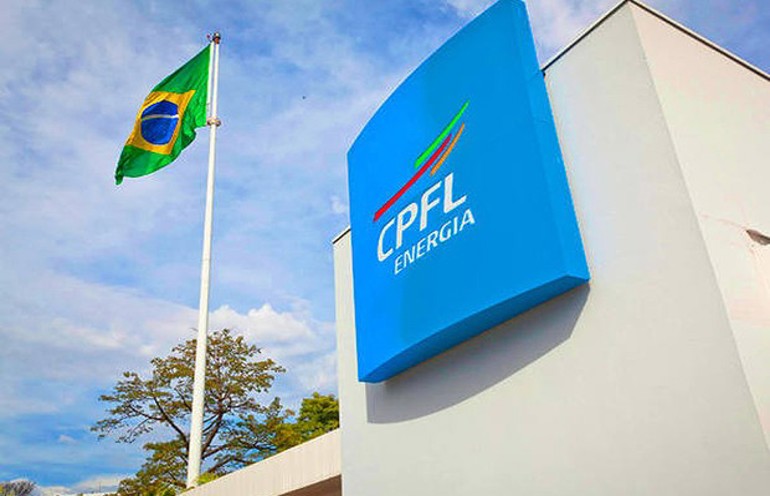
Brazil faced economic headwinds after the commodity supercycle ended and amid the political turmoil surrounding Dilma Rousseff’s impeachment. State Grid moved decisively, acquiring an initial controlling stake of roughly 54% in CPFL Energia for several billion dollars, later increasing its position further (at peaks exceeding 80%). Regulators approved the deal under the rules in place at the time. From a conservative standpoint, this occurred during a period when Brazilian leadership—across administrations but with particular enthusiasm from left-leaning governments tied to BRICS and South-South cooperation—prioritized short-term capital inflows over long-term strategic risk assessment. China presented itself as a reliable partner offering infrastructure without lectures on governance or human rights, while Western sources sometimes came with conditions. - Compounding Factors That Allowed It to Deepen
- Insufficient national security screening: Unlike the United States’ CFIUS process (which can block or unwind deals threatening critical infrastructure), Brazil lacked equally robust, consistently enforced mechanisms focused on foreign state actors in energy. Deals were often evaluated primarily on economic and antitrust grounds.
- Ideological openness: Segments of Brazilian political and intellectual elites viewed closer ties with China as a healthy counterbalance to U.S. influence. This mindset downplayed the reality that Chinese state capital serves geopolitical objectives, not pure commercial ones.
- Infrastructure needs: Brazil required massive investment in generation, transmission, and modernization. Chinese firms delivered projects and financing at scale when domestic capital or traditional partners moved more slowly.
- Gradual normalization: Once a foothold existed, follow-on opportunities (additional stakes, transmission contracts, technology partnerships) became easier to justify. The video circulating today simply highlights the cumulative result: State Grid Brazil Holding’s documented role in transmission lines crossing multiple states and CPFL’s distribution reach.
The outcome is that a CCP-linked entity now holds substantial equity and operational involvement in one of Brazil’s largest private energy groups. Profits from Brazilian ratepayers can flow back to China, decisions on technology and supply chains can be influenced by Beijing’s priorities, and in a hypothetical crisis (Taiwan conflict, broader great-power competition), economic dependencies create pressure points.
Core Conservative Principles Applied Here
Conservatives prioritize the long-term security and independence of the nation over immediate economic gains or globalist integration narratives. Key takeaways:
- Sovereignty first: Critical infrastructure like the electric grid should remain under effective national control or trusted allied partnerships. Foreign state ownership—especially by an authoritarian power with a track record of using economic tools coercively—introduces unacceptable risks of espionage, cyber vulnerabilities in smart systems, or leverage during disputes.
- Reciprocity and realism: China restricts foreign ownership in its own strategic sectors far more stringently. Nations should apply similar standards rather than one-sided openness.
- Learning from patterns: This mirrors concerns in the U.S., Australia, and Europe over Chinese involvement in ports, 5G, rare earths, and grids. Early warnings were often dismissed as alarmist; later reviews led to restrictions and divestment pushes.
- Domestic responsibility: Brazilian conservatives would argue that successive governments failed to protect the “nervous system of the economy” by treating energy assets as just another investment vehicle. The solution lies in stronger review processes, incentives for domestic or Western-allied capital, and, where feasible, gradual reduction of risky foreign state stakes.
In short, China’s position in Brazil’s energy sector did not emerge from conspiracy but from disciplined state capitalism exploiting Brazil’s privatization legacy, capital needs, and occasional political naivety. A conservative approach would treat this as a cautionary example: economic engagement with the CCP must always be subordinated to clear-eyed protection of national strategic assets. Brazil, like any sovereign country, retains the ability to review, condition, or adjust such arrangements going forward in the interest of its own people and security.