

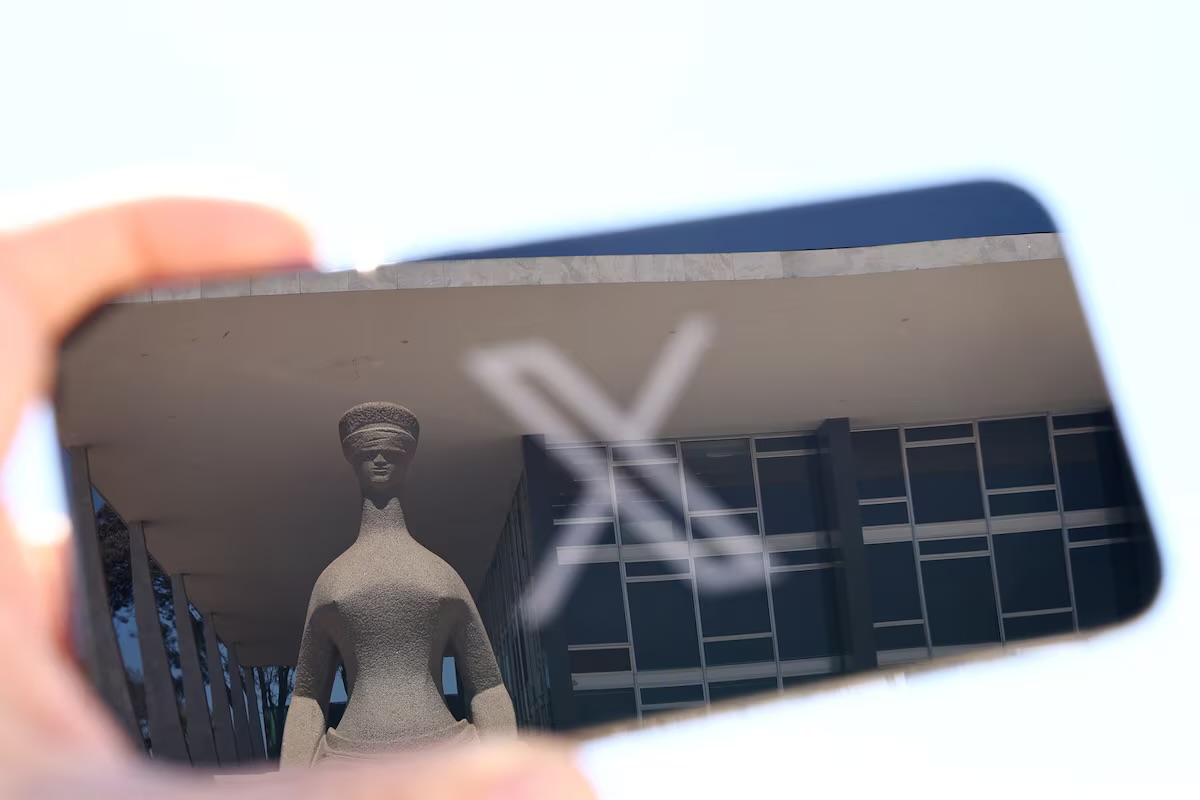

The Death of the Global Internet: the attempt to kill Free Speech
By Hotspotnews
For the first time in history, a foreign power has fined an American company 140 million euros because Europeans didn’t like what some American citizens said on an American platform. The European Union’s weapon of choice was the Digital Services Act, and the target was Elon Musk’s X. Brussels didn’t just demand the posts be removed inside the EU; it demanded X enforce European speech rules everywhere on earth, including inside the United States.
This is not a trade dispute. It is not about privacy or competition. It is a direct assault on the First Amendment by bureaucrats who have never been elected by a single American voter.
The precedent is now set. If Brazil, Turkey, India, or Nigeria decide tomorrow that an American platform must delete criticism of their presidents, silence their opposition journalists, or ban discussion of election fraud, they can simply copy the EU’s playbook: declare the speech “illegal,” levy a nine-figure fine, and threaten to confiscate the company’s local assets or ban the service outright. Every nation on earth just received a how-to manual for censoring Americans without ever setting foot on American soil.
What happens next is predictable, and it is grim.
Large platforms will be given three choices, none of them compatible with liberty.
First, they can surrender. They can turn their algorithms over to the most restrictive regimes and let Turkish censors, Brazilian judges, and European commissars decide what Americans are allowed to read. One global feed, lowest common denominator, permanently set to the preferences of the world’s thinnest-skinned dictators and the EU’s most zealous regulators.
Second, they can retreat. Build digital walls around the United States and let the rest of the world descend into whatever censored ghetto each government demands. Americans keep their free speech; everyone else gets a lobotomized version of the platform. The “global town square” dies, replaced by a balkanized patchwork of national intranets.
Third, they can fight and bleed billions in fines until shareholders force a sale or breakup. Even the strongest companies cannot withstand coordinated lawfare from dozens of governments simultaneously.
We have already watched the dress rehearsal. Brazil banned X entirely for weeks in 2024 because the platform refused to censor a sitting senator at the request of a supreme court justice. Turkey switches Twitter off like a light whenever citizens criticize Erdogan. Russia and China never even pretended to play by open-internet rules. The only thing new is that supposedly liberal democracies in Europe and Latin America are now adopting the same tactics—and doing it with a smile and a press release about “democratic values.”
This is the end of the dream that the internet would remain a borderless realm of free expression. That dream depended on one unspoken assumption: that the United States, as the home of the major platforms and the world’s strongest constitutional protections for speech, would never allow foreign governments to dictate the boundaries of American discourse. That assumption is collapsing in real time.
Conservatives have warned for years that globalist institutions would eventually try to override American sovereignty. We were told we were paranoid when we said the UN, the WHO, and the EU had ambitions far beyond their legitimate authority. Yet here we are: a continental bureaucracy in Brussels is now effectively claiming the right to veto what Americans may say to one another on an American-owned service.
The response cannot be polite negotiation or another toothless statement from the State Department. It must be raw, unilateral, and unmistakably American.
Legislation like Wyoming’s GRANITE Act—now being discussed as a possible federal model—offers the only serious countermeasure. Let any foreign government that censors Americans or fines American companies for protected speech be sued in American courts by any injured citizen. Let their assets in the United States be seized to pay the judgments. Make the cost of attacking the First Amendment prohibitively expensive.
If French or German officials want to fine an American platform for hosting American speech, let them explain to their own taxpayers why French factories in South Carolina or German banks in New York are suddenly at risk. Sovereignty is not a one-way street.
Some will call this escalation. It is not. It is simple reciprocity. For decades the United States opened its markets, its universities, and its networks to the world on the assumption of mutual respect. If the rest of the world now insists on treating American companies as global utilities subject to 190 different censorship regimes, then the United States must treat foreign governments as hostile actors when they cross the line into our constitutional protections.
The open internet is dying. It is being murdered, slowly and deliberately, by governments that never liked free speech to begin with and have finally figured out how to kill it without firing a shot. Unless the United States responds with overwhelming force—legal, financial, and diplomatic—the world will soon be divided into walled digital gardens, each tended by its own Ministry of Truth.
Americans did not ask for this fight. But if we do not win it, the First Amendment will survive only as a local ordinance, enforceable within our borders and nowhere else. And the light of liberty that once beamed out from these shores to every corner of the planet will flicker and go dark.