


The Banco Master Scandal: A Brewing Storm of Fraud, Politics, and Judicial Overreach
By Hotspotnews
Brazil is witnessing what could become one of the largest financial fraud cases in its history, centered on Banco Master and its president, Daniel Vorcaro. What began as allegations of mismanagement has escalated into serious accusations of a criminal organization involving money laundering, market manipulation, fake credit portfolios, and the fabrication of billions in nonexistent assets.
On January 14, 2026, the Federal Police launched the **second phase of Operation Compliance Zero**, executing **42 search and seizure warrants** across multiple locations. Targets included Vorcaro himself (already under house arrest with an electronic ankle monitor since late 2025), his father Henrique Vorcaro, siblings, in-laws, and close business associates such as Nelson Tanure. Authorities blocked or seized approximately **R$ 5.7 billion** in assets to prevent further dissipation, including luxury items like cars, watches, and cash. Earlier phases had already seen Vorcaro arrested in November 2025 while attempting to flee, with estimates of fraudulent credit titles reaching up to **R$ 17 billion** (some reportedly sold to institutions like BRB in deals worth over R$ 12 billion that later proved illusory).
The probe paints Banco Master not as a victim of poor oversight but as a potential hub for high-level financial crimes, with “fartos indícios” (ample evidence) of ongoing offenses cited even by the overseeing minister. Yet the handling of the case has sparked deep unease among conservatives and free-market advocates, who see signs of selective justice, institutional friction, and possible protection of powerful interests.
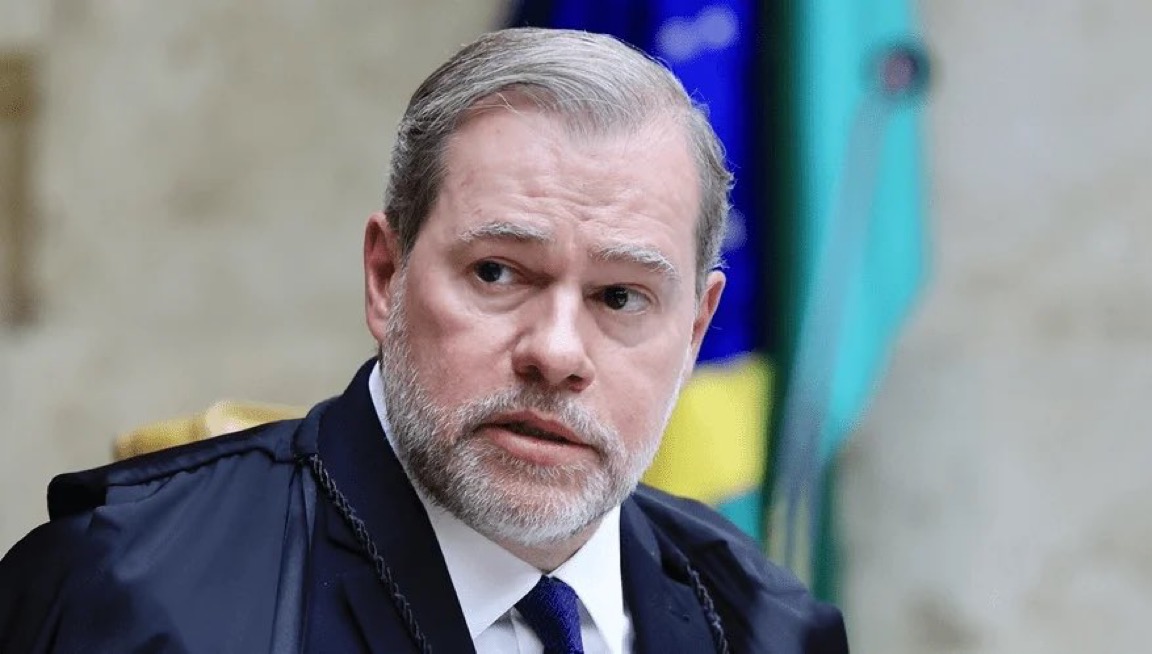
At the center of controversy is Supreme Court Justice **Dias Toffoli**, who authorized the new phase but has clashed publicly with the PF. He criticized delays, demanded explanations from the PF director within 24 hours, ordered all seized materials sealed and held directly under STF control (bypassing standard PF custody), and reportedly hesitated on some warrants before approving them after evidence of continuing crimes was presented. Critics argue this level of direct involvement raises questions about impartiality, especially amid broader tensions between the judiciary and investigative bodies. Some voices on the right warn that such moves risk undermining confidence in institutions and could enable cover-ups rather than accountability.
Politically, the scandal has ignited fierce crossfire. Senator **Magno Malta** (PL), a vocal opponent of the Lula administration, has slammed the governing PT for contributing **zero signatures** to a proposed CPMI (Parliamentary Inquiry Commission) on Banco Master—despite 243 total signatures being gathered—suggesting reluctance to expose any uncomfortable ties. Meanwhile, fresh revelations today highlight connections on the conservative side that opponents are eagerly amplifying.
Fabiano Campos Zettel—Vorcaro’s brother-in-law (married to his sister Natália Vorcaro), an entrepreneur, evangelical pastor at Igreja Lagoinha, and figure in conservative Christian business circles—was among today’s key targets. He was temporarily detained at Guarulhos Airport while attempting to board a private jet to Dubai (later released after procedures, with his passport seized briefly). Official TSE records confirm Zettel as the **largest individual donor (pessoa física)** to two major right-wing campaigns in 2022:
– **R$ 3 million** to Jair Bolsonaro’s presidential reelection bid.
– **R$ 2 million** to Tarcísio de Freitas’s successful run for São Paulo governor (representing about 5.18% of Tarcísio’s total campaign funds of roughly R$ 20.6 million, the biggest single private contribution).
In total, Zettel donated **R$ 5 million** across both, making him one of the top individual funders nationwide that election cycle. His defense at the time described the contributions as fully legal (within the 10% income limit) and aligned with his personal conservative Christian values and family convictions. Tarcísio’s office responded swiftly today, noting his campaign had over 600 donors, denying any personal link or relationship with Zettel, and affirming full electoral court approval of the accounts.
No public evidence has emerged directly implicating Tarcísio or Bolsonaro in wrongdoing related to these donations—no quid pro quo has been alleged in mainstream reporting. Still, the timing—Zettel’s sudden elevation as a prime target amid the escalating probe—has fueled speculation and attacks from the left, who portray it as evidence of broader conservative entanglements. Right-leaning observers counter that large donations are standard in high-stakes elections, stress the absence of proven illegality, and redirect scrutiny toward perceived judicial favoritism or government reluctance to investigate fully.
With up to 1.6 million investors potentially affected (though FGC payments appear unaffected so far), ongoing PF-STF friction, and 2026 elections on the horizon (where Tarcísio polls strongly as a potential Lula challenger), this scandal shows no signs of fading. Conservatives are left asking tough questions: Is this genuine pursuit of justice, or another chapter in Brazil’s long history of politicized institutions shielding allies while targeting opponents? The coming weeks will likely reveal more names, more connections, and more fallout. The stakes—for financial stability, political reputations, and public trust—could not be higher.