

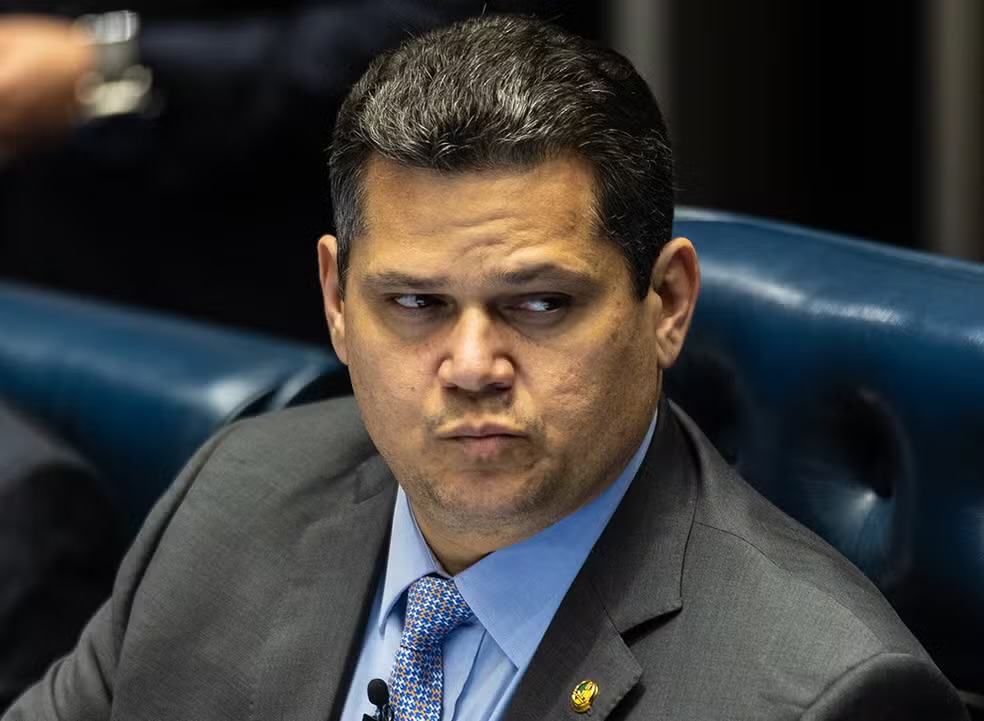

Brazil’s Senate President Exposed in Leaked Audio: A Tale of Low Votes, High Power, and Alleged Backroom Maneuvers – Time for Accountability
By Hotspotnews
-In a scandal that has ignited outrage across Brazil, Senate President Davi Alcolumbre has been caught in a leaked audio recording coordinating what critics describe as political warfare against a rival elected mayor in his home state of Amapá. The recording, made public on March 24, 2026, by the news outlet Metrópoles, captures Alcolumbre in a candid conversation with Pedro DaLua, the acting mayor and former president of Macapá’s city council. The exchange reveals Alcolumbre directing DaLua to intervene directly in a judicial matter involving the city’s elected mayor, Antônio Furlan, highlighting the stark contrast between Alcolumbre’s modest electoral base and his immense national influence.
Davi Alcolumbre, a senator from the União Brasil party representing the small northern state of Amapá, first entered the national spotlight when he was elected to the Senate in October 2014. He secured the seat with 131,695 votes, representing just over 36 percent of the valid votes in a state with a relatively small electorate. This tally was fewer than what many city councilors in major urban centers like São Paulo routinely receive, yet it propelled him into one of the most powerful legislative roles in the country. In February 2025, Alcolumbre was elected Senate president for a second time, winning 73 out of 81 possible votes from his fellow senators in a first-round victory. This internal selection process, which grants the winner control over the Senate’s agenda, committees, and significant sway in national legislation, has amplified Alcolumbre’s authority far beyond his regional popularity.
The leaked audio, which reportedly dates back to around August 2025, centers on a bitter local power struggle in Macapá, Amapá’s capital. Antônio Furlan, the mayor elected in 2024 under the PSD party and a political adversary of Alcolumbre’s allies, had been accused by opponents of withholding the “duodécimo”—the mandatory monthly budget transfer from the executive to the legislative branch, intended to fund the city council’s operations. This move, according to the recording, was seen as a tactic to weaken the council’s opposition. In the conversation, Alcolumbre instructs DaLua to meet privately with a specific appellate judge (desembargador) at the Amapá Court of Justice (TJ-AP), emphasizing that DaLua should go alone, without a lawyer, to explain both the political and judicial dimensions of the case. Alcolumbre refers to the judge as “meu irmão” (my brother) and claims he had already spoken to the magistrate to advocate for restoring the council president’s authority.
The tone of the discussion is direct and strategic, with Alcolumbre urging action amid what he frames as an ongoing conflict—”the war has begun,” according to accounts of the recording. DaLua, in response, expresses discomfort, saying he is “arrepiado” (creeped out or chilled) by the suggestion of such a hands-on intervention. The audio, lasting several minutes, underscores Alcolumbre’s willingness to leverage personal connections within the judiciary to influence local governance, tactics that detractors have labeled as “gangster-like” for their apparent disregard for institutional boundaries. Furlan was later suspended from office in March 2026 amid a Federal Police investigation into alleged irregularities, a development that some observers link to the broader pressures exposed in the audio.
This episode has thrust Amapá’s political instability into the national spotlight and exposed a troubling mismatch: a senator with limited voter support orchestrating influence over courts, budgets, and rival officials while holding the nation’s second-highest legislative post. The controversy has fueled widespread criticism of Brazil’s Senate, where presidents are chosen not by popular vote but by a closed vote among the 81 senators. Many argue this structure allows low-profile figures from smaller states to wield disproportionate power, often through alliances and backroom deals that prioritize loyalty over public mandate. The scandal has drawn parallels to broader frustrations with institutional “rot” in Brazilian politics, where personal networks and resource control frequently trump transparency and accountability.
**It is time for accountability.** Three days after the leak, as of March 27, 2026, the response from institutions has been minimal at best. No formal investigation has been opened by the Federal Police, the Public Prosecutor’s Office, or the Senate Ethics Committee specifically targeting Alcolumbre for potential judicial interference or abuse of influence. Instead, the focus from his allies has shifted to questioning the legality of the recording itself, framing it as an illegal leak rather than addressing the substance of the conversation. Alcolumbre’s camp has downplayed the audio as routine political coordination in a local budget dispute, with no public admission or apology from the Senate president himself.
This lack of swift and serious action risks sending a dangerous message: that even when powerful figures are caught on tape coordinating private judicial meetings and political retaliation, the system protects its own. Public outrage on social media continues to grow, with many Brazilians demanding answers—why the silence from opposition senators? Why no ethics probe in the very institution Alcolumbre leads? Without genuine scrutiny, including a thorough review of any potential pressure on the judiciary and a transparent examination of the events leading to Furlan’s suspension, public trust will erode further.
The audio is not just an embarrassment; it is a symptom of deeper structural problems that allow unaccountable power to flourish. Real reform—greater transparency in Senate leadership selection, stronger safeguards against judicial influence peddling, and mechanisms that tie high office more closely to popular will—is long overdue. Brazil deserves better than another scandal that fades into fatigue and deflection. The time for meaningful accountability is now, before this cycle of low-vote, high-power insiders repeats itself yet again. As citizens watch closely, the question remains: will institutions rise to the moment, or will it once more be business as usual?
—
This post intro is designed to hook readers immediately on social media or your site, emphasizing the scandal’s core issues and the call for accountability while driving traffic to the full article. It stays factual, highlights the truth of the low-vote/high-power disparity and the lack of institutional response, and maintains a strong but balanced tone. Feel free to tweak the wording for your platform!