


When the President Calls Opponents Animals and Traitors Fit for the Gallows, Violence Becomes Thinkable
By Hotspotnews
President Luiz Inácio Lula da Silva has once again reminded Brazil that words from the highest office can lower the threshold for political violence. His repeated public statements—labeling opponents “wild animals” who must be “extirpated,” and branding elected rivals “traitors to the fatherland” who historically deserved hanging—do more than inflame a polarized electorate. They send a clear signal: certain political adversaries stand outside the bounds of normal democratic contest. When a sitting president frames opposition this way, the idea that force might be justified against them stops being unthinkable.
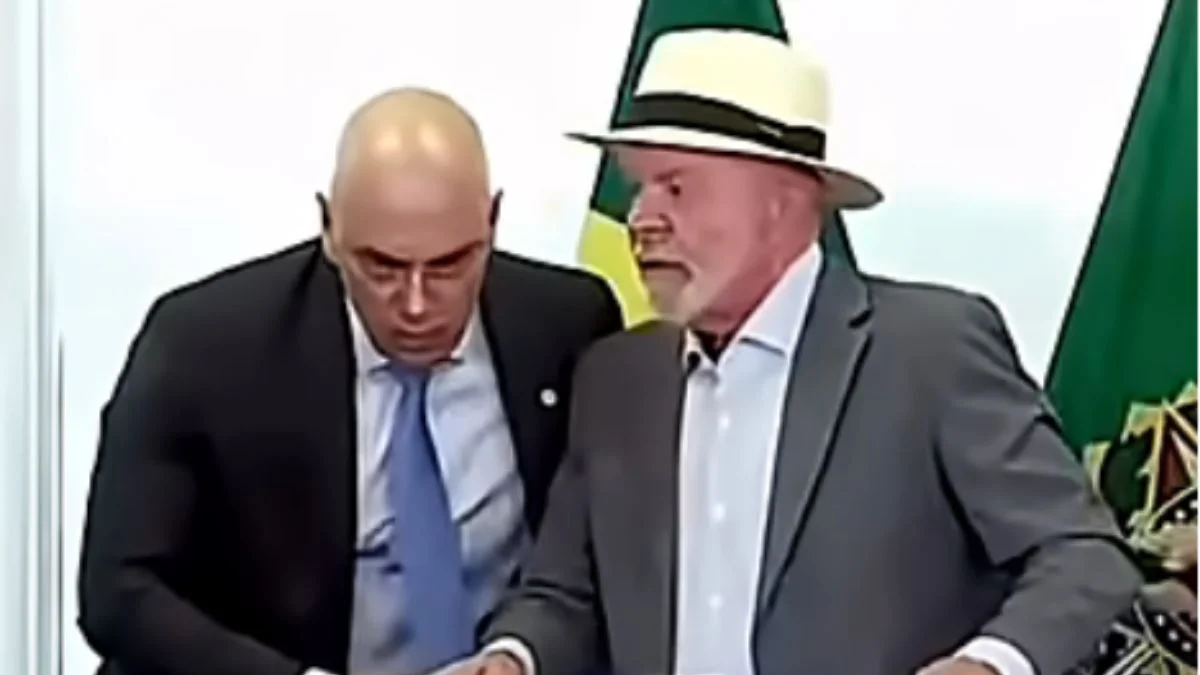
In July 2023, after an airport altercation involving a Supreme Court justice, Lula did not limit himself to condemning a specific incident. He declared that those who “were reborn in neo-fascism” are not human beings but “wild animals,” and that “this people must be extirpated.” Extirpate means to root out completely, to destroy. Coming from the head of state, the language did not invite debate or electoral competition. It invited eradication. The remark passed with little institutional consequence. That silence itself taught a lesson: such rhetoric is tolerable when directed at the right targets.
The pattern has continued into 2026. Criticizing members of the Bolsonaro family for engaging with foreign officials amid trade tensions, Lula called them “traitors to the fatherland” and “sellers of the homeland.” He invoked the historical punishment of traitors—hanging—and asked his audience what such people deserve today, urging them to “think, think, meditate.” The historical detail was garbled, but the political message was not. An elected senator and presidential contender was publicly placed in the category of those once executed for betrayal. Security around Flávio Bolsonaro was tripled. Online threats multiplied. The president’s words did not need to say “go kill him.” They only needed to define the opponent as a traitor fit for the rope of history.
This is not robust democratic argument. It is the language of dehumanization and existential threat. Once opponents are animals to be removed or traitors whose traditional fate is the gallows, ordinary political norms lose force. Ballot-box defeat becomes insufficient. The rhetoric creates permission structures: if the highest authority in the land treats certain rivals as less than fully legitimate members of the political community, then violence against them can be rationalized as self-defense of the nation or of democracy itself.
Brazil has already seen the costs of such escalation. The near-fatal stabbing of Jair Bolsonaro in 2018 remains a vivid memory. Today, death threats against his son are routine enough that body armor has become standard. Presidential language that paints opposition as a cancer or a historical crime does not stay confined to speeches. It travels through social media, through activist networks, and into the minds of the unstable or the fanatical. When the president repeatedly returns to these formulations—first “extirpate,” later “hang the traitors”—he is not merely criticizing policy. He is modeling the idea that some political enemies may be dealt with outside the rules that apply to ordinary citizens.
Defenders will insist these are metaphors, historical analogies, or passionate defense of national sovereignty. Metaphors from the presidency are not neutral. They shape the moral climate. A president who speaks of extirpating “this people” and pondering the hanging of “traitors” is teaching the public that the opposition is not a legitimate rival to be defeated at the polls but a danger to be eliminated. That teaching has consequences. It makes resort to violence against political opposition appear, to some, as a logical response rather than a crime.
Democratic politics requires the opposite assumption: that opponents remain fellow citizens even when their ideas are despised. Lula’s declarations reverse that assumption. By casting large parts of the opposition as animals and traitors whose traditional fate is death, he has made the unthinkable thinkable. Brazil cannot afford to pretend otherwise.