


Brazil’s Moment of Truth: The AI Divide, Critical Minerals, and the Cost of Hesitation
By Hotspotnews
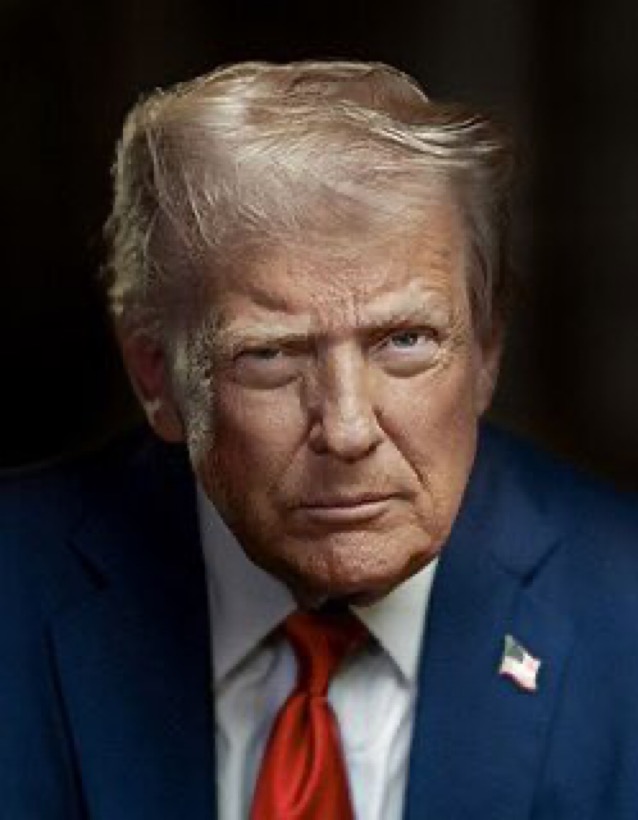
For decades, Brazilian foreign policy prided itself on the art of the balance. Successive governments sold soybeans and iron ore to Beijing while cultivating correct, if sometimes frosty, relations with Washington. That era is ending. The United States under President Trump has made clear that the age of strategic ambiguity in artificial intelligence, semiconductors, and critical minerals is over. Countries will either join the emerging network of trusted partners or find themselves on the outside looking in. For Brazil, the choice is no longer theoretical. It is the central economic and sovereignty question of the next decade.
The American position is straightforward and unapologetic. Through initiatives such as Pax Silica and the AI Opportunity Statement, Washington is building exclusive supply chains for the technologies that will define military and economic power in the twenty-first century. Advanced AI models, high-end chips, and the minerals that feed them cannot be secured if partners simultaneously deepen ties with the Chinese Communist Party’s competing architecture. Dual membership is being treated as non-membership. The logic is cold realism: technology leadership confers lasting advantage, and free-riding by Beijing cannot be tolerated.
Brazil enters this contest with extraordinary geological advantages and dangerous political liabilities. The country holds the world’s second-largest reserves of rare earths, near-total dominance in niobium, and vast deposits of other minerals essential to batteries, magnets, defense systems, and data centers. Yet almost none of the high-value processing—the separation, refining, metallization, and magnet production—occurs on Brazilian soil. China controls the overwhelming majority of global refining capacity. The pattern is familiar and corrosive: Brazil exports the ore and imports the finished goods that command multiples of the original price. This is not industrial policy. It is the commodity trap dressed up in nationalist rhetoric.
Under a continued Workers’ Party government, the risks multiply. President Lula has consistently prioritized multipolar rhetoric, BRICS expansion, and closer technological engagement with Beijing. Brazil’s participation in China’s World Artificial Intelligence Cooperation Organization while remaining outside the American-led frameworks sends a clear signal. The stated goal of “sovereignty” and non-alignment sounds attractive in speeches. In practice, it risks locking the country into the role of reliable raw-material supplier to an authoritarian power that has no interest in helping Brazil climb the value chain. Chinese investment arrives with conditions—often opaque, always strategic—and rarely transfers the frontier capabilities that matter most. When the United States closes the door on dual players, the default path under Lula is deeper dependence on the only remaining large buyer and technology partner: China.
Critics of the American approach argue that forcing a choice will simply drive Brazil further into Beijing’s arms. There is partial truth here. Commodity trade with China is enormous and will not vanish overnight. Iron ore, soy, and niobium flows generate hard currency that any Brazilian government needs. A sudden rupture would be costly. Moreover, pure non-alignment has emotional and historical appeal in a country that remembers periods of American neglect or heavy-handedness. Some on the Brazilian right worry that aligning too closely with Washington invites lectures on democracy, environment, or social policy that they reject. These concerns are not imaginary.
Yet the counter-argument is stronger and more urgent. Remaining non-aligned while the two technological superpowers harden their blocs is not neutrality; it is gradual exclusion from the higher-growth ecosystem. Access to advanced semiconductors, preferential financing for processing plants, joint research, and secure markets for value-added products will concentrate among countries that choose deliberately. Brazil can continue selling ore to China. What it cannot do indefinitely is expect the United States and its partners to share sensitive technology and capital with a nation that simultaneously advances Beijing’s parallel architecture. The opportunity cost is measured in lost factories, lost skilled jobs, lost productivity gains, and a permanently lower place in the global division of labor.
A different path is available. Senator Flávio Bolsonaro has made the strategic case with unusual clarity for a Brazilian politician. He has described Brazil as the natural solution for the United States seeking to reduce dependence on Chinese rare earths and critical minerals. He has criticized the current government’s anti-American posture and its readiness to prioritize ideological affinity with Beijing over national economic interest. A government led by him would almost certainly seek entry into the trusted-partner networks, court American and allied investment conditioned on domestic processing, and treat technological alignment with the free world as a feature rather than a betrayal of sovereignty. The commodity relationship with China need not be abandoned, but it would no longer dictate the country’s technological future.
Conservatives should not romanticize this choice. Alignment with the United States will require discipline: regulatory reform to attract capital, consistent rule of law, rejection of the institutional vandalism that has characterized recent years, and a willingness to prioritize long-term industrial capacity over short-term political signaling. It will also require managing the inevitable friction with a powerful trading partner in the East. Yet the alternative—drifting into technological second-tier status under the protective rhetoric of multipolarity—is worse. History is unkind to countries that supply the raw materials of rising powers while remaining dependent on them for the finished products of progress.
The emerging bipolarity in AI and advanced manufacturing is not a plot against the Global South. It is the predictable result of a Chinese system that treats technology as an instrument of state power and a Western response that finally treats security of supply as non-negotiable. Brazil’s geology gives it leverage few other nations possess. Whether that leverage is used to secure a place inside the productive alliances of the free world or is squandered in the service of an outdated non-alignment doctrine will be decided in the coming election and the policies that follow. The space for permanent ambiguity has closed. The only remaining question is whether Brazilian leaders will choose the side that maximizes national power and prosperity—or discover too late that hesitation itself was a choice.