

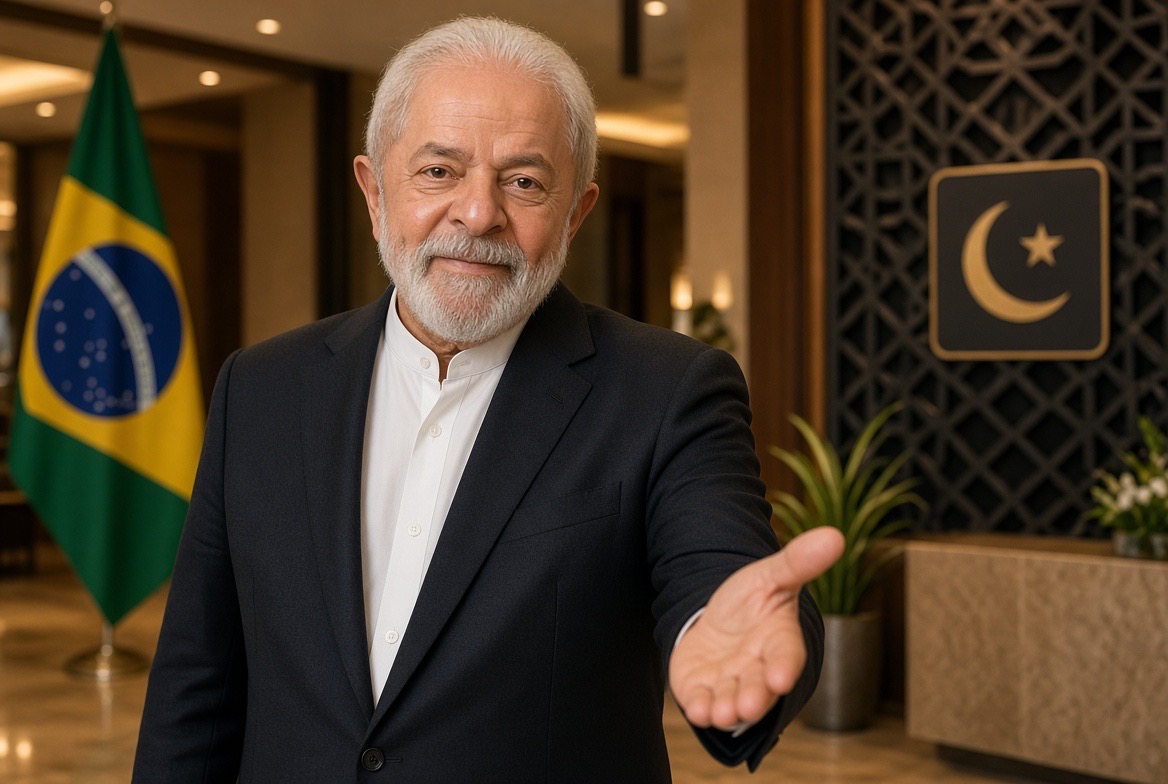

Lula’s Tourism “Victory”: Prayer Spaces Over Public Safety
Is Brazil becoming a Muslim Harboring Nation?
By Hotspotnews
While organized crime still extracts tens of billions from the Brazilian economy and homicide rates remain stubbornly high by regional standards, the Lula government just scored an international win at UN Tourism. On November 24 in Abu Dhabi, the organization approved by acclamation Brazil’s proposal for voluntary global guidelines on “Muslim-friendly” tourism. The standards, drawn from a National Guide developed with the Federation of Muslim Associations of Brazil and the Arab-Brazilian Chamber, call for Islamic-compliant food options, dedicated prayer spaces, greater privacy in accommodations, and special services during Ramadan. Adoption is optional for countries and businesses, and the text carefully distinguishes “Muslim-friendly” hospitality from formal halal certification.
That is the official story, according to Agência Brasil and the Ministry of Tourism. The market itself is real: Mastercard-CrescentRating data show roughly 196 million international Muslim arrivals in 2025, with projections continuing upward. Destinations routinely tailor offerings to high-value segments. Private hotels and restaurants that choose to offer these amenities are simply responding to demand, the same way they already accommodate dietary preferences, family travelers, or other groups.
The political packaging is different. Brazil’s Muslim population is small—roughly 41,000 by the 2022 census, with community estimates ranging higher but still a fraction of the national total. The country has already been meeting or exceeding its overall international visitor targets without a special UN-backed campaign aimed at one religious cohort. Meanwhile, public security remains Brazilians’ top concern in multiple polls, crime continues to impose measurable economic costs, and travel advisories still flag elevated risks of violent crime in major cities. Prioritizing specialized religious accommodations for one group while ordinary safety, infrastructure, and broad-based tourism competitiveness lag is a choice of emphasis.
Critics who raise cultural compatibility are not inventing patterns. Pew Research Center surveys across dozens of countries have repeatedly found substantial majorities of Muslims in many societies favoring sharia as official law for their communities, alongside more traditional views on gender roles and the role of religious authorities in public life. Those findings vary by region and are not universal, but they are documented and recurring. Treating tourism facilitation as purely commercial does not erase the difference between market segmentation and active state promotion of one set of religious norms as an international model. In a secular constitutional order, private accommodation is one thing; elevating it as a signature diplomatic achievement while core domestic problems persist is another.
Tourism revenue is welcome. Special pleading under the banner of “inclusion,” funded by a government that still struggles to deliver basic security for its own citizens, is a signal of priorities. Brazilians can decide whether that signal matches the principles of equal treatment and public order they expect from their government.
Sources: Agência Brasil and Ministry of Tourism reporting on the November 2026 UN Tourism session; Mastercard-CrescentRating Global Muslim Travel Index figures; IBGE 2022 census data on religious affiliation; Pew Research Center multi-country surveys on Muslim attitudes toward sharia, politics, and social issues; Brazilian Public Security Forum and Ministry of Justice data on crime trends and economic costs.
#Lula #Brasil #TurismoIslamico #SegurancaPublica #Prioridades #Conservador #UNTurismo #CulturaNacional