

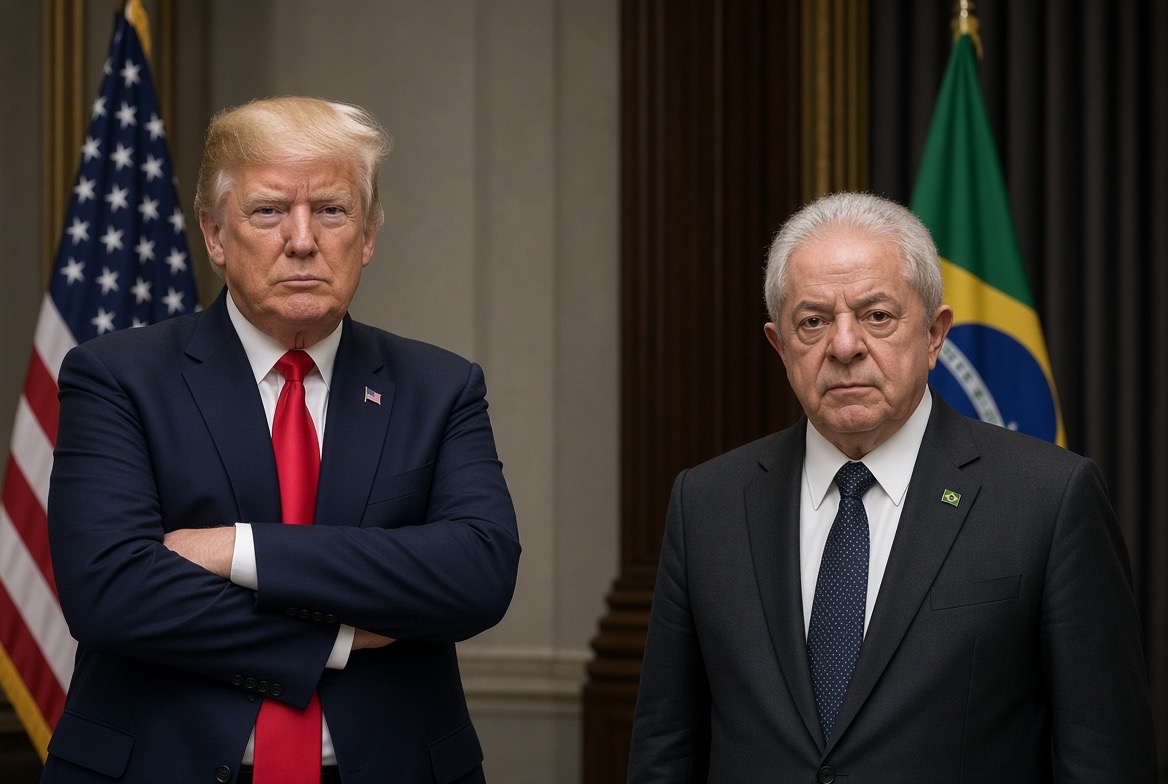

U.S. Terror Designations of Brazil’s PCC and Comando Vermelho: What They Mean for Brazilian Territory
By Hotspotnews
In late May 2026, the United States designated Brazil’s two largest criminal organizations—Primeiro Comando da Capital (PCC) and Comando Vermelho (CV)—as Specially Designated Global Terrorists (SDGTs), with full Foreign Terrorist Organization (FTO) status taking effect on June 5, 2026. The announcement came hours after Senator Flávio Bolsonaro met President Trump and Secretary of State Marco Rubio in Washington and specifically requested the designations. Brazilian government officials were informed but not consulted.
What the designations have already produced
On July 1, 2026, the U.S. Treasury’s Office of Foreign Assets Control (OFAC) sanctioned two Brazilian nationals and several companies for allegedly helping the PCC launder drug proceeds through networks that touched Florida and the U.S. financial system. Among those designated was São Paulo-based Victor Henrique de Oliveira Shimada, described as a key link between Florida-based operators and foreign traffickers, along with related firms. This was the third round of OFAC actions against PCC-linked targets since 2021 (the group had already been on the SDN list under a drugs-related executive order).
These actions illustrate the most immediate practical effect: the ability to freeze assets and cut off dollar-clearing access for individuals and companies with any U.S. nexus.
What the designations enable inside Brazil
Financial and compliance pressure (highest near-term impact)
Any transaction involving a U.S. person, U.S. bank, or U.S. dollar clearing can trigger blocking requirements and secondary-sanctions risk. Brazilian banks, fuel distributors, port and logistics operators, construction firms, crypto facilitators, and other businesses that interact with the U.S. financial system face higher compliance costs, potential de-risking by foreign counterparties, and the risk of being designated themselves if they are found to have knowingly facilitated the groups. Brazilian law does not automatically treat PCC or CV as terrorist organizations, creating a mismatch that complicates cross-border compliance.
Material-support criminal liability
Under 18 U.S.C. § 2339B, knowingly providing money, financial services, training, logistics, personnel, or other support to an FTO is a serious federal crime when there is a U.S. connection. The statute has extraterritorial reach in defined circumstances. This applies even if the conduct itself occurs entirely in Brazil.
Diplomatic and political leverage
Brazil’s Foreign Ministry has publicly warned that the designations could be used to justify unilateral administrative, judicial, or even military measures against Brazilian individuals, companies, or territory, and has described the move as having significant implications for national sovereignty. In November 2026, Brazil and Uruguay were the only countries to vote against a U.S.-led OAS resolution that invoked the Inter-American Treaty of Reciprocal Assistance (Rio Treaty/TIAR) to discuss regional responses to drug trafficking and what the resolution described as “terrorism.” Brazilian diplomats characterized both the FTO designations and the OAS resolution as pressure tactics rather than pure operational cooperation.
What the designations do not automatically authorize
An FTO label by itself does not authorize U.S. military strikes, raids, or operations on Brazilian soil. Under the UN Charter, the use of force still requires either the consent of the Brazilian government or a valid self-defense claim meeting Article 51 standards. Brazil’s Foreign Ministry has explicitly flagged the risk that the designations could be invoked as a pretext for extraterritorial or military action, citing the broader regional pattern of U.S. operations. However, as of late November 2026, no U.S. military operations related to these designations have taken place on Brazilian territory.
Current status of the groups
A November 2026 assessment by Brazil’s intelligence agency (Abin) found that the PCC remains the most sophisticated organization, with a presence reported in 28 countries and a primary focus on international cocaine trafficking and logistics hubs. The CV has expanded significantly in Brazil’s North and Northeast and is described as a major driver of local violence and extortion. Both groups continue to operate at scale; the designations have raised their costs without eliminating their presence.
Realistic scenarios going forward
- Continued financial and secondary-sanctions pressure — The most probable path. Additional OFAC actions against Brazilian facilitators, front companies, and financial operators are possible whenever a U.S. nexus exists.
- Intelligence and law-enforcement cooperation — Expanded information sharing or support for Brazilian operations remains available if Brasília agrees. The Lula government has previously sought cooperation on money laundering and arms trafficking while rejecting the terrorism framing.
- Political and electoral use — The designations arrived during the 2026 presidential campaign and were publicly welcomed by Flávio Bolsonaro. They provide an external endorsement of a hardline security platform while giving the current government grounds to frame the issue as foreign interference in sovereignty.
- Invited or joint operations — If a future Brazilian administration formally requests or consents to U.S. assistance, the FTO label would make it easier to structure support under counterterrorism authorities.
- Unilateral military action without consent — Explicitly warned about by Brazil’s Foreign Ministry and legally constrained by the UN Charter. It has not occurred and would represent a major escalation with significant diplomatic and legal consequences.
Bottom line
The strongest effects so far, and the most likely near-term effects inside Brazil, are financial disruption, elevated compliance burdens on legitimate businesses, and political pressure. Direct unilateral U.S. military action on Brazilian territory remains constrained by sovereignty rules and has not taken place. The Brazilian government itself, however, has treated the designations as creating a new legal and political opening that did not previously exist—an assessment that continues to shape Brasília’s response.