

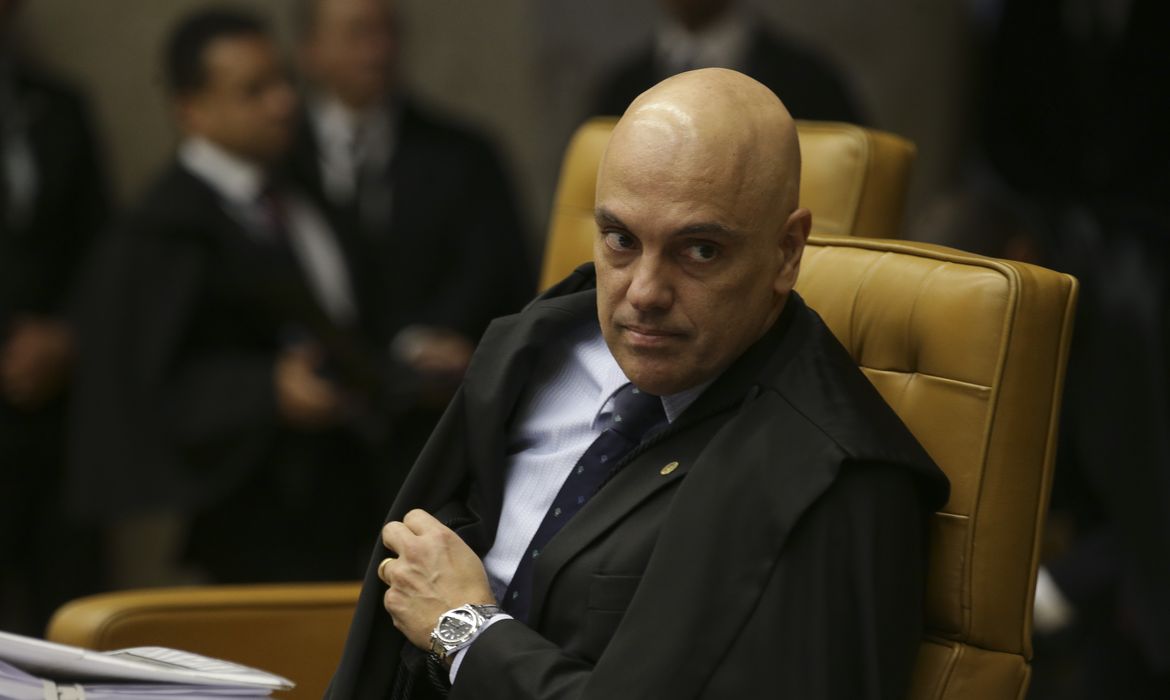

The Brazilian institutions just delivered another masterclass in selective blindness.
By Hotspotnews
According to reporting by Malu Gaspar in O Globo, a straightforward search in the Polícia Federal’s own digital evidence system for the term “Alexandre de Moraes” pulls up drafts of the R$131 million contract between Banco Master and the law firm of Viviane Barci de Moraes, the wife of the STF minister. The metadata lists “Ministro Alexandre de Moraes” as the last author. A second arrangement involving shares in a jet and helicopter was also left out, along with dozens of messages. These details had already surfaced in earlier PF work. Yet the version of the report that reached STF President Edson Fachin on November 18 omitted them.
The official explanation is procedural purity. Andrei Rodrigues and the PF say they followed Fachin’s instructions for strictly descriptive reports limited to mentions of ministers, without data crossing or deeper analysis that might be seen as investigating a sitting justice. Including family business contracts, they argue, would risk nullifying the material. The full phone extraction was supposedly made available to the Court and the PGR. An earlier, more complete version produced by investigators was rejected; some of those delegates were later removed from the case.
This is the same system that has shown extraordinary energy and creativity when the targets are political opponents, journalists, or ordinary citizens. When the evidence points toward a powerful minister, his wife’s multimillion-real contract with a controversial bank, and documents that appear after a basic keyword search, the machinery suddenly develops a refined sense of jurisdictional restraint. The distinction between “following the letter of the order” and producing a report engineered to minimize embarrassment is left for the public to notice.
The practical effect is that the formal document meant to inform whether an investigation should proceed arrives scrubbed of the most commercially and politically sensitive material. The raw data may sit in some archive, but the official narrative that travels to the PGR and the Court does not. In a country where STF ministers already concentrate extraordinary power and where the Banco Master case has involved liquidations, arrests, and large sums of public-interest money, this narrowing is not a technical footnote. It is a choice about what the institutional record will emphasize and what it will downplay.
Critics are entitled to observe the pattern: expansive interpretations of authority when convenient, sudden caution when the names belong to the institutional elite. The PF’s note insists there was no omission, only compliance. The O Globo reporting shows the documents were locatable without sophisticated forensics and that a fuller version once existed. The gap between those two facts is where public confidence erodes. Transparency that is available only if one already knows where to look, and only outside the official report, is transparency in name only.
Institutions do not preserve legitimacy by explaining why obvious material was left out of the document that actually moves the process. They preserve it by applying the same standards regardless of who is involved. When a simple search finds what the formal report omits, the burden of explanation rests with those who decided the narrower version was sufficient.
Sources: Reporting by Malu Gaspar and colleagues in O Globo (November 23 and November 27, 2026) on the omitted contracts, messages, and the results of a direct search in the PF’s Iped system; PF official note and statements from Andrei Rodrigues emphasizing compliance with Fachin’s limits on descriptive reporting; contemporaneous accounts in Folha de S.Paulo, Valor Econômico, and Gazeta do Povo confirming the omissions and the institutional response.
#STF #AlexandreDeMoraes #PoliciaFederal #BancoMaster #JustiçaSeletiva #Brasil #Transparência #Blindagem #CasoMaster #PF #VivianeBarci #EdsonFachin #AndreiRodrigues #Accountability #RuleOfLaw #BrazilPolitics #STFBrasil #Omissão #RelatórioPF #Investigação #EliteJustice #PublicTrust #BrazilianInstitutions #MasterCase #SelectiveJustice #AccountabilityNow #NoDoubleStandards #InstitutionalIntegrity #Brazil2026 #PowerAndPrivilege #JudicialAccountability