

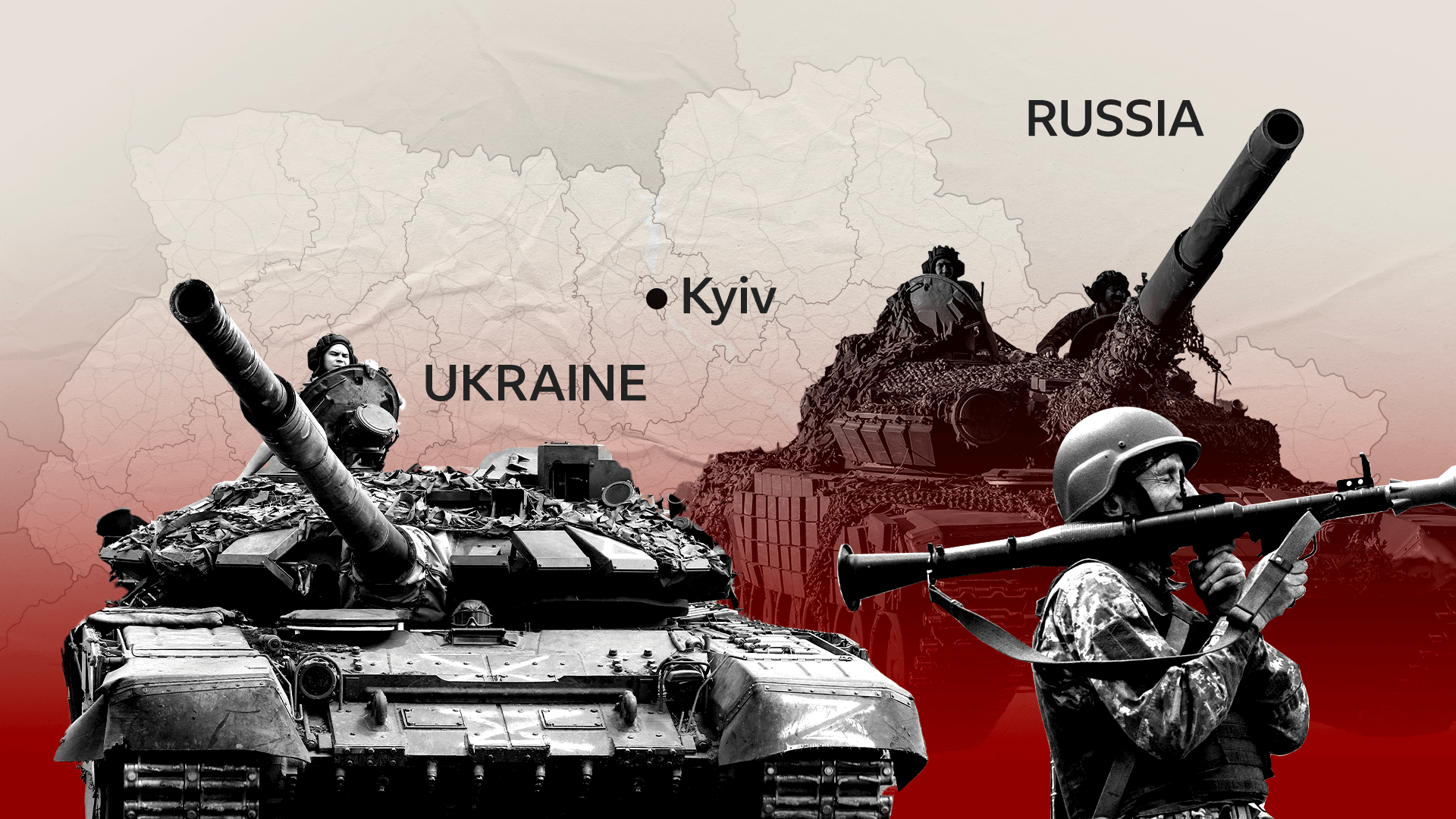

Ukrainian forces fighting inside Russia, specifically in the Kursk region, has reported on March 7, 2025, an indication that they are nearly surrounded according to open-source maps:
Ukrainian forces launched a significant incursion into Russia’s Kursk region in August 2024, marking the most substantial attack on Russian soil since World War II. The operation aimed to:
– Disrupt Russian military efforts by forcing Moscow to divert resources from the eastern front in Ukraine.
– Bring the war to Russian civilians, countering the Kremlin’s efforts to shield its population from the conflict.
– Secure a strategic foothold as a potential bargaining chip in future peace negotiations.
Initially, Ukraine claimed control over significant territory, with reports suggesting they held over 1,200 square kilometers at one point. However, by March 2025, the situation appears to have shifted dramatically.
Current Situation
Open-source maps, such as those from the Ukrainian military blogging resource Deep State, indicate that as of March 7, 2025:
– Thousands of Ukrainian troops are nearly encircled by Russian forces in Kursk.
– Russian counteroffensives over the preceding three days have retaken territory, splitting the Ukrainian contingent into two groups and severing their main supply lines.
– A narrow corridor, approximately 1 kilometer long and less than 500 meters wide at its narrowest, connects the bulk of the Ukrainian forces (about three-quarters of the total) to a smaller group closer to the border. Russian forces are actively working to close this gap.
Analysts, including Pasi Paroinen from the Finland-based Black Bird Group, describe the situation as “very bad” for Ukraine, suggesting that encirclement or a forced withdrawal is imminent unless the situation is quickly reversed.
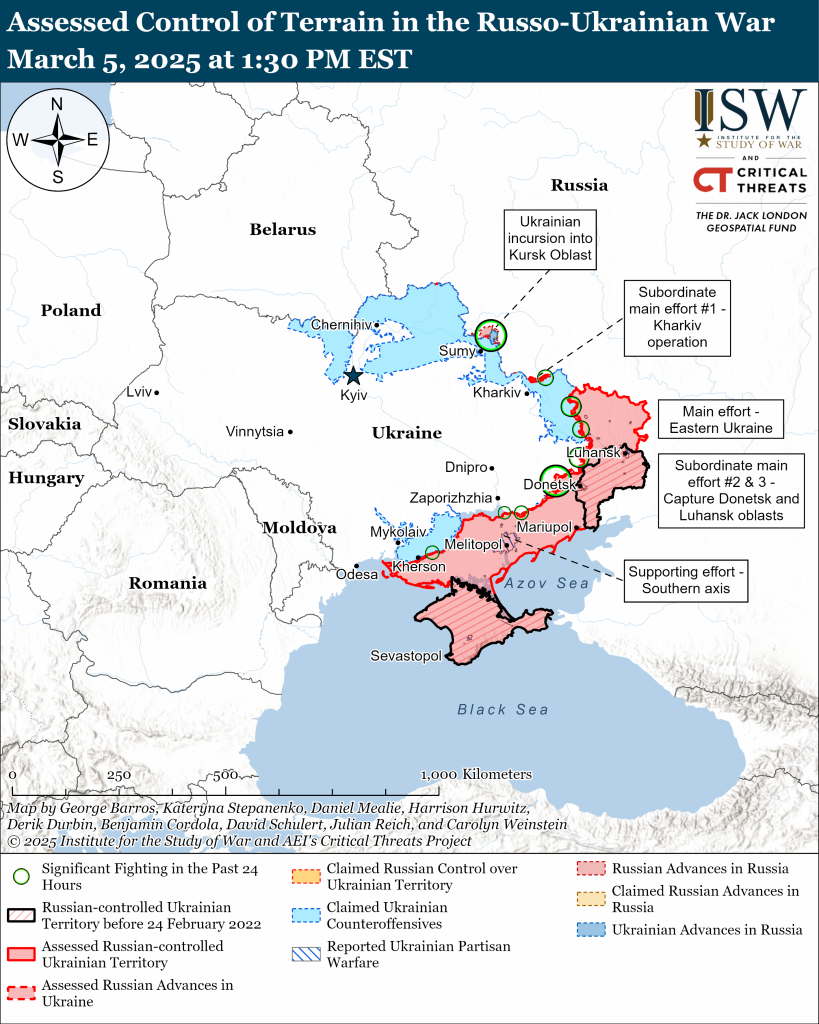
Key Developments
1. Russian Counteroffensive:
– Russian forces have driven a wedge south of Sudzha, a key town within the Ukrainian-held pocket, cutting off an alternative supply route. Influential Russian war blogger Yuri Podolyaka reported this breakthrough as extending up to 4 kilometers deep.
– Advances near settlements like Kuryilovka and pressure on the Sumy region border further threaten Ukrainian logistics.
2. Ukrainian Response:
– Ukrainian military analyst Evhen Dykyi claimed that counterattacks in the last day or two (as of March 7) improved positions near Sudzha, targeting Russian rear and logistics. Ukraine’s General Staff reported repelling 29 Russian attacks in Kursk over the past day, indicating ongoing resistance.
– However, the broader trend suggests these efforts may be insufficient to halt Russian momentum.
3. External Factors:
– The suspension of U.S. intelligence sharing with Kyiv has likely weakened Ukraine’s situational awareness and response capabilities, exacerbating the precariousness of their position.
– Mounting U.S. pressure for a ceasefire adds political complexity, potentially forcing Ukraine into a retreat that could undermine morale and negotiating leverage.
Strategic Implications
– Military Risks: If encircled, Ukrainian forces face significant losses—either through capture or destruction—given the reported Russian advantage in drones (e.g., FPV drones) and artillery. A withdrawal, if attempted, would be perilous, described as a “dangerous gauntlet” due to Russian firepower.
– Political Fallout: Losing the Kursk salient would eliminate a key bargaining chip for Kyiv in peace talks, especially as Russian President Vladimir Putin has rejected territorial swaps and vowed to reclaim the region by force.
– Morale and Resources: The incursion’s initial success boosted Ukrainian morale, but a retreat or defeat could reverse this, straining an already stretched military amid manpower shortages and a grinding war in eastern Ukraine (e.g., Donetsk).
The narrative of Ukrainian forces being “almost surrounded” relies heavily on open-source maps and analyst commentary, which, while credible (e.g., Deep State, Black Bird Group), lack immediate official confirmation from Russian or Ukrainian military sources due to their tendency to report with delays. This introduces some uncertainty—Ukrainian counterclaims of successful counterattacks suggest the situation may not be as dire as portrayed, or at least remains fluid.
However, the convergence of multiple sources—Russian bloggers, Ukrainian analysts, and Western observers—lends weight to the assessment of a deteriorating Ukrainian position. The loss of U.S. intelligence support aligns with Russia’s intensified efforts, suggesting Moscow is capitalizing on a perceived window of opportunity. The use of drones and deep wedges indicates a Russian strategy focused on isolating and overwhelming Ukrainian units, consistent with their broader attritional approach in the war.
### Possible Outcomes
1. Encirclement: If Russian forces close the corridor, Ukrainian troops could be trapped, leading to a significant military and propaganda victory for Moscow.
2. Withdrawal: A retreat might preserve some forces but would cede Kursk, undermining Ukraine’s strategic goals and morale.
3. Stalemate: Successful Ukrainian counterattacks could stabilize the front, though sustaining this against Russian pressure seems unlikely without external aid resuming.
### Conclusion
As of March 8, 2025, Ukrainian forces in Kursk appear to be in a critical predicament, with open-source maps and expert analysis pointing to a near-encirclement by Russian forces. The situation reflects a reversal of Ukraine’s bold incursion, driven by Russian adaptability and compounded by reduced Western support. While Ukrainian resistance persists, the odds favor a Russian closure of the pocket unless Kyiv can muster a rapid, effective response— a challenging prospect under current conditions. This development underscores the war’s shifting dynamics and the high stakes of territorial control as diplomatic pressures mount.