

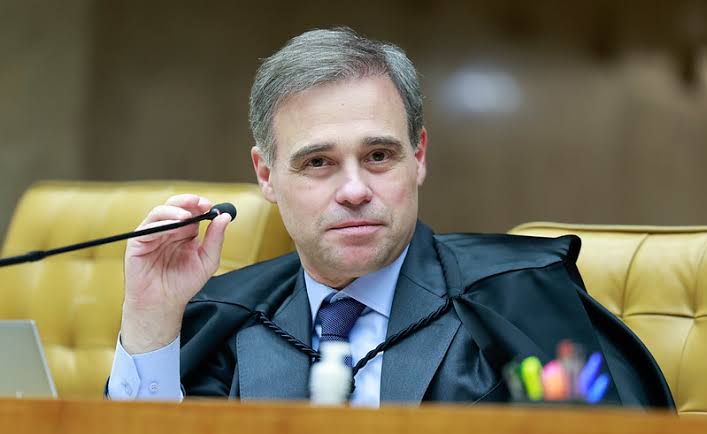

André Mendonça and the Fight Against Impunity: A Critical Juncture in Brazilian Justice
By Hotspotnews
In the halls of Brazil’s Supreme Federal Court (STF), one minister stands out as a rare voice pushing back against entrenched interests and selective accountability. André Mendonça, appointed by former President Jair Bolsonaro, has emerged as the relator in high-stakes investigations that expose alleged corruption networks reaching deep into the current Lula administration. As anticipation builds around his next decisions—particularly in the sprawling Operação Compliance Zero—many conservatives see a potential crack in the wall of impunity that has long protected powerful political figures.
The stakes feel especially high because, despite mounting evidence from police operations, documents, financial trails, and witness statements, accountability often evaporates when it touches the upper echelons of power. This pattern is what makes the current moment both hopeful and profoundly concerning for those who believe in equal application of the law.
The Caso Master and Operação Compliance Zero
At the center of recent developments is the investigation into the Banco Master, owned by Daniel Vorcaro. What began as probes into financial irregularities, fraud against the national financial system, money laundering, and organized crime has expanded into allegations of political corruption, obstruction of justice, and sophisticated schemes to influence public opinion and intimidate critics.
Operação Compliance Zero, conducted by the Federal Police under STF oversight, has unfolded in multiple phases. In the ninth phase, launched in June 2026, authorities carried out searches targeting Senator Jaques Wagner (PT-BA), the government leader in the Senate, and banker Augusto Lima. Investigators examined suspicions that Wagner used his parliamentary position to benefit the bank in exchange for personal advantages, including an apartment valued around R$2.5 million and substantial payments routed through family-linked companies. Cash in foreign currencies was reportedly found in locations connected to the senator.
The tenth phase, authorized shortly thereafter, focused on publicist Thiago Miranda, accused of orchestrating campaigns to discredit the Central Bank and attack institutions. According to the Federal Police and Mendonça’s decisions, Miranda allegedly coordinated efforts to recruit influencers and journalists with payments reaching up to R$2 million, using illicitly obtained data for intimidation and to protect the interests of Vorcaro and his associates. The operation involved searches for documents, electronic devices, and assets, highlighting what authorities describe as a “mafia-like” structure with significant operational capacity.
These phases were not spontaneous. They followed Mendonça’s review of evidence presented by the police, his authorization of coercive measures, and his willingness to empower investigators. He has also maintained pressure through related decisions, such as upholding or ordering detentions linked to the case. This stands in contrast to perceptions of past high-profile operations—like Lava Jato—where aggressive phases gave way to reversals, annulments, or political maneuvering that shielded key figures.
Who Is André Mendonça?
Mendonça is not a typical STF minister. A former Attorney General and Justice Minister under Bolsonaro, he is known for a more textualist and institutionalist approach compared to the court’s activist majority. As a Presbyterian pastor with conservative values, he has often dissented on issues involving free speech, religious liberty, and procedural safeguards.
His role as relator in the Master case has drawn both praise from opposition voices and intense scrutiny. Reports indicate his security was reinforced due to the sensitivities involved. Supporters argue he is simply applying the law without fear or favor—authorizing searches when evidence justifies them, revising prior restrictive decisions to give police more room to operate, and refusing to prematurely close avenues of investigation.
Critics from the government side have pushed back, with defenses filing appeals and questioning procedural aspects. This resistance itself fuels the narrative that powerful interests are circling the wagons.
The Broader Problem of Selective Justice
What makes this case particularly alarming to conservatives is the recurring theme of evidence without consequences for the politically connected. Brazil has seen repeated cycles: dramatic police operations uncovering trails of money, influence, and power; followed by legal maneuvers, media framing that downplays implications for certain parties, and eventual dilution of accountability.
Under the Lula government, figures like Jaques Wagner occupy central positions of influence. Allegations that a Senate leader may have traded legislative support for personal gain strike at the heart of democratic integrity. When such claims arise alongside operations targeting attempts to manipulate public discourse and institutions, it raises uncomfortable questions about the health of the republic.
The STF itself has faced accusations of overreach in other matters, with some ministers perceived as aligned with the executive or activist agendas. Mendonça’s presence provides a counterweight, but one minister cannot single-handedly reform an entire system. His decisions can preserve evidence, advance phases of investigation, influence public debate, and potentially shape related electoral matters through his TSE role. However, final outcomes depend on collegial votes, lower courts, and political will.
This is no miracle cure. Systemic change requires consistent pressure from multiple fronts: an engaged citizenry, independent media willing to follow evidence regardless of political color, and electoral consequences in 2026. Yet dismissing Mendonça’s role as insignificant would ignore the power of a determined relator to keep uncomfortable truths alive.
Implications for 2026 and Beyond
With presidential elections approaching, the Master investigations carry political weight. Revelations touching government allies could complicate narratives of clean governance and fuel opposition arguments about corruption returning under PT leadership. Conversely, successful pushback or dilution could reinforce cynicism that “the system protects its own.”
Conservatives view Mendonça’s posture as a reminder that judicial independence, when exercised responsibly, can serve as a check on executive and legislative excess. His actions—grounded in police evidence rather than political expediency—offer a model of what impartial justice should look like: following facts where they lead, even when they point toward powerful incumbents.
The fear that “no matter the evidence, nobody is investigated” reflects deep frustration with Brazil’s history of elite impunity. Operação Compliance Zero demonstrates that dedicated investigators and at least one resolute STF minister can still force the system to confront allegations. Whether this leads to meaningful accountability or another chapter of stalled justice will test the resilience of Brazilian institutions.
For those committed to the rule of law over political tribalism, the coming weeks and months around these cases will be telling. Evidence must be allowed to speak, investigations must proceed without undue interference, and outcomes must apply equally—regardless of party affiliation or proximity to power. Mendonça’s next moves may not deliver a sweeping transformation overnight, but they represent a principled stand against the normalization of selective enforcement. In a democracy, that stand matters more than many realize.
The Brazilian people deserve institutions that protect the law, not the powerful. The work continues.