

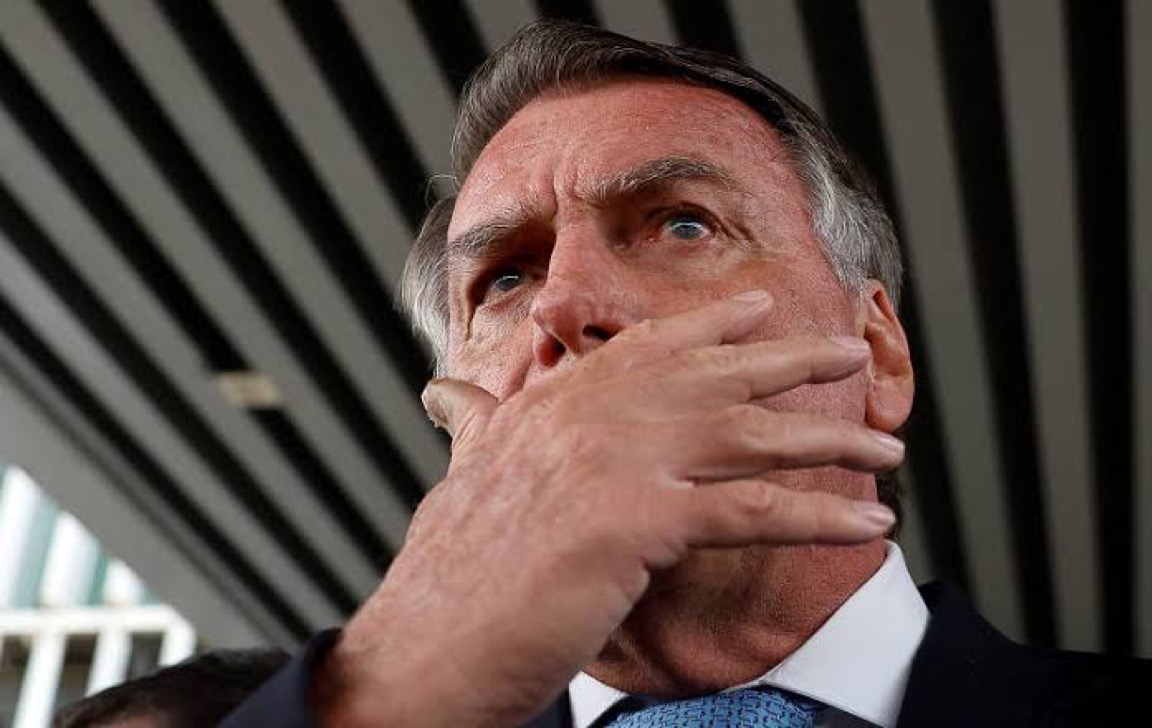

A Day of Reckoning: Brazil’s Political Landscape Shifts on September 2, 2025
By Hotspotnews
September 2, 2025, will be remembered as a pivotal day in Brazil’s ongoing political saga, a moment where the nation’s struggle for sovereignty, free speech, and democratic integrity came into sharp focus. For conservatives, this day underscores both the resilience of Brazil’s right-wing movement and the mounting challenges it faces under the weight of an emboldened leftist establishment and international pressures. Today’s events, centered around the intensifying legal battles against former President Jair Bolsonaro and the ripple effects of U.S. tariffs, signal a critical juncture for Brazil’s conservative cause.
The centerpiece of today’s political earthquake is the escalating judicial campaign against Bolsonaro, a figure who remains a lightning rod for Brazil’s conservative base. The Supreme Court, led by Justice Alexandre de Moraes, tightened its grip on the former president, who faces charges of orchestrating a coup following his narrow 2022 election loss to Luiz Inácio Lula da Silva. Conservatives view this as nothing short of a vendetta, a calculated effort to silence a leader who dared to challenge Brazil’s entrenched elites. Reports surfaced today of new evidence allegedly found on Bolsonaro’s phone—a letter requesting asylum in Argentina—further fueling accusations of a witch hunt. To his supporters, this is not justice but a weaponization of the judiciary, designed to paint Bolsonaro as a fugitive while ignoring the broader context of his fight against a system they see as corrupt and ideologically driven.
The conservative perspective holds that Bolsonaro’s prosecution is less about accountability and more about consolidating power. Lula’s administration, backed by a judiciary perceived as sympathetic to his Workers’ Party, has moved aggressively to dismantle the right-wing opposition. The Supreme Court’s actions, including Moraes’ controversial orders to monitor Bolsonaro around the clock and impose house arrest, are seen as evidence of a creeping authoritarianism. For conservatives, this is a stark betrayal of the democratic principles Brazil fought to restore after decades of military rule. The fact that 51% of Brazilians, according to recent polls, approve of Bolsonaro’s house arrest only deepens the sense of polarization, with many on the right arguing that public opinion has been swayed by relentless media campaigns and disinformation from the left.
Adding fuel to the fire, today also saw Brazil grappling with the economic fallout of U.S. President Donald Trump’s 50% tariffs on Brazilian goods, a policy explicitly tied to the Bolsonaro case. Conservatives in Brazil see this as a double-edged sword. On one hand, Trump’s intervention is a bold show of support for Bolsonaro, signaling that the global conservative movement stands with Brazil’s embattled former leader. The tariffs, framed as a response to Brazil’s alleged censorship of free speech and persecution of Bolsonaro, resonate with those who believe Lula’s government is overreaching by targeting conservative voices, including through Moraes’ orders to censor social media platforms. On the other hand, the tariffs threaten Brazil’s economy, hitting key exports like coffee, beef, and orange juice. Conservatives argue this economic pressure unfairly punishes ordinary Brazilians, many of whom already feel squeezed by Lula’s policies and a slowing economy projected to grow at just 2.2% in 2025.
The tariff issue has also exposed tensions within Brazil’s conservative movement. Some, like Bolsonaro’s son Eduardo, have doubled down, declaring that Brazil “does not deserve the privilege of the free market” if it continues to suppress conservative voices. This rhetoric galvanizes the base but risks alienating moderates who worry about the economic consequences of a prolonged trade war with the United States. Lula’s response—wearing a cap emblazoned with “Brazil belongs to Brazilians” and vowing to resist U.S. pressure—has only deepened the divide. Conservatives see this as posturing, a refusal to negotiate that prioritizes ideological loyalty over national interest.
Today’s events also highlight the broader cultural and political battle raging in Brazil. The conservative movement, rooted in values of individual liberty, traditionalism, and skepticism of globalist agendas, feels under siege. Lula’s push for policies like the Ecological Transformation Plan and increased taxation of foreign tech companies is viewed as a nod to international progressive elites, further eroding Brazil’s sovereignty. Meanwhile, the right’s frustration is compounded by the judiciary’s perceived overreach, including Moraes’ suspension of the social media platform X for over five weeks earlier this year. For conservatives, this is not just about one platform but a broader assault on free expression, a cornerstone of their fight against what they see as a leftist stranglehold on Brazil’s institutions.
Yet, amid the turmoil, there are glimmers of hope for Brazil’s conservatives. The resilience of Bolsonaro’s base, despite his legal troubles and ineligibility to run until 2030, points to a movement that refuses to be extinguished. Figures like Eduardo Bolsonaro and former first lady Michelle Bolsonaro are emerging as potential standard-bearers for 2026, rallying supporters who see themselves as defenders of a Brazil unbowed by domestic elites or foreign interference. The historic trial of Bolsonaro, now unfolding, is galvanizing the right, with many viewing it as a clarifying moment that will expose the judiciary’s biases and rally voters disillusioned with Lula’s governance.
September 2, 2025, is a day of reckoning for Brazil’s conservatives—a day that encapsulates their struggle against a judiciary they see as weaponized, a government they view as beholden to globalist interests, and an international community that wields economic power to meddle in Brazil’s affairs. The road ahead is fraught, with economic pressures mounting and political polarization deepening. Yet, for Brazil’s right, today is not just a setback but a call to arms, a reminder that the fight for their vision of a free and sovereign Brazil is far from over. As the nation braces for the next chapter in this historic drama, conservatives stand united, determined to reclaim their voice in a country at a crossroads.