

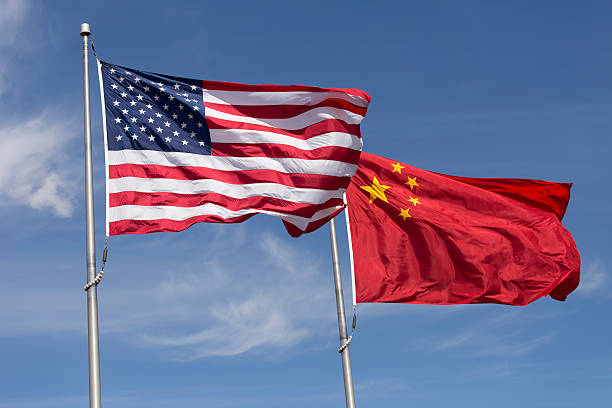

China’s Reluctant Trade Talks with America: A Win for U.S. Resolve, But Vigilance Is Needed
By the Hotspotorlando News
In a move that underscores the power of American economic leverage, China has finally agreed to sit down with the United States to discuss trade and tariff policies, as announced by Beijing’s Ministry of Commerce. After a month of deliberation, the Chinese Communist Party (CCP) has bowed to pressure from the incoming Trump administration, global economic realities, and the undeniable influence of U.S. businesses and consumers. This decision, while a step forward, should be viewed with cautious optimism by conservatives who understand the CCP’s long game. It’s a testament to America’s strength, but the road ahead demands unwavering resolve to protect our national interests.
A Victory for American Pressure
The announcement comes on the heels of renewed U.S. outreach, including Treasury Secretary Scott Bessent’s planned meeting with Chinese Vice-Premier He Lifeng in Switzerland from May 9–12. This follows years of tough tariff policies initiated under President Trump in 2018, which slapped 25% duties on $200 billion of Chinese goods to counter Beijing’s unfair trade practices—intellectual property theft, forced technology transfers, and market distortions through state subsidies. These tariffs, largely maintained by the Biden administration, have cost China dearly, contributing to its economic woes, including a faltering housing market and record trade surpluses that alienate even its global partners.
China’s decision to engage is no act of goodwill. It’s a direct response to the economic pain inflicted by American tariffs and the strategic appointments of China hawks like Mike Waltz as national security adviser and Marco Rubio as secretary of state. The CCP, facing internal pressures and global calls for trade stability, had little choice but to come to the table. This is a win for the America First agenda, which prioritizes U.S. workers, businesses, and consumers over appeasing a regime that seeks to undermine our economic dominance.
Why China Blinked
Beijing’s Ministry of Commerce framed its decision as a response to “global expectations,” its own interests, and the appeals of U.S. businesses and consumers. Let’s unpack this. Globally, China’s massive trade surpluses—nearing $1 trillion in 2024—have sparked tensions with the EU and others, who see Beijing’s export-driven model as predatory. The CCP knows it can’t afford to alienate its trading partners further, especially as the U.S. rallies allies to counter Chinese influence.
Domestically, China’s economy is on shaky ground. High youth unemployment, local government debt, and a property sector crisis have weakened the CCP’s grip. Tariffs have hit Chinese exporters hard, and Beijing needs relief to stabilize its economy. By agreeing to talks, China hopes to secure tariff reductions while offering minimal concessions—a classic tactic to buy time.
The U.S. business community and consumers, meanwhile, have been vocal about the costs of the trade war. American companies like Tesla, which rely on China for sales, want better market access, while consumers bear the brunt of higher prices from tariffs. These pressures are real, but conservatives must recognize that short-term pain is necessary to correct decades of trade imbalances that hollowed out American manufacturing. The CCP’s nod to these concerns is less about empathy and more about exploiting U.S. domestic divisions to weaken our negotiating stance.
The Conservative Case for Staying Tough
While China’s willingness to talk is a victory, conservatives must remain vigilant. The CCP has a history of making promises it doesn’t keep—look no further than its failure to honor the 2020 Phase One trade deal, where it fell short on agricultural purchases and structural reforms. Beijing’s rhetoric about “fairness” and “justice” in trade is laughable, given its track record of forced labor in Xinjiang, state-backed monopolies, and cyberattacks on U.S. firms. The Ministry’s warning against U.S. “coercion and extortion” is pure propaganda, designed to paint China as a victim while it continues to manipulate global markets.
The Trump administration must hold the line. Any deal must prioritize:
– Protecting American Workers: Tariffs have brought manufacturing jobs back to the U.S. and forced China to feel the consequences of its trade abuses. Reducing tariffs should only happen in exchange for verifiable concessions, like ending subsidies to state-owned enterprises.
– Securing National Interests: China’s control over critical supply chains—think semiconductors and rare earth minerals—poses a national security threat. Talks must address these vulnerabilities, not just trade balances.
– Countering CCP Influence: Beijing will use negotiations to drive wedges between the U.S. and its allies or exploit American businesses eager for market access. We must resist corporate pressure to prioritize profits over principles.
A Path Forward
The upcoming Switzerland talks are a chance to advance America’s economic agenda, but only if we negotiate from strength. Creative tariff strategies, like those proposed by Bessent, could escalate pressure on China until it opens its markets and plays by the rules. At the same time, we must bolster domestic industries through tax cuts, deregulation, and incentives for reshoring manufacturing. The goal isn’t just a better trade deal—it’s ensuring America’s economic sovereignty for generations.
Conservatives should celebrate this moment as proof that a strong, America First approach works. But we mustn’t let our guard down. The CCP is a strategic adversary, not a partner. As we head into these talks, let’s keep our eyes on the prize: a trade system that puts American workers, businesses, and consumers first, while holding China accountable for its decades of economic aggression.
**Sources**: Chinese Ministry of Commerce statements, U.S.-China trade data, economic analyses from 2024–2025, and reports on U.S. tariff impacts.