


Coca-Cola’s Risky Dance with a Sanctioned Brazilian Judge: When Corporate Virtue Signaling Meets Real-World Consequences
By Hotspotnews -November 17, 2025- Orlando FL-USA
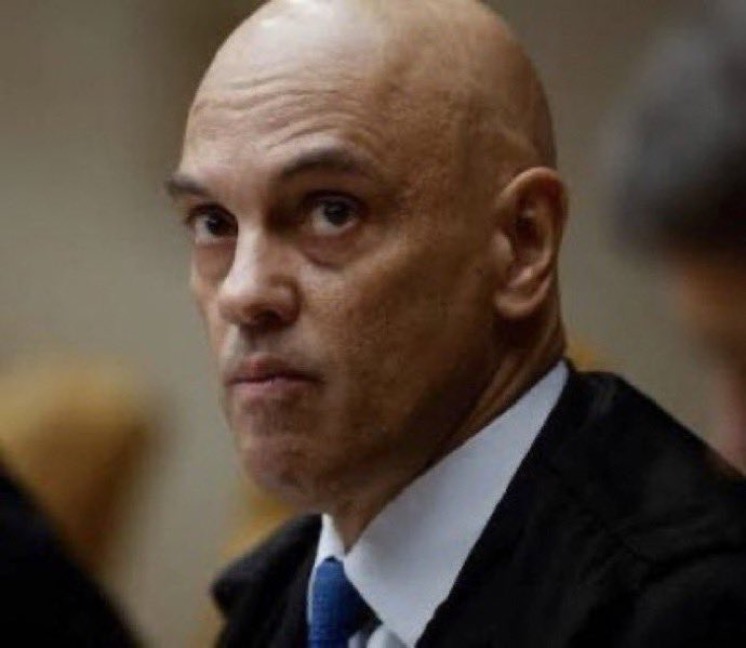
In a world where American corporations love to parade their commitment to “human rights” and “democracy” on glossy annual reports, few moments expose the hypocrisy quite like Coca-Cola’s latest sponsorship blunder. Just days ago, the iconic soda giant helped bankroll a high-profile Brazilian legal conference featuring Justice Alexandre de Moraes—the very same STF (Supreme Federal Court) judge slapped with U.S. sanctions in July for alleged censorship and human rights abuses. As the dust settles on the XXVI National Public Ministry Congress in Brasília, conservatives are right to ask: When does corporate complicity cross the line into outright endangerment of American interests? And what price will Coca-Cola pay for cozying up to a figure the U.S. Treasury has branded a global pariah?
This isn’t some abstract debate over fizzy drinks and free speech. It’s a stark reminder of how globalist elites—be they judges in robes or executives in boardrooms—flout the rule of law when it suits them, leaving everyday Americans to foot the bill. With the Trump administration’s unapologetic stance on countering authoritarian overreach abroad, the fallout from this event could ripple from Wall Street to Brasília, hitting Coca-Cola’s bottom line, its reputation, and even U.S.-Brazil relations. Let’s unpack the mess and the mounting consequences.
The Sanctioned Star of the Show: Moraes and the Magnitsky Hammer
To understand the stakes, rewind to July 30, 2025. That’s when the U.S. Department of the Treasury’s Office of Foreign Assets Control (OFAC) dropped the hammer on Alexandre de Moraes under the Global Magnitsky Human Rights Accountability Act. Accused of orchestrating a campaign of censorship, arbitrary detentions, and suppression of political dissent—tactics that have silenced conservative voices in Brazil and drawn parallels to the worst excesses of leftist regimes—Moraes joined a rogue’s gallery of sanctioned autocrats. His U.S. visa was revoked weeks earlier, and the message was clear: America won’t tolerate judges who weaponize the courts against free expression.
Fast-forward to November 11-14, and there he was, strutting onstage at the National Public Ministry Congress, a gathering of thousands of prosecutors and legal heavyweights. Moraes didn’t just attend; he headlined, delivering a sanctimonious closing speech on November 14 about “defending democracy.” Irony doesn’t get thicker. The event, organized by the National Association of Public Prosecutors (Conamp), was billed as a forum for institutional dialogue. In reality, it served as a platform for Moraes to burnish his image amid mounting domestic and international scrutiny.
But here’s the kicker: This wasn’t a shoestring affair. Sponsors like Coca-Cola Brasil poured resources into it, plastering their logos across posters, websites, and venues. Why? Corporate goodwill in Brazil’s public sector, perhaps. Access to influencers, maybe. Whatever the motive, it reeks of tone-deafness—or worse, willful blindness—to the sanctions regime Uncle Sam enforces with an iron fist.
Coca-Cola’s Complicity: From Sponsor to Sanctions Target?
Coca-Cola isn’t alone in this folly. Heavy hitters like PicPay, Febraban (Brazil’s banking federation), Sebrae, BRB, Caixa Econômica Federal, Banco do Brasil, and Ambev all chipped in, their brands circled in red on viral posters shared by critics like journalist Paulo Figueiredo. But as an American multinational with deep ties to the U.S. economy—headquartered in Atlanta, listed on the NYSE, and employing thousands stateside—Coca-Cola stands out as the most vulnerable.
Under OFAC rules, “dealing with” a sanctioned individual like Moraes is no joke. That includes any financial transaction post-designation, from sponsorship checks to marketing perks derived from the event. Sure, contracts might predate the July sanctions, but any lingering payments, booth setups, or promotional tie-ins could trigger audits. And OFAC doesn’t mess around: Fines can soar to $1 million per violation, with willful evasion potentially leading to criminal charges. Remember the $9 billion in penalties doled out last year alone? Coca-Cola, with its $45 billion in annual revenue, might shrug off a slap on the wrist. But a full-blown investigation? That’s a different story.
The legal peril is just the appetizer. Reputational damage could be the main course—and conservatives are already serving it up hot on social media. Since the congress wrapped, X (formerly Twitter) has lit up with calls for boycotts, tagging @CocaCola and @CocaCola_Br in posts decrying the company’s “support for a human rights abuser.” Hashtags like #BoycottCoke and #SanctionSponsors are gaining steam among Brazilian expats, U.S. conservatives, and free-speech advocates. If this escalates into a full consumer revolt—think Bud Light’s 2023 debacle on steroids—Coca-Cola’s market share could take a 5-10% hit in key demographics, translating to hundreds of millions in lost sales. Stock watchers, take note: KO shares dipped 0.8% in early trading today amid the chatter. Coincidence? Hardly.
Worse still, secondary sanctions loom like a storm cloud. If OFAC views Coca-Cola as part of Moraes’ “support network”—and that viral poster makes a compelling exhibit A—the company could face its own designation. Frozen assets, blocked U.S. transactions, and severed dealings with American banks aren’t hypotheticals; they’re the fate that befell Russian oligarchs and Venezuelan cronies. For a firm reliant on global supply chains, that’s existential. And let’s not forget the shareholder lawsuits: Activist investors, smelling blood, could pile on with class actions alleging fiduciary breaches for ignoring geopolitical risks.
Broader Ripples: From Boardrooms to the Ballot Box
The consequences don’t stop at Coca-Cola’s doorstep. Other sponsors face similar heat—Febraban’s member banks, for instance, could see U.S. correspondent banking relationships strained, while PicPay’s fintech ambitions in America grind to a halt under compliance scrutiny. Collectively, this exposes a pattern: Multinationals treating sanctions as mere suggestions, prioritizing profits over principles.
For Moraes himself, the event was a pyrrhic victory. His star turn only amplifies the sanctions’ bite. Asset freezes are already in play for any U.S.-linked holdings, and travel bans keep him grounded— no jaunts to Harvard lectures or Davos schmoozes. Reputational rot festers: International bar associations are whispering impeachment, and Brazilian conservatives in Congress are dusting off Magnitsky-inspired bills to mirror U.S. actions domestically. If President Lula’s coalition fractures ahead of 2026 elections, Moraes could face probes that make his current woes look tame.
Zoom out, and this saga underscores the Trump doctrine’s staying power: America First means holding allies and adversaries alike to account. By sponsoring Moraes’ forum, these companies aren’t just risking fines—they’re undermining U.S. leverage against global censorship. In Brazil, where judicial overreach has jailed journalists and banned platforms, such corporate enabling emboldens the censors. Stateside, it fuels distrust in Big Business, already at a low ebb after DEI debacles and China entanglements.
Time for Accountability: Boycott, Divest, and Demand Better
Conservatives have long warned that woke capitalism is a house of cards. Coca-Cola’s silence—zero statements from Atlanta as of this writing—speaks volumes. No mea culpa, no pledge to redirect funds to free-speech causes. Just crickets. That’s not leadership; it’s cowardice.
The path forward is clear: Consumers, hit them where it hurts—skip the Coke at lunch, opt for alternatives, and amplify the call online. Investors, pressure the board through proxies. And policymakers? Congress should haul Coca-Cola’s execs before the Foreign Affairs Committee for a reckoning, much like the Big Tech grillings of yore.
In the end, this isn’t about a soda. It’s about whether America will enforce its values abroad or watch them fizzled out by corporate expediency. Coca-Cola has a choice: Stand with the sanctioned censor, or stand corrected. History—and OFAC—suggests the latter comes at a steep, but necessary, price. Choose wisely, Atlanta. The world is watching.