


From Deforestation to Redemption: Brazil’s “King of Cattle” Leads Amazon Ranching Reform
By Laiz Rodrigues
At 85, Roque Quagliato, Brazil’s “King of Cattle,” is no stranger to controversy. His sprawling ranches in Xinguara, Pará, have fueled his fortune but also accusations of slave-like labor conditions in the 1990s and deforestation in the early 2000s. Yet, in 2025, Quagliato is making headlines for a different reason: he’s spearheading a transformative cattle traceability program in the Amazon, aiming to curb deforestation and unlock global markets. As Brazil’s beef industry faces pressure to reform, Quagliato’s pivot could reshape ranching not just in Pará but worldwide. How does his project work, how does it compare to established systems like Texas, and what could it mean for the global beef trade?
The Traceability Program: A Game-Changer for Pará
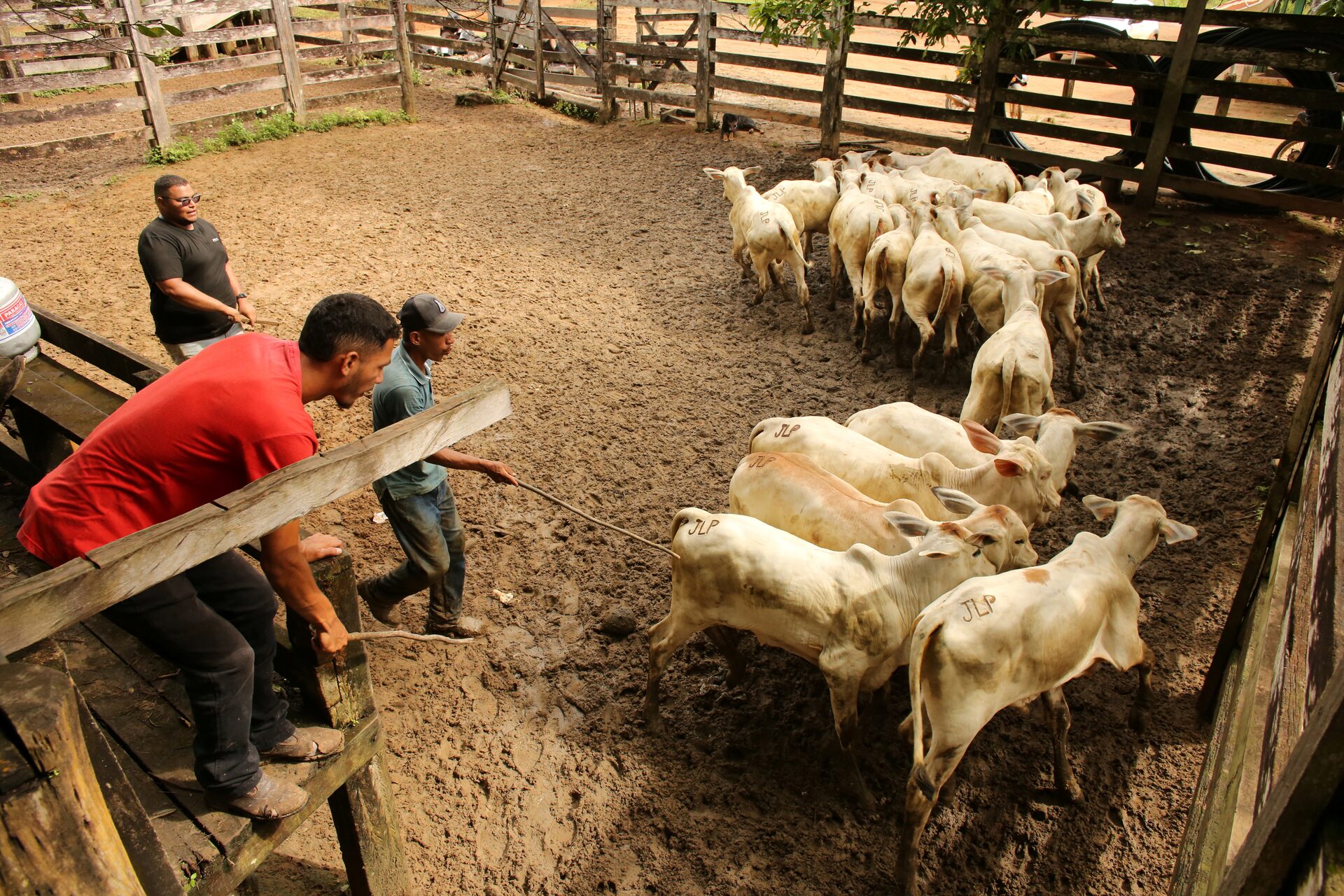
Pará, home to 26 million cattle, is Brazil’s ranching heartland but also a deforestation hotspot, with cattle ranching driving 80% of Amazon forest loss since 2001. Launched in late 2023, the state’s traceability program seeks to tag every cow with electronic ear chips by 2027, ensuring they aren’t raised on illegally deforested land. Managed by Adepará (Pará’s agricultural agency), the program uses blockchain technology to create a transparent supply chain, allowing buyers to verify beef’s environmental credentials. Ranchers must comply by December 31, 2026, or risk exclusion from legal markets.
Quagliato, whose 150,000-head herd was among the first tagged, is a vocal advocate. “We have to do it,” he told *Reuters* in May 2025, eyeing premium markets like the EU, which demands deforestation-free beef under its 2024 Deforestation Regulation. Supported by a $16.3 million grant from the Bezos Earth Fund, the program has tagged 12,000 cattle as of May 2025—a modest start but a symbolic one, given Quagliato’s influence. His public rejection of illegal deforestation (“Deforesters are now a matter for jail”) marks a shift from his past, where he paid most deforestation fines but faced criticism for labor violations.
The program’s stakes are high. Brazil, the world’s largest beef exporter (2.7 million tonnes in 2024, worth $8 billion), relies on markets like China, the EU, and the U.S., many of which restrict Pará’s beef over environmental concerns. Uruguay’s traceable beef, fetching 8% higher prices, shows the potential reward. With the UN climate summit (COP30) in Pará in November 2025, the program is under global scrutiny as a test of Brazil’s commitment to halt deforestation by 2030.
Challenges to Overcome
Despite its promise, the program faces hurdles. Only 12,000 of 26 million cattle are tagged, reflecting slow adoption. Smaller ranchers cite costs ($2–$5 per tag) and technical glitches in Adepará’s digital platform, though the agency denies widespread issues. Poor rural infrastructure—spotty internet and roads—complicates data uploads. Some ranchers resist, fearing government overreach or hoping for a delayed deadline, while others worry the EU won’t pay the expected premium. Brazil’s history of lax enforcement under former President Jair Bolsonaro (2019–2022) fuels skepticism, though President Luiz Inácio Lula da Silva’s administration is pushing hard for compliance.
Quagliato’s support mitigates resistance among large ranchers, but smaller farmers need training and subsidies to keep pace. The program’s success hinges on balancing equity with enforcement, especially in Pará’s remote frontier, where illegal land-grabbing persists. Posts on X from @ParaRanchers (May 2025) praise Quagliato’s leadership but highlight smallholder concerns, while @AmazonWatch (June 2025) calls for stronger crackdowns on non-compliant ranchers.
Comparing Brazil to Texas: A Tale of Two Ranching Worlds
To understand the program’s potential, compare Pará to Texas, the U.S.’s cattle capital. Both regions are beef powerhouses—Pará with 26 million cattle, Texas with 12 million (USDA, 2024)—driving economies through exports and domestic demand. Texas’s $12 billion industry mirrors Pará’s role in Brazil’s $8 billion export market. Both rely on extensive grazing and traditional herding (vaqueiros in Brazil, cowboys in Texas), with large ranches like Quagliato’s or Texas’s King Ranch.
But differences are stark. Pará’s ranching clears rainforest, contributing to 40% of Amazon deforestation, while Texas uses established grasslands, facing issues like water use rather than forest loss. Pará’s low stocking density (1–2 cattle per hectare) contrasts with Texas’s 3–5, reflecting poorer soil. Brazil’s regulatory framework is evolving—Pará’s program is a recent response to global pressure—while Texas operates under strict USDA, EPA, and labor laws, with RFID tags standard. Texas’s advanced technology (drones, GPS) and infrastructure outpace Pará’s nascent systems, where connectivity lags. Labor in Pará has faced abuse allegations (e.g., Quagliato’s 1990s issues), unlike Texas’s regulated wages ($15–$20/hour, BLS 2024).
Texas shows what Pará could achieve: a high-value, traceable beef industry. But Pará’s environmental stakes are higher, with the Amazon’s fate tied to reform. Texas’s mature system offers lessons in enforcement and tech adoption, but Brazil’s scale and deforestation challenges are unique.
Influence on the Global Beef Industry
Quagliato’s project could reshape the beef industry in several ways:
1. Market Access and Premium Prices:
– Success in Pará could open high-value markets like the EU, U.S., and Japan, which restrict non-traceable beef. If Brazil emulates Uruguay’s 8% price premium, Pará’s economy could gain billions, strengthening Brazil’s 25% share of global beef exports. Quagliato’s early adoption sets a model for other states like Mato Grosso.
– Conservative Appeal: This market-driven approach aligns with free-market principles, rewarding ranchers who invest in sustainability without heavy government mandates, a model conservatives might champion.
2. Environmental Impact:
– By excluding cattle from deforested land, the program could reduce Amazon deforestation, critical as the forest nears a savannah tipping point. Scaling it nationally could support Brazil’s 2030 deforestation goal, earning global goodwill at COP30. Environmentalists on X (@AmazonWatch) see it as a step, not a cure, needing stronger enforcement.
– **Conservative Caution**: While environmental gains are valuable, conservatives might stress protecting ranchers’ property rights and avoiding overregulation that stifles growth.
3. Industry Standards:
– Pará’s blockchain-based system could set a global benchmark for traceability, pushing competitors like Australia to adopt similar tech. Meatpackers like JBS, already investing in monitoring, may standardize traceability across supply chains, raising industry costs but also quality.
– **Conservative Perspective**: This innovation showcases private-sector leadership, with Quagliato and JBS driving change, but small ranchers need support to avoid being priced out.
4. Social and Economic Equity:
– The program’s success depends on including smallholders, who face cost barriers. If scaled equitably, it could stabilize rural economies, but failure risks widening inequality. Texas’s subsidies for tech adoption offer a blueprint.
– Conservative Concern: Conservatives might argue for minimizing bureaucratic hurdles to protect small farmers, ensuring the program doesn’t favor large players like Quagliato.
5. Global Trade Dynamics:
– A traceable Brazilian beef industry could shift trade flows, challenging U.S. exporters like Texas in premium markets. However, it may also raise costs for Brazil’s low-cost model, requiring careful pricing strategies.
– Conservative View: Competition drives innovation, but Brazil must avoid ceding ground to rivals by overcomplicating its edge in volume.
Roque Quagliato’s transformation from deforestation poster child to traceability pioneer reflects the pressures reshaping Brazil’s beef industry. Pará’s program, though nascent, could redefine ranching by curbing deforestation, opening markets, and setting global standards. Compared to Texas’s mature system, Pará faces unique environmental and logistical challenges but also greater potential impact. For the industry, Quagliato’s project promises economic gains and environmental progress, but only if it overcomes adoption hurdles and balances equity with enforcement. As COP30 looms, the world watches whether Brazil’s “King of Cattle” can lead ranching into a sustainable future.
– **Sources**: Draws from *Reuters*, *Bloomberg*, *Mongabay*, *The Guardian* (2025), USDA, Texas Farm Bureau, BLS (2024), and X posts (@ParaRanchers, @AmazonWatch, @TXCattlemen). Legal details (e.g., EU Deforestation Regulation) and program specifics (e.g., Adepará, blockchain) are cross-referenced.