


Diplomatic Overreach: Brazil’s Thin-Skinned Response to Milei’s Straight Talk
By Hotspotnews
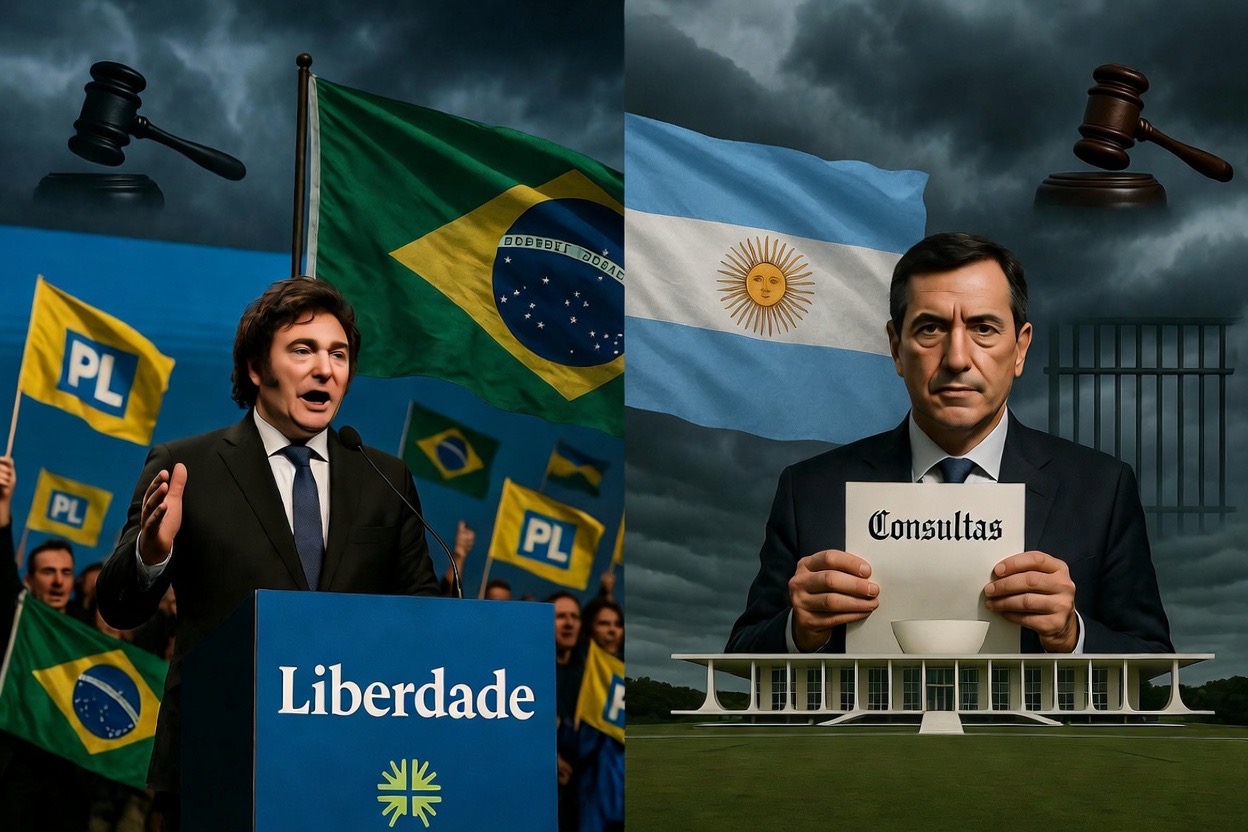
In a predictable display of fragility from Brasília, the Lula government has summoned its ambassador in Buenos Aires for consultations after Argentine President Javier Milei delivered pointed criticisms of Luiz Inácio Lula da Silva and Supreme Court Justice Alexandre de Moraes. The remarks came during Milei’s appearance at the Liberal Party (PL) national convention in São Paulo, where he backed Flávio Bolsonaro’s presidential candidacy.
Milei called Lula a “presidiário” — a reference to the Brazilian leader’s past conviction and imprisonment on corruption charges that were later annulled on procedural grounds — and referred to Moraes as “lixo careca.” He also described Jair Bolsonaro’s confinement as unjust and suggested Lula’s return to power represented a radicalized risk that voters should reject at the ballot box. Brazilian Foreign Ministry officials labeled the comments an “affront” to the president, the judiciary, and the Brazilian people. Summoning an ambassador is a formal diplomatic protest, signaling serious displeasure short of recalling the envoy permanently or expelling Argentina’s representative.
These facts are straightforward. Milei, a libertarian who has made no secret of his disdain for socialism and left-wing governance, spoke freely at a political event hosted by Brazil’s main conservative opposition force. He did so on Brazilian soil while supporting a candidate who challenges the status quo. The Brazilian government’s reaction treats robust political speech as a near-casus belli.
This episode fits a long pattern of mutual barbs. Milei has repeatedly criticized Lula as a corrupt communist or socialist with totalitarian leanings, dating back to the Argentine’s 2023 campaign and earlier. Lula and his allies have not been silent. The Brazilian president has dismissed Milei’s conservative gatherings as “antipovo,” “antissocial,” and “antidemocratic.” He has conditioned any personal meeting on an apology from Milei for past insults. Brazilian officials monitored Milei’s visit closely, preparing responses to any criticism of Lula or the electoral system. Lula has also weighed in on Argentine internal affairs in the past, including support for Milei’s opponents and a high-profile visit to former President Cristina Kirchner while she faced legal troubles.
Is Lula simply returning the favor? In a narrow sense, yes — the relationship has been marked by reciprocal hostility since Milei’s rise. Lula’s camp has long resented Milei’s alignment with Bolsonaro and his blunt rejection of left-wing orthodoxy in the region. Yet the scale differs. Milei’s language is characteristically unfiltered and personal. Brazil’s response elevates political rhetoric into a state-level diplomatic incident. One side fires rhetorical shots; the other reaches for institutional levers. That asymmetry reveals more about Brasília’s sensitivity than about any unique offense.
Possible consequences are serious for two neighbors whose economies remain deeply intertwined. Trade between Brazil and Argentina is substantial; disruptions could hurt exporters, manufacturers, and consumers on both sides of the border. Formal consultations risk further freezing high-level dialogue already strained by differences over Venezuela, regional politics, and ideology. Brazil may contemplate reciprocal steps, such as summoning Argentina’s ambassador, escalating the chill. In the broader South American context, this fuels the narrative of a dividing “blue wave” of conservative and libertarian governments versus entrenched left-wing administrations. It could complicate Mercosur cooperation and signal to investors that personal politics still override pragmatic bilateral interests.
For conservatives watching from Brazil and beyond, the episode underscores a deeper problem: an intolerance for dissent that treats criticism of powerful figures as illegitimate. Moraes has faced sustained accusations of overreach in speech regulation and political cases. Lula’s past legal troubles remain a live political issue for millions of Brazilians. When a foreign leader echoes those concerns at an opposition event, the proper response is political counterargument, not diplomatic theater. Thin skin does not strengthen institutions; it exposes their insecurity.
Milei’s comments were sharp, even crude. In open societies, that is the price of free expression. Brazil’s formal protest risks looking less like defense of sovereignty and more like an attempt to police the speech of a neighboring elected president who refuses to play by the old regional script of polite left-wing consensus. The real test will be whether Brasília prioritizes mature statecraft over bruised egos — or continues down a path that isolates it from the shifting political currents of the Southern Cone.