

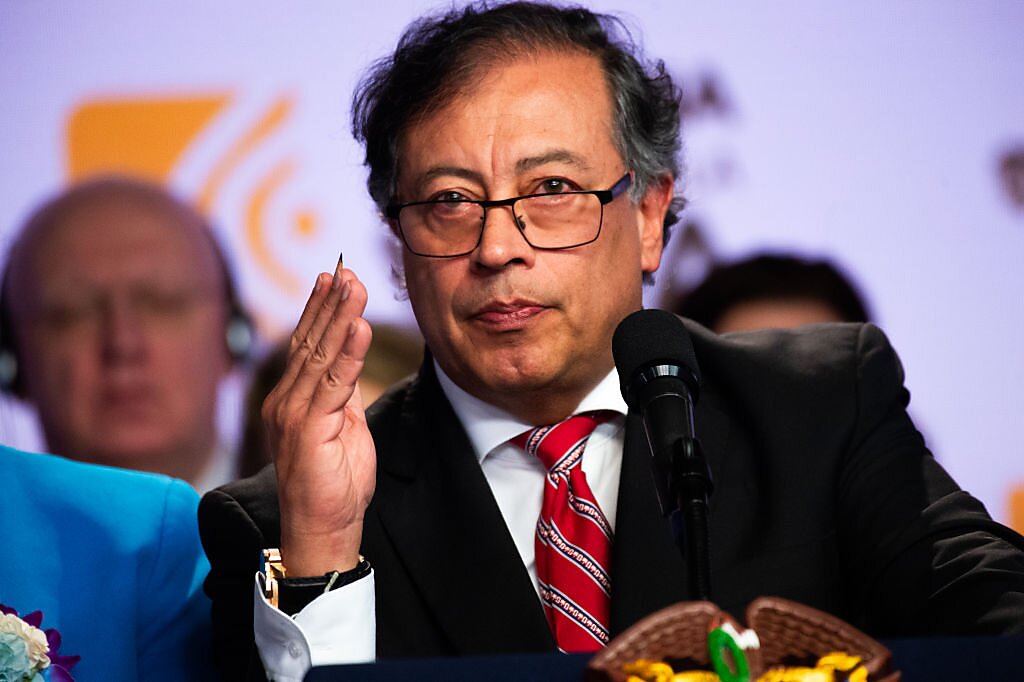

Petro’s Power Play: Colombia’s Leftist Outgoing President Undermines Democratic Transition
By Hotspotnews
In a troubling echo of regional patterns where socialist leaders resist relinquishing control, Colombia’s Gustavo Petro has escalated a dangerous standoff by blocking president-elect Abelardo de la Espriella from holding his inauguration at a military base. This move, issued just weeks before the August 7 handover, reveals the deep reluctance of the political left to accept defeat at the ballot box.
De la Espriella, a conservative outsider endorsed by President Trump and backed by voters seeking change after years of Petro’s policies, secured a hard-fought victory in June’s runoff. His narrow win reflected Colombians’ desire for stronger security, economic reform, and a break from “total peace” experiments that critics argue emboldened crime and instability. Yet rather than facilitate a smooth transition, Petro—himself a former guerrilla—has invoked legal technicalities to deny the incoming administration symbolic access to the armed forces, while floating unsubstantiated claims of electoral fraud.
This is not mere protocol. By insisting the ceremony occur only in Congress under his oversight, Petro signals distrust in the very institutions that must ensure continuity. It mirrors tactics seen elsewhere in Latin America, where outgoing leftists stretch rules, sow doubt in results, and appeal to international allies to prolong their influence. De la Espriella rightly suspended transition talks earlier, calling out what he described as a coup-minded effort to cling to power. His call for the military to uphold their constitutional oath underscores the stakes: protecting democracy from those who weaponize it only when it suits them.
Colombia’s voters rejected Petro’s vision at the polls with record participation. The incoming administration now faces the task of restoring order, curbing deficits, and confronting threats from armed groups—challenges made harder by this manufactured crisis. True democrats accept election results; those who obstruct them reveal their priorities. As August approaches, the world will watch whether Colombia’s institutions hold firm or succumb to the same erosion plaguing its neighbors. De la Espriella’s leadership offers a chance to reverse course—if the left allows the people’s choice to take office.