

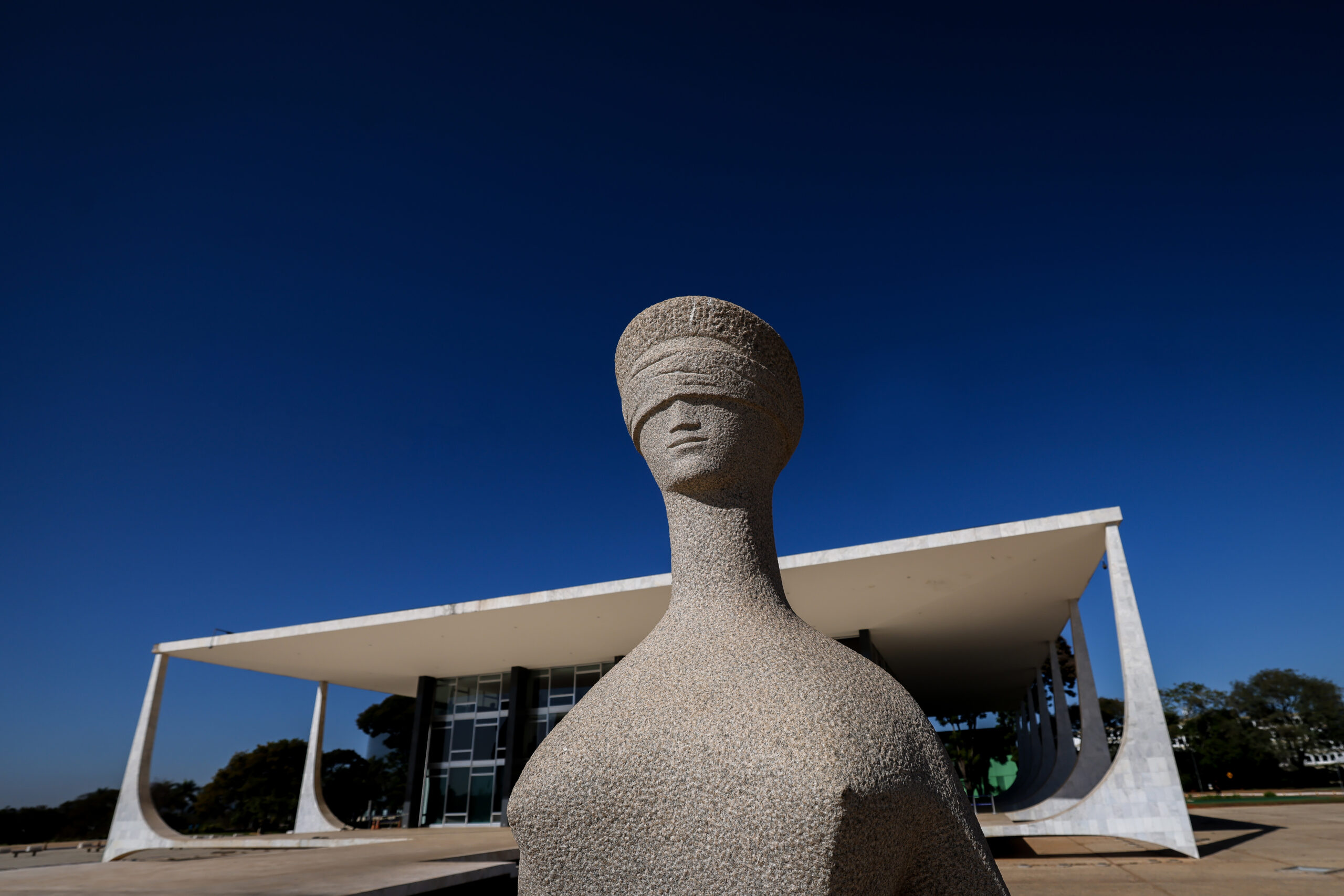

STF on the Brink: Mendonça Challenges Moraes as Brazil’s Highest Court Fractures. It fractured because is structure is broke. No Justice is made in that house!
By Hotspotnews
Brazil’s Supreme Federal Court is no longer merely interpreting the Constitution. It is now openly at war with itself. On September 3, Minister Alexandre de Moraes used the long-running “fake news” inquiry to accuse fellow Justice André Mendonça of abuse of authority, administrative improbity, and crimes of responsibility. Hours later, Mendonça went to Court President Edson Fachin and demanded Moraes’s removal, asking that the matter go before the full plenary. The gloves are off.
The immediate trigger is the Banco Master scandal. Police Federal reports unsealed by Mendonça detail extensive communications between banker Daniel Vorcaro and a contact identified as Moraes, along with questions surrounding a multimillion-real contract involving the law firm of Moraes’s wife. Moraes denies being the recipient of those messages and has retaliated by folding Mendonça into his own inquiry. What began as an investigation into financial fraud has become a raw power struggle inside the nation’s highest court.
This is not an isolated personal feud. It exposes a deeper institutional problem: the concentration of investigative, prosecutorial, and judicial power in the hands of a single justice. Moraes has long operated the “fake news” inquiry with extraordinary latitude. When that same apparatus is now turned against a colleague who dared to shine light on uncomfortable facts, the appearance of self-protection is hard to ignore. Conservatives have warned for years that an unaccountable judiciary eventually consumes itself. That warning is no longer theoretical.
The consequences are already visible. Public confidence in the STF, already battered, will erode further. Political actors on the right see confirmation of their long-held view that certain justices act as both players and referees. On the left, the episode is framed as an attack on the Court itself. Neither interpretation serves the country. A court that cannot police its own members without descending into mutual accusations of criminality has lost the moral authority to lecture the rest of the republic about institutional norms.
What comes next is equally fraught. Fachin has given the principal figures five business days to submit written explanations. He has not granted the removal request. The most likely near-term outcome is a cautious, procedural holding action designed to buy time and prevent an immediate explosion. A plenary session remains possible, though the Court has shown little appetite for public, high-stakes confrontations that expose its internal divisions. Any vote would almost certainly split along familiar lines, with Mendonça isolated except for a handful of votes.
Politically, the timing could hardly be worse. With national elections approaching, the crisis hands opposition voices a potent narrative of judicial impunity. Calls for impeachment or external accountability mechanisms will grow louder. Markets and foreign observers will watch closely; institutional instability in Brazil’s highest court is not a domestic footnote.
The healthiest resolution would be transparent, collegial review of the facts by the full Court, followed by whatever disciplinary or investigative steps the evidence actually supports. That outcome is far from guaranteed. What is certain is that the STF can no longer pretend these tensions are manageable through back-channel conversations. The public is watching, and the Court’s legitimacy now hangs on whether it treats its own members by the same standards it applies to everyone else.
#STF #Moraes #Mendonça #Fachin #BancoMaster #Justiça #Brasil #Instituições
Sources: UOL, Veja, Valor Econômico, GloboNews reporting, O Antagonista, Brasil 247, Correio Braziliense, Jota.