

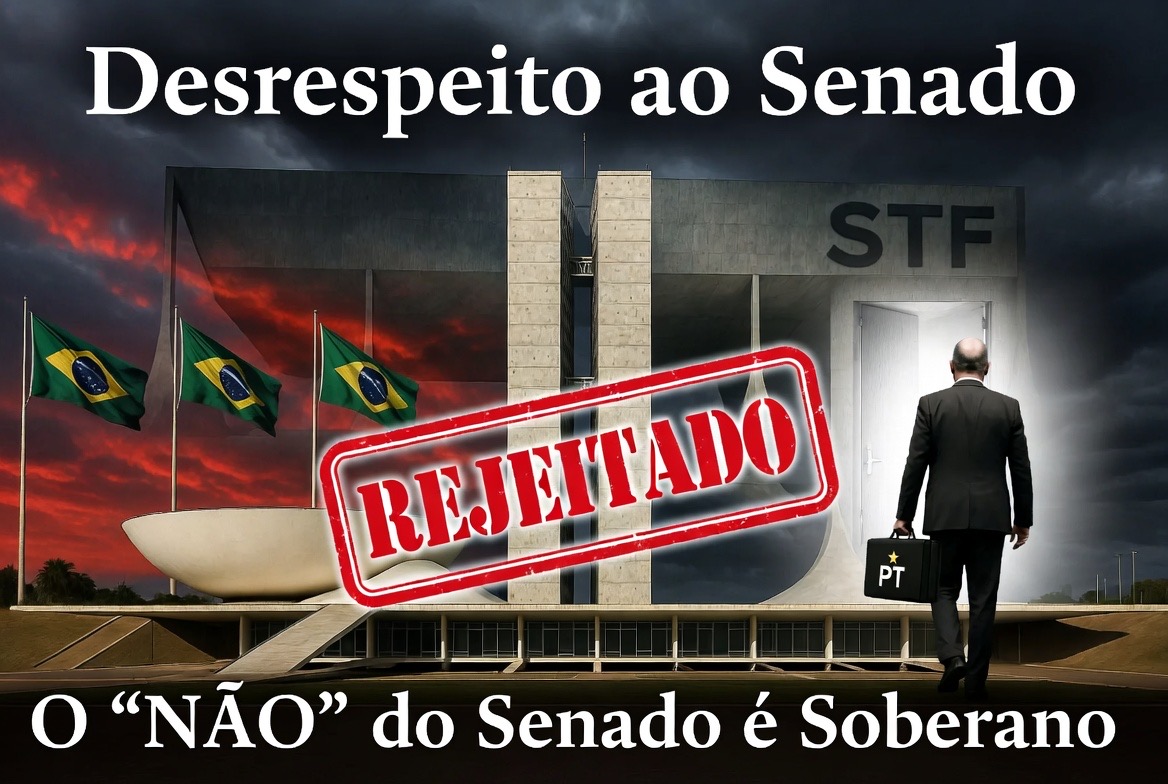

The Arrogant Disrespect to the Senate: Lula’s Allies Treat Brazil’s Upper House Like a Subordinate They Can Overrule
By Hotspotnews
In a blatant show of institutional arrogance, the PT machine and its judicial allies are trampling on one of Brazil’s most fundamental democratic bodies: the Federal Senate. After suffering a historic and decisive rejection of Jorge “Bessias” Messias for the Supreme Federal Court (STF) — the first such defeat in 132 years — they are now running to the very court they wanted to conquer, asking activist judges to nullify the Senate’s sovereign vote.
This is not mere legal maneuvering. It is open disrespect to the legislative branch and a dangerous assault on the separation of powers.
A Sovereign Decision Thrown in the Trash
On April 29, 2026, the Senate fulfilled its clear constitutional duty under Article 52, III of the Constitution. By a 42-34 vote, senators rejected Lula’s handpicked Attorney General after open hearings and intense political debate. This was no hidden coup or procedural error — it was the legitimate exercise of the upper house’s exclusive prerogative to approve or reject STF nominees.
The message was unmistakable: Enough with the court-packing. Enough with installing loyal operatives who will deepen the STF’s activist overreach. The Senate, representing the states and acting as a counterweight to executive power, said NO.
Yet days later, the response from the left was pure contempt. An association tied to government interests filed ADPF 1324 before the STF, demanding the annulment of the entire vote. They accuse the Senate of “irregularities,” claim the outcome was “pre-determined,” and even want a new vote held in open sessions to expose and pressure individual senators.
In other words: The Senate’s decision doesn’t count unless it delivers what the Planalto wants. If it doesn’t, the judiciary — particularly the court Messias tried to join — should step in and fix it.
This level of disrespect is unprecedented and alarming.
Treating Senators Like Children or Pawns
The core of this action is an insult to every senator who voted according to conscience, state interests, or political conviction. By alleging “vices of will” and “deviation of purpose,” the petitioners essentially claim that senators who opposed Messias acted illegitimately — that political opposition to a nominee is somehow unlawful.
Senate voting on STF nominations has always been political by nature. That’s the point of confirmation: to allow elected representatives to vet candidates not just on technical merit, but on philosophy, independence, and suitability for such immense power. Secret ballots exist precisely to protect senators from exactly the kind of executive and judicial pressure now being attempted.
Asking the STF to investigate and overturn the result treats the Senate like a junior body whose decisions are subject to judicial review. It transforms a coordinate branch of government into something subordinate — a dangerous inversion of the Republic’s design.
Conservatives have long warned about the STF’s imperial tendencies. This case proves the point: when the legislature dares to check the executive, the Court is invited to slap it down and restore the desired outcome.
The Real Institutional Crisis
The disrespect goes beyond Messias’ personal ambition. It reveals the PT’s view of democracy: institutions exist to serve their project, and any resistance must be crushed — legally or otherwise. Lula’s low popularity, the fraying coalition, and growing congressional independence were already exposing their weakness. Instead of accepting the loss and nominating a consensus name, they choose confrontation and judicial warfare.
If the STF entertains this ADPF, it will set a catastrophic precedent. Future nominees could routinely challenge negative votes. Legislative independence would erode. The Senate’s role as a check on power would become meaningless.
Brazil’s patriots and conservatives understand what is at stake: the defense of republican balance. The Senate’s rejection was a healthy assertion of autonomy. Attempting to judicially erase it is not “defending the Constitution” — it is disrespecting it.
The STF must dismiss this action immediately and unequivocally. Not out of favoritism, but out of respect for the other branches. The Senate spoke. Its decision deserves dignity, not a judicial override.
Enough with the entitlement. Enough with the back doors. The disgruntled losers in the Planalto must learn: the Senate is not their servant. It is a co-equal power of the Republic — and its “NO” stands.