


U.S. Stands Firm on Democratic Principles in Response to Brazil’s Political Crisis
In a recent address, Mauricio Galante, a prominent figure in the Brazilian-American community and a conservative voice in U.S. politics, articulated a robust defense of American policy towards Brazil. Galante emphasized that the United States is not engaging in punitive measures against Brazil but is instead responding to a critical failure by the Brazilian government to adhere to fundamental democratic principles as outlined in international agreements.
Galante pointed out that Brazil, as a signatory to the 1948 Charter of the Organization of American States (OAS) and the 2001 Inter-American Democratic Charter, has committed to upholding transparent electoral processes, strengthening democratic institutions, and respecting political opposition. However, recent developments in Brazil have raised serious concerns about the erosion of these commitments. The U.S., according to Galante, is leveraging its economic influence not as a form of retribution but as a necessary enforcement mechanism to ensure Brazil fulfills its obligations under these treaties.
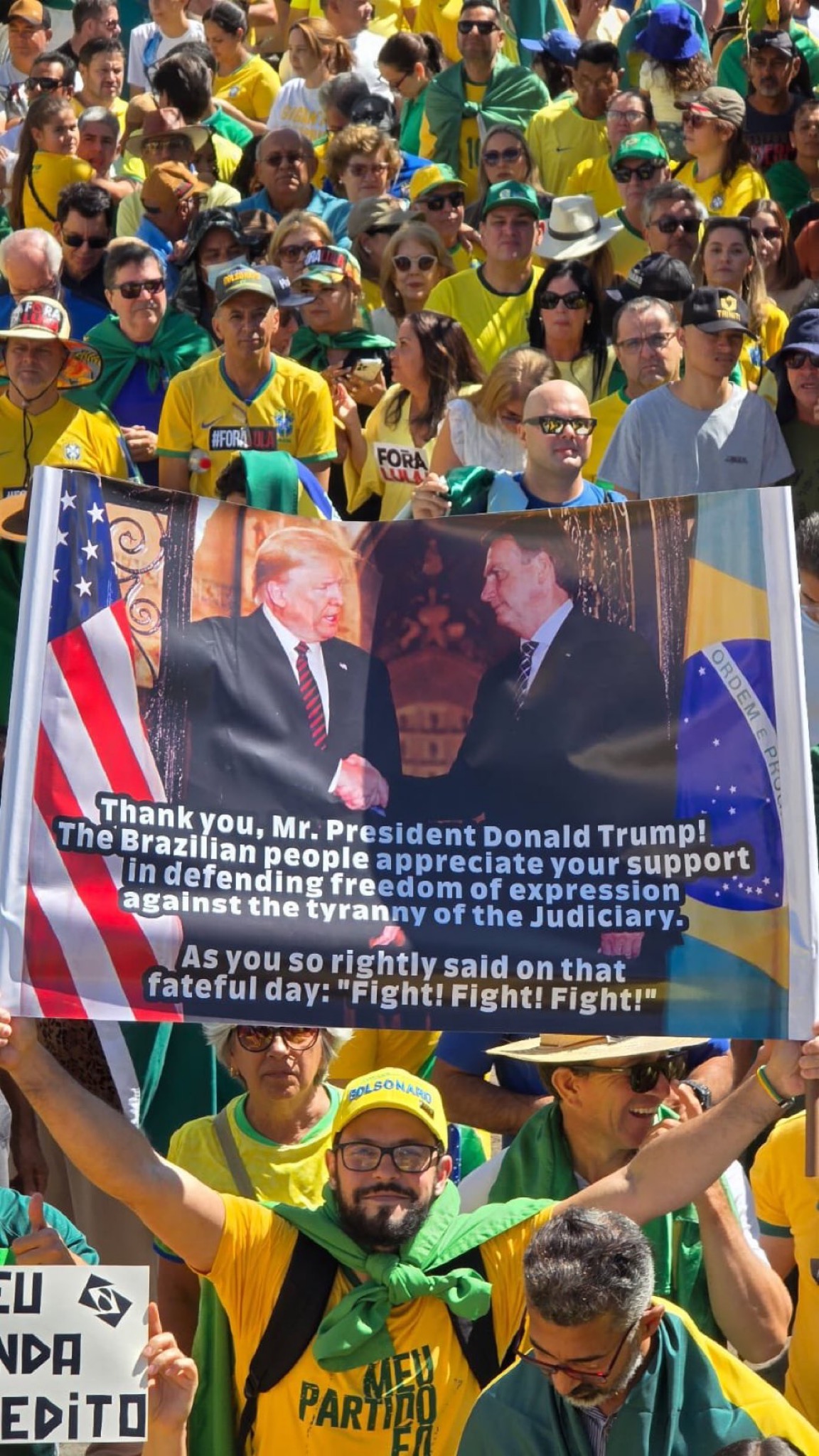
This stance comes at a time when the political landscape in Brazil has been marred by allegations of electoral fraud, the suppression of free speech, and the targeting of political opponents, including the former President Jair Bolsonaro. The Brazilian Supreme Court’s actions, particularly those of Justice Alexandre de Moraes, have been criticized for undermining democratic norms and violating human rights. These developments have not gone unnoticed by the U.S., which has taken unprecedented steps to address what it perceives as a threat to both American interests and global democratic values.
The U.S. response, including the imposition of tariffs on Brazilian imports, is framed within the context of defending the rule of law and protecting the rights of U.S. citizens and companies operating in Brazil. This approach is consistent with a long-standing American policy of promoting democracy and human rights abroad, a principle that resonates deeply with conservative values of liberty and justice.
Galante’s remarks highlight a broader concern about the global decline of democratic institutions, a trend that conservatives have long warned against. The U.S. action against Brazil is seen as a necessary intervention to prevent the further deterioration of democratic governance, which could have far-reaching implications for regional stability and international relations. By standing firm on these principles, the U.S. is not only safeguarding its own interests but also sending a clear message about the importance of upholding democratic standards worldwide.
In this light, the U.S. response to Brazil’s political crisis is a testament to the enduring commitment to conservative ideals of freedom, transparency, and the rule of law. It serves as a reminder that the defense of these principles is not merely a domestic concern but a global imperative, one that requires decisive action in the face of growing threats to democracy.