

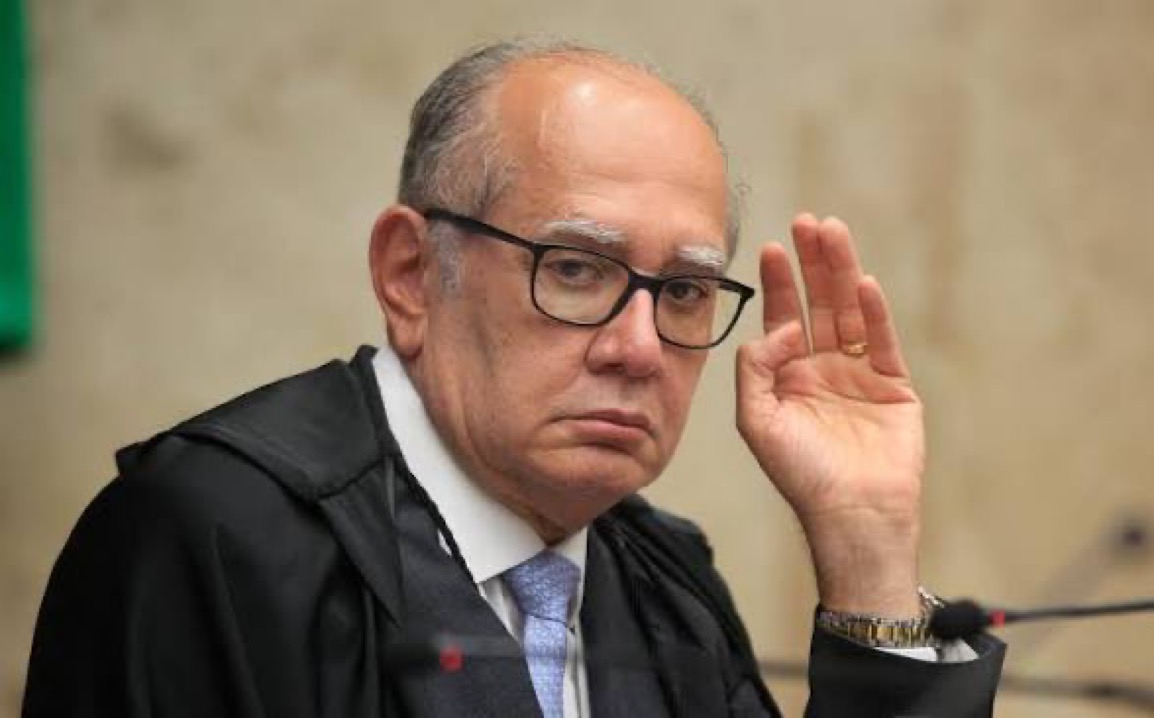

U.S. Prepares Magnitsky Sanctions on Brazil’s Gilmar Mendes as Judicial Overreach Crosses the Line
By Hotspotnews, November 19, 2025-Orlando-FL-USA
Senior officials in the Trump administration are finalizing recommendations to place Brazil’s Supreme Federal Court Justice Gilmar Mendes on the Global Magnitsky sanctions list, multiple sources close to the Treasury Department confirm. The move would make Mendes the second justice from Brazil’s highest court to face personal U.S. penalties in less than four months, following the August designation of his colleague Alexandre de Moraes.
The Magnitsky sanctions, which freeze any U.S. assets and ban American visas, are reserved for foreign officials credibly accused of gross human rights abuses or significant corruption. In the case of Brazil’s judiciary, the Biden administration had resisted using the tool despite years of complaints. The second Trump administration has shown no such hesitation.
At issue is a series of STF decisions that conservative critics in both Brazil and the United States describe as a systematic assault on free expression and due process. Since 2019, the court has operated an open-ended “inquiry into fake news and anti-democratic acts” that functions as a parallel judicial system with no fixed end date and no legislative oversight. Under this framework, justices have ordered the nationwide blocking of social-media accounts, imposed multimillion-dollar fines on platforms that refuse to censor protected political speech, and authorized police raids on private homes for the crime of posting memes critical of the court.
Gilmar Mendes has been one of the most enthusiastic defenders of these measures. While Alexandre de Moraes has served as the public face of the crackdown, Mendes has repeatedly provided the decisive fifth vote to uphold nationwide suspensions of X (formerly Twitter), secret censorship orders that even Brazil’s own Congress is not allowed to see, and the eight-year political ineligibility sentence handed down against former president Jair Bolsonaro. In public statements, Mendes has dismissed concerns about free speech as “freedom for the enemy of democracy” and argued that the court must act as the ultimate guardian of Brazil’s institutions—even when that means overriding elected branches of government.
For American conservatives, the breaking point came when the STF began targeting U.S.-based platforms and, by extension, American citizens. When X refused blanket compliance with orders to remove accounts of sitting Brazilian congressmen and American journalists, the court threatened to fine the company the equivalent of tens of millions of dollars per day and to arrest its legal representatives in Brazil. The court’s willingness to extend its reach into American jurisdiction transformed a domestic Brazilian dispute into a direct challenge to U.S. sovereignty over its own companies and citizens.
The incoming Trump administration views the Brazilian court’s actions as part of a broader pattern of left-wing governments using judicial power to silence opposition—parallels frequently drawn to Venezuela, Nicaragua, and pre-2022 Peru. Senior Republican lawmakers and conservative advocacy groups have flooded the State Department and Treasury with evidence dossiers arguing that the STF’s conduct meets the legal threshold for “serious human rights abuse” under the Magnitsky Act, specifically the arbitrary detention and cruel treatment of individuals for political speech.
Inside Treasury’s Office of Foreign Assets Control, the Mendes designation is described as all but certain, with an announcement possible before the end of the year. Sources say the evidence package is thicker than the one used against Moraes, reflecting Mendes’s longer public record of defending the censorship regime and his influential role in sustaining its legal foundations.
In Brasília, the prospect of a second sanctioned justice has triggered panic among the court’s defenders. Mendes himself has spent recent weeks lobbying for emergency legislation that would criminalize compliance with foreign sanctions inside Brazil and shield justices’ personal assets abroad. The irony has not been lost on critics: a court that routinely suspends constitutional rights in the name of defending democracy now seeks statutory immunity from the consequences of its own actions.
For now, the United States appears unmoved. The message from Washington is blunt: when foreign judges use state power to crush dissent, censor American platforms, and target political opponents with no meaningful due process, they forfeit the normal protections of international comity. If Brazil’s Supreme Federal Court wishes to avoid becoming a roster of Magnitsky designees, it will need to rediscover the meaning of judicial restraint—and fast.
The sanctions train, it seems, has already left the station. Gilmar Mendes is simply next in line.